
By Wadulo Arnold Mark
Following a high-level directive from the 4th Cabinet Meeting held on July 20, 2026, the Ministry of Trade, Industry, and Cooperatives has officially launched an ambitious drive to strengthen Uganda’s egg and baby food industry. The initiative, ordered by H.E. President Yoweri Museveni, aims to transition the country toward a self-sustaining economy by maximizing the value of local agricultural output.
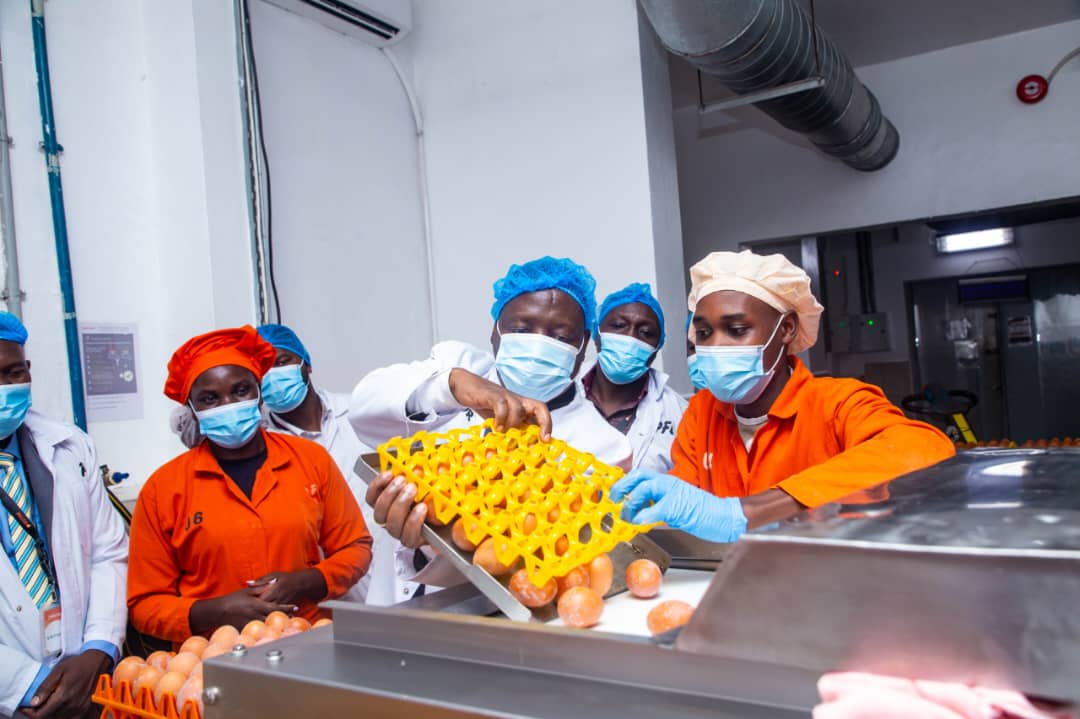
As part of this national assessment, the State Minister for Industry, Hon. David Bahati, conducted an inspection of Pristine Foods Limited on Thursday, August 13, 2026, in Kamuli A village, Kireka. Pristine Foods currently stands as the only egg processing facility in East and Central Africa, making it the focal point of the government’s new industrialization strategy.
During the visit, Minister Bahati emphasized that the development of the egg industry aligns with the government’s 10-point program, specifically the goal of building an integrated and self-sustaining economy. He noted that by processing eggs locally, Uganda can significantly reduce its import bill.
“We have been informed from the experts that we can produce a number of products from eggs. We have liquid eggs and mayonnaise, and we are currently importing $30 million US of mayonnaise,” Bahati stated. He warned that continuing these imports is equivalent to “exporting jobs of Ugandans”and pledged that the government will do whatever it takes to support the sector.
The government’s resolve includes a dual focus on economic growth and social welfare. Minister Bahati proposed a policy shift to include eggs in school diets to fight malnutrition. “The Ministry of Education can support companies like this by making a policy of including eggs as part of the requirements for the meal… not necessarily that government is paying, but just a mere policy,” he suggested.
Joel Guma, the Managing Director of Pristine Foods, highlighted the technical advantages of processing. He explained that while fresh eggs have a short life, liquid eggs last 10 weeks and powdered eggs can last over two years under ambient conditions. Guma also noted that processing helps overcome trade barriers like bird flu, as the heating process kills pathogens such as H1N5, making the product safe for export even during outbreaks.
The initiative is already yielding results in the “gig economy.” Pristine Foods currently produces mayonnaise and specialized sauces like Thousand Island and Tartar, which are used by young people in the “Rolex” trade to make their food more delicious and marketable. Guma revealed that 80% of his workforce are young people under the age of 30, and the business supports countless others across the supply chain, from farms to roadside vendors.
In response to the President’s directive, the Ministry is currently finalizing an assessment of Uganda’s egg production capacity and a review of existing processing infrastructure. Minister Bahati concluded the visit by promising to mobilize farmers and address the requirements needed to develop a “massive industry of eggs” that will support both the Parish Development Model and large-scale factories. By processing shells into calcium and waste into chicken feed, the government intends to ensure every part of the egg contributes to the national economy.