By Lawrence Kooko
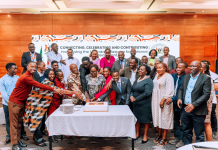
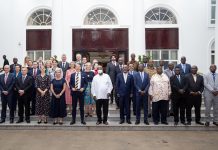
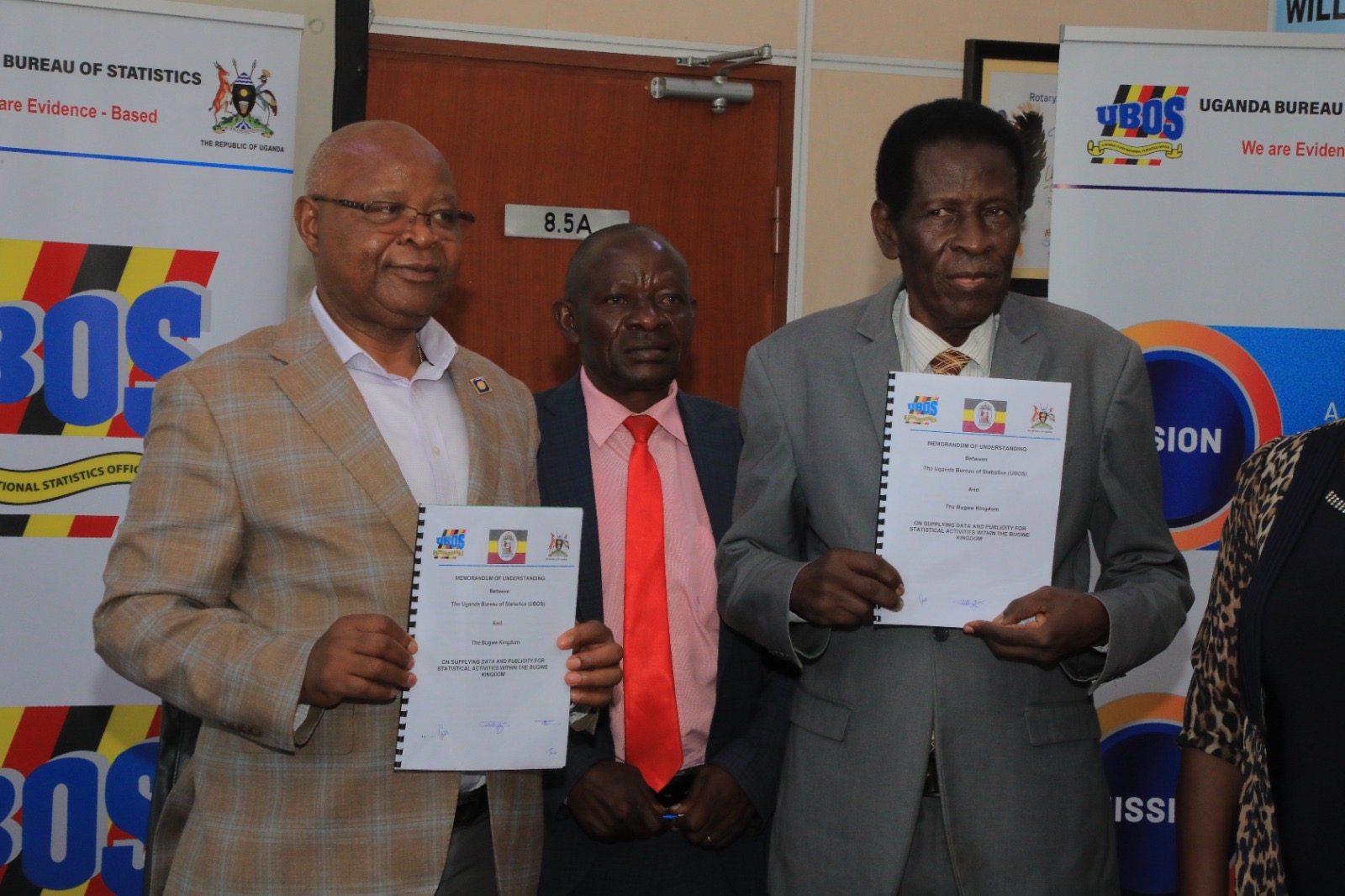
The Uganda Bureau of Statistics (UBOS) has signed Memoranda of Understanding with the cultural institutions of Samia Bugwe and Tieng Adhola to improve the collection and use of statistics for planning and development.
The agreements will allow UBOS to work with the two institutions to collect, manage and share information generated from their communities.
Speaking at the signing ceremony, UBOS Executive Director Dr Chris Mukiza said cultural institutions collect a lot of information through their daily activities, but much of it has not been properly documented or used in planning.
Mukiza said UBOS will help the institutions improve their systems and train staff to collect and manage reliable data.
He said particular attention will be paid to births and deaths, an area where Uganda still has gaps in its records.
Mukiza said better administrative records could also contribute to building a stronger population register and eventually reduce the amount of work and money required to conduct national population censuses.
Under the agreements, UBOS will provide technical support and help the institutions establish and strengthen their statistics units.
UBOS Head of Outreach and Quality Assurance Lydia Namono said Samia Bugwe and Tieng Adhola will provide information collected through their administrative structures and help communities understand and use statistics.
UBOS will also help organise and validate the information to ensure it meets national and international statistical standards.
For Bugwe Kingdom, Deputy Prime Minister Charles Wabwire Wandenya said the partnership will help the kingdom deal with gaps caused by inadequate and irregular population data.
He said having reliable information on population, health and agriculture will make it easier for the kingdom to identify its needs and plan accordingly.
Wandenya said accurate population figures are particularly important in education and health because they can help determine how many schools, classrooms, teachers and health facilities are needed in different areas.
The Prime Minister of Tieng Adhola, Richard Obbo Josel, said the institution will use its existing grassroots structures to collect information.
Clan leaders and coordinators at sub-county, parish and village levels will work with officials from the cultural institution and UBOS.
Obbo said reliable statistics will help Tieng Adhola establish which communities are most affected by poverty, violence against women and children and other social and economic problems.
He said the information will also give cultural leaders evidence when engaging government and development partners on the needs of their communities.