By Wadulo Arnold Mark
MUKONO, Katoogo Families and people living with cerebral palsy in Mukono District are calling for stronger government and community support, saying stigma, inaccessible services and limited opportunities continue to prevent many from living independently and participating fully in society.
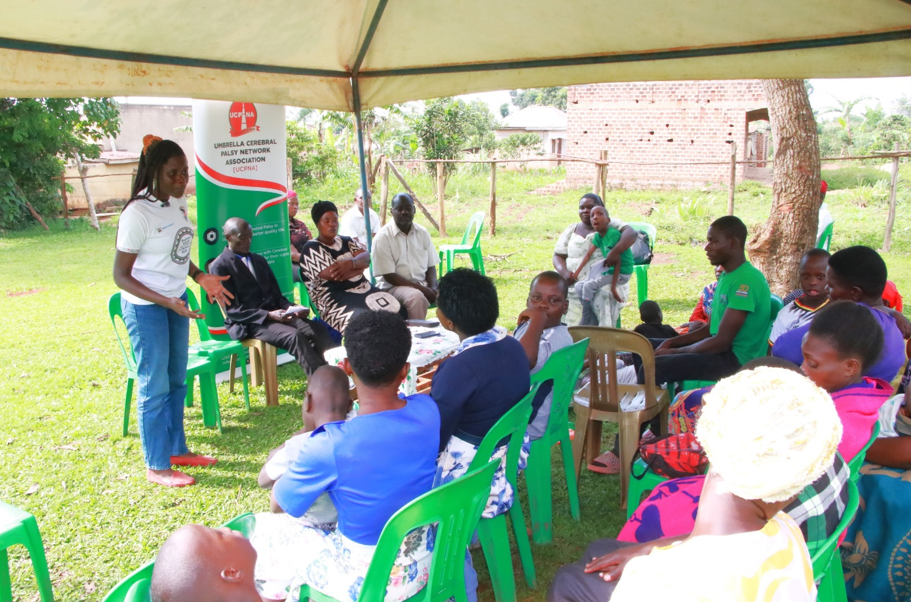
The concerns emerged during community engagements in Katogo, where parents, young people, community leaders and people living with cerebral palsy shared experiences ahead of World Cerebral Palsy Day, observed every October 6.
For years, some families in the area have hidden children with cerebral palsy inside their homes because of stigma and misconceptions surrounding disability. Community leaders say this is gradually changing as awareness programmes encourage families to bring children into the community and recognise their abilities.
However, the progress remains uneven.
Residents say several communities outside the areas reached by disability organisations still have children who remain isolated at home, with parents reluctant to seek support because of fear of discrimination.
The Umbrella Cerebral Palsy Network Association says it currently has more than 600 people with cerebral palsy and their families within its membership, a number that continues to grow. The organisation works through community structures, helping families form groups, build their advocacy capacity and engage local governments and other potential sources of support.
The organisation also focuses on young people, many of whom are out of school because existing education systems are often inaccessible or unaffordable for families. Its programmes include livelihood training and sexual and reproductive health education aimed at helping young people make informed decisions about their lives.
For families, access to healthcare remains another major concern.
Parents say physiotherapy services can be expensive and are largely concentrated in urban areas, leaving many rural families without regular access to specialised care. UCPNA says it responds by training parents in basic physiotherapy exercises and activities of daily living so they can support their children at home.
People living with cerebral palsy also report challenges when accessing health services. Some say healthcare providers lack adequate understanding of their specific needs, while others face barriers in accessing sexual and reproductive health information and services.
Naggawa Christine, a young woman living with cerebral palsy, said some health workers question whether women with disabilities should seek family-planning services.
“I am a woman with a body and blood just like anyone else. I also need to have children and live a healthy life,” she said, calling for more disability-sensitive health services.
Education is another area where gaps remain visible.
Students too with cerebral palsy describe classrooms where teachers may fail to provide adequate attention or reasonable accommodation. Physical infrastructure, including buildings and toilets that are inaccessible to people using wheelchairs, further limits participation.
Community leaders are therefore calling for disability inclusion to be considered in public infrastructure, education, healthcare and government programmes.
They are also appealing to fathers to become more involved in raising children with disabilities, saying mothers have often carried much of the responsibility for care and advocacy.
For UCPNA, the wider objective is not simply to provide assistance, but to change attitudes and create communities where people with cerebral palsy are recognised as citizens with rights, abilities and a meaningful contribution to make.
As the world marks Cerebral Palsy Day on 6th October, under the theme “Unique and United,” inclusion is being targeted to move beyond awareness and translate into accessible services, opportunities and dignity for people living with cerebral palsy.