By Wadulo Arnold Mark
BANGKOK, Thailand – Top Ugandan financial leaders joined global central bankers and finance ministers in Bangkok, Thailand, for the 2026 Annual Meetings of the International Monetary Fund (IMF) and World Bank Group, held from October 12 to October 18. The high-level gathering took place as the IMF officially raised its 2026 economic growth forecast for Sub-Saharan Africa to 4.5%, up from an earlier 4.3% estimate, driven by stronger regional economic performance.
However, the IMF’s updated outlook warned that high debt-servicing costs which currently consume roughly 12% of government revenues across Africa alongside a projected 12% drop in international development aid, are forcing developing nations to adapt quickly. With regional median inflation also expected to reach 4.3% in 2026, African countries face tough choices to keep prices stable while funding essential public services.
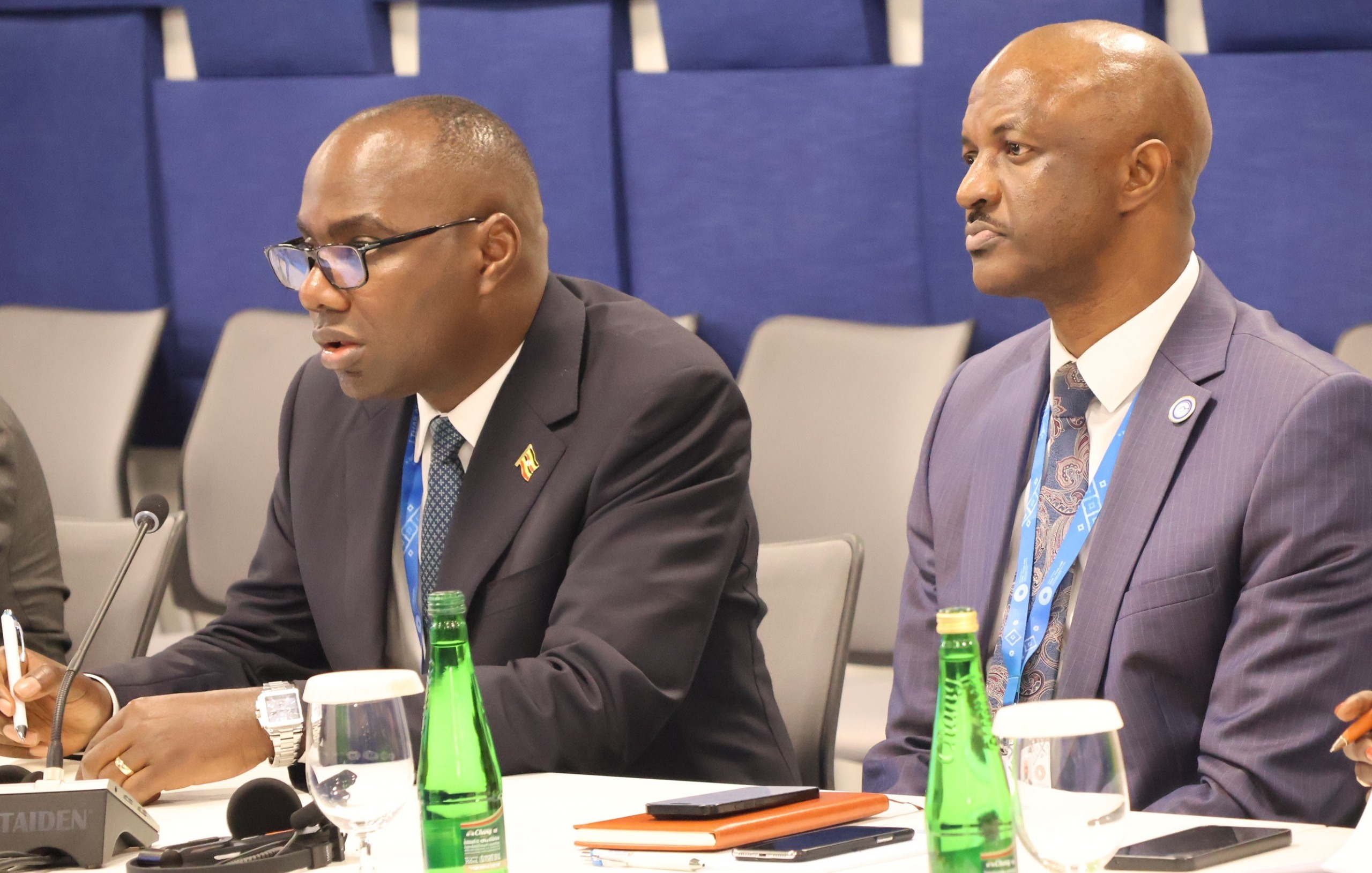
Attending the summit alongside Bank of Uganda Governor Dr. Michael Atingi-Ego, Uganda’s Minister for Finance, Henry Musasizi, stressed that global economic pressures mean nations must tighten their spending and focus heavily on creating opportunities for young people. “Out of 100 people in Uganda, the median age is 16,” Musasizi explained, highlighting the urgent need for youth job creation. “The mission is the same: that we must build an economy that is resilient, that is able to overcome shocks, that is able to respond to the needs of our people,” he emphasized.
Musasizi noted that with foreign aid shrinking globally, Uganda is focusing on raising private capital and boosting domestic tax collection from 14% to 20% of GDP over five years. He also shared positive news regarding major infrastructure projects, revealing that the World Bank has agreed to support Uganda’s railway expansion. “I am happy that the World Bank is now willing to finance the Standard Gauge Railway,” Musasizi announced, noting that the Malaba-Kampala line is fully subscribed, with further discussions underway for the Kasese line and mining developments.
Adding to Uganda’s strategic push, Permanent Secretary and Secretary to the Treasury Ramathan Ggoobi highlighted that international financial institutions are now directly supporting Uganda’s ambitious plan to expand its economy tenfold. Ggoobi noted that the World Bank is backing key economic drivers, particularly through the “Agri-Connect” program designed to boost agricultural processing, as well as investments in tourism and minerals.
“The World Bank is very well aligned with our strategy for growing the economy 10-fold because their own agenda now is to promote growth that creates jobs,” Ggoobi said. “They are putting a lot of emphasis on leveraging private sector capital so that private firms can create good jobs for the younger people,” he added.
Ggoobi emphasized that tight coordination between the Ministry of Finance and the central bank remains essential to shield Ugandans from global fuel price shocks and supply chain disruptions. By securing commitments for railways, agriculture, and private sector investment, Uganda wrapped up its Bangkok meetings focused on turning global financial changes into real opportunities for its young population.