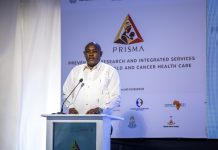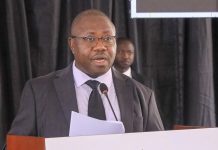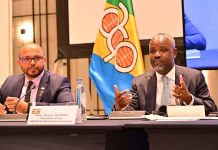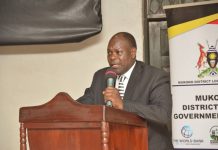
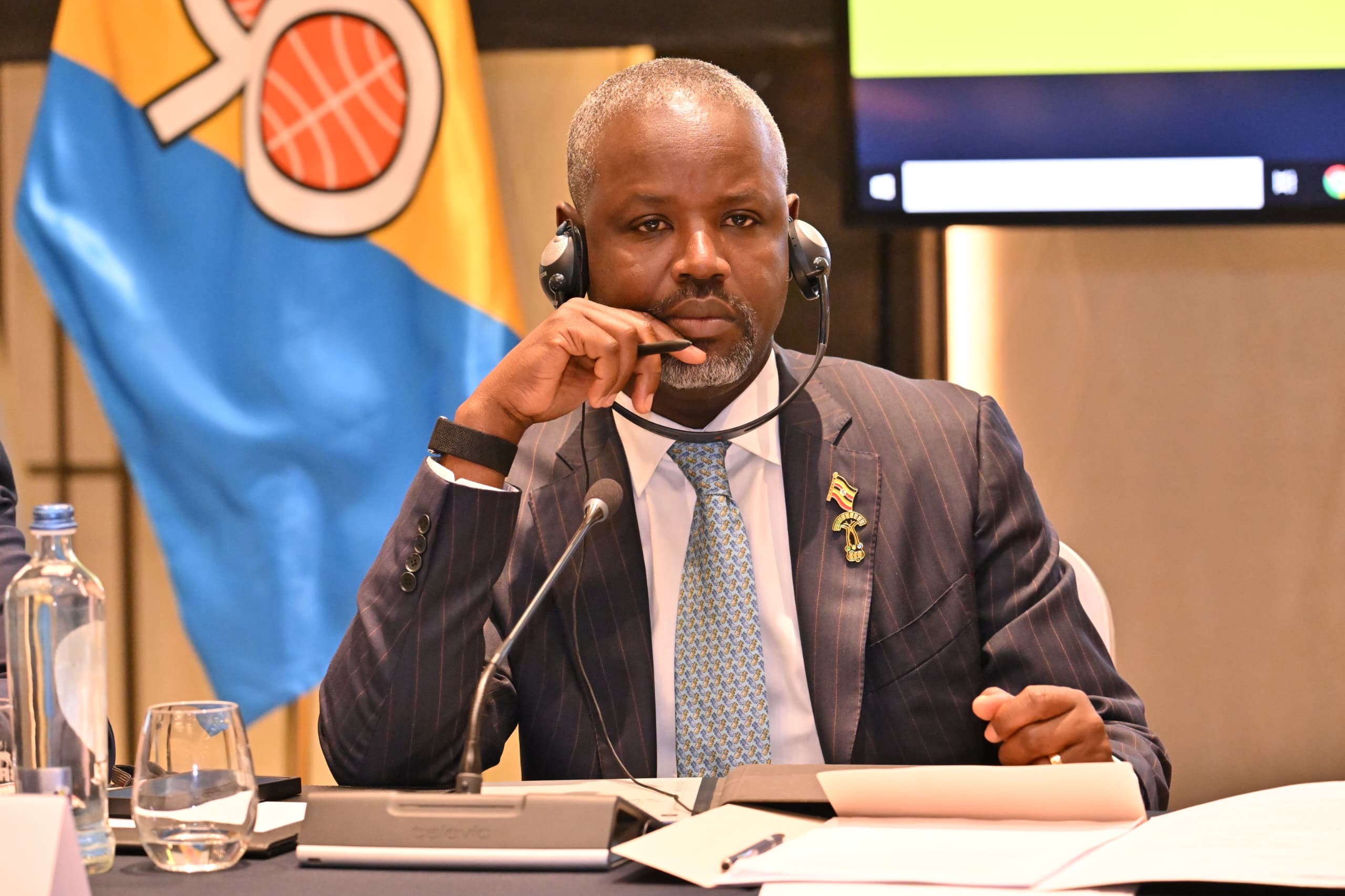
As Thomas Tayebwa, the Deputy Speaker of Parliament of Uganda and OACPS President, leads delegates into a crucial joint assembly with the EU in Brussels, he has prepared them to make climate justice and equitable climate financing central to the week-long discussions.
The Organisation of African, Caribbean and Pacific States (OACPS) will put climate change financing at the centre of its discussions with the European Union (EU), with member states calling for reforms to ensure that vulnerable countries can respond to climate shocks without accumulating more debt.
This was agreed during the 65th OACPS Parliamentary Assembly in Brussels today, as delegates prepared for a joint assembly with their EU counterparts, which begins tomorrow (today, Monday). The meetings will continue in Brussels until Friday.
Uganda’s Deputy Speaker of Parliament and President of the OACPS Parliamentary Assembly, Thomas Tayebwa, who chaired the assembly, said member states must collectively demand climate justice and ensure that the countries responsible for the largest share of global emissions bear the cost of addressing climate change.
He said African, Caribbean and Pacific countries were experiencing severe climate impacts despite contributing relatively little to global emissions.
“The ones who are emitting a lot are not feeling the impact, as we are, who are emitting less. If you look at the OACPS countries, in total, we don’t emit more than, on average, more than 6%. But the impact is huge on us,” Tayebwa told delegates.
He pointed to rising sea levels, coastal erosion and damage to coral reefs in the Caribbean, drought, hunger and famine in Africa, and increasingly difficult conditions facing countries in the Pacific. He contrasted these with the experiences of wealthier countries, which have greater financial resources to invest in adaptation measures and protect their populations.
Tayebwa acknowledged that European countries were also experiencing the effects of global warming. He argued that OACPS countries must be deliberate in their engagement with the EU and other international partners to ensure that the principle of polluters paying for climate damage moves beyond political statements and resolutions.
Climate finance dominated by loans
Dr James Murombedzi, the former head of the Africa Climate Policy Centre at the United Nations Economic Commission for Africa (UNECA), said OACPS countries faced a major financing challenge because climate finance was dominated by loans.
In a presentation titled Financing Climate Resilience Without Deepening Debt, Dr Murombedzi called for urgent reforms to the way climate resilience is financed, warning that the current reliance on loans risks worsening the debt burden of countries already struggling with climate-related disasters.
He said low-income countries suffer significant economic and welfare losses from climate shocks despite contributing the least to global greenhouse gas emissions. Yet the resources available to help them adapt remain far below what is required.
Dr Murombedzi argued that the current financing structure was unsuitable for countries that need substantial resources to protect communities, infrastructure and livelihoods from climate impacts but have limited capacity to take on additional debt.
He recommended prioritising grants for adaptation projects that do not generate direct revenue, while reserving loans for affordable, revenue-generating investments capable of supporting repayment.
He also called for direct financing for Loss and Damage to support emergency response, recovery and reconstruction in countries already experiencing the consequences of climate change, rather than concentrating exclusively on reducing future risks.
Dr Murombedzi further recommended expanding pre-arranged disaster financing mechanisms to ensure that funds are available when climate emergencies occur. He proposed incorporating climate-resilient debt clauses into loan agreements, allowing countries to temporarily suspend repayments when severe climate events strike.
He also called for simpler application procedures to improve developing countries’ direct access to climate finance, alongside greater investment in public goods such as food security and early-warning systems.
Weak negotiating capacity
Apart from financing arrangements, Dr Murombedzi said OACPS countries needed a stronger and more organised presence in international climate negotiations, including the annual United Nations climate conferences known as the Conference of the Parties (COP).
“I’m not sure that there is any organised presence of OACPS to support, to provide inputs into those negotiating processes, but also to provide support at the negotiations themselves,” he said.
He noted that many OACPS delegations were smaller and less adequately resourced than those of wealthier countries, limiting their ability to conduct research, generate data and participate effectively. “We have the smallest delegations, sometimes the least skilled, and also the least resourced,” he said.
Member states demand changes to global financing
Delegates from several countries also called for reforms, saying that the existing international financial system does not adequately account for the vulnerability of countries facing repeated climate disasters.
Dwight Sutherland, the Barbados delegate, said climate change posed an immediate threat to the economic stability of small island developing states, extending beyond environmental concerns to affect their ability to finance development.
He called for support for the Bridgetown Initiative, which aims to reform international financial arrangements so that climate-vulnerable countries can access affordable financing and respond to disasters without undermining their development priorities.
“The Bridgetown Initiative seeks to reform the international financial architecture so that climate-vulnerable countries can respond to shocks, invest in resilience, and finance their development on affordable terms,” Sutherland said.
David Houdeingar Ngarimaden, Chad’s delegate, illustrated the scale of environmental changes confronting vulnerable communities by citing the shrinking area of Lake Chad.
“I will also mention the case of Lake Chad, whose area was 25,000 km² a few years ago. With the climate shock, we are now at 2,500 km²,” he said.
He said the example of Lake Chad showed the impact of environmental degradation on communities whose livelihoods depend on natural resources.
Mauritius representative Mohamed Ehsan Juman drew attention to the widening gap between the resources available for climate adaptation and the amount required by developing countries.
“The recent report of the United Nations Environment Programme provides for an annual deficit in financing for adaptation to climate change of 272 billion euros by 2035,” Juman said.
Jamaica’s representative, Heroy Clarke, challenged the use of loans to finance recovery from climate disasters. He cited Hurricane Melissa, which devastated Jamaica in 2025, arguing that countries should not be expected to borrow money and pay interest to recover from damage caused by climate events to which they contributed little.
“Loans for Loss and Damage are morally and economically indefensible. You cannot lend a country money to recover from a harm it did not cause, then charge interest on its suffering,” Clarke said.