
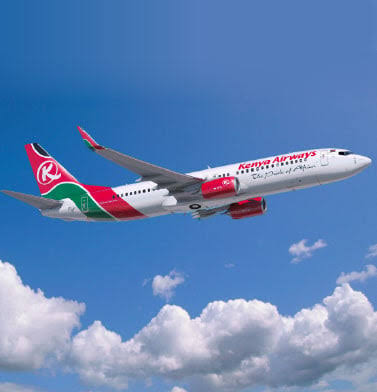
Aircraft shortages and engine delays shrink network as demand holds steady.
By Samuel Ssenono
Kenya Airways returned to loss in 2025 after global aircraft and engine shortages reduced capacity across its network, cutting traffic and revenue despite steady demand for air travel.
The airline reported revenue of KShs 161.5 billion, about US$1.25 billion, down from KShs 188.5 billion, or US$1.46 billion, in 2024. It posted an operating loss of KShs 5.6 billion, about US$43 million, and a net loss after tax of KShs 17.2 billion, about US$133 million, reversing a profit recorded the previous year.
The numbers point to a capacity-driven slowdown rather than weak demand.
Operational data in the investor briefing shows Available Seat Kilometres fell 18 percent to 13.349 billion. Passenger numbers dropped 13 percent to 4.6 million, while revenue passenger kilometres declined by 18 percent. Cabin factor held relatively stable at 74.8 percent, down slightly from 75.2 percent.
Cargo volumes also declined by 8 percent to 64,780 tonnes, reflecting reduced flying and limited belly capacity. Block hours fell 14 percent, mirroring the cut in network activity.
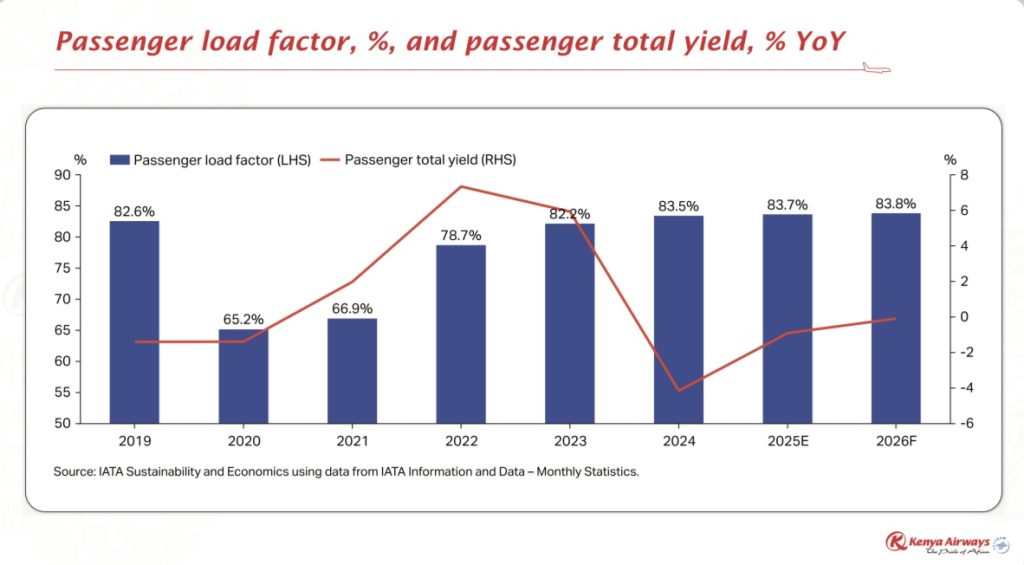
Kenya Airways links the performance to ongoing global supply chain disruption.
According to the briefing, about 14 percent of the global fleet remains parked, while demand for spare parts exceeds supply by up to 20 percent. Lead times for avionics parts have increased, and recovery from maintenance disruptions now takes between 45 and 90 days.
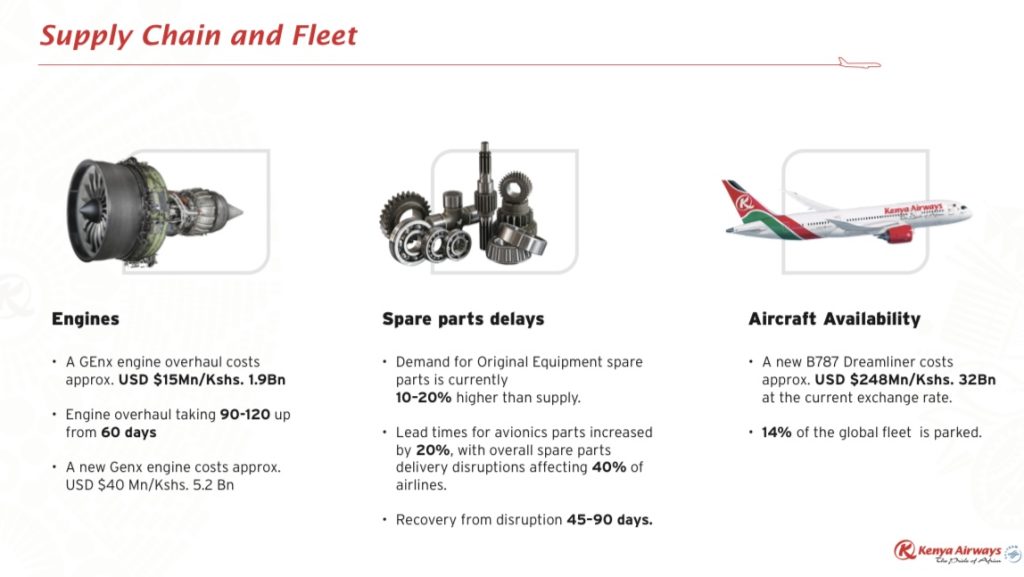
Engine maintenance has become more costly and time-consuming. A GEnx engine overhaul now costs about US$15 million and can take up to 120 days, while a new engine costs around US$40 million. A Boeing 787 Dreamliner is priced at about US$248 million, underlining the capital intensity of restoring capacity.
Despite reduced flying, operating costs remained elevated at KShs 167.1 billion, about US$1.29 billion, while net finance costs rose to KShs 12.3 billion, or US$95 million. The airline closed the year with a negative net margin of 10.6 percent.
Signs of operational recovery.
The airline added a Boeing 737-800 to its fleet, bringing total aircraft to 41, and returned three aircraft to service during the year. It also expanded in-house maintenance, completing 16 heavy checks and 38,000 component repairs, while adding new regulatory approvals and maintenance partnerships across Africa.
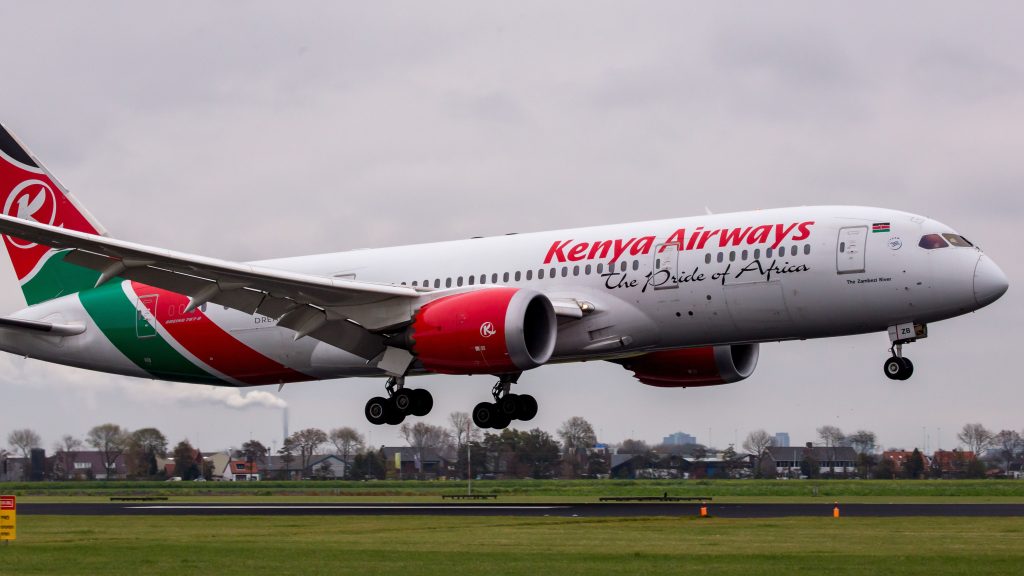
Commercially, Kenya Airways increased London capacity with three weekly Nairobi-Gatwick flights, raising total London frequency to 10 per week. It also signed partnerships with Safarilink, Qatar Airways and Air Tanzania aimed at strengthening connectivity and feed traffic through Nairobi.
Customer metrics improved, with Net Promoter Score rising to 28 and on-time performance at 73 percent, even as flight disruptions remained a key operational challenge.
The broader industry context remains tight. IATA forecasts cited in the briefing show African airlines generating just US$0.2 billion in net profit, with margins of about US$1.30 per passenger, the lowest globally.
Kenya Airways says its focus going forward will be restoring aircraft availability, raising capital, controlling costs and improving operational efficiency as it works to stabilise the business