
By Wadulo Arnold Mark
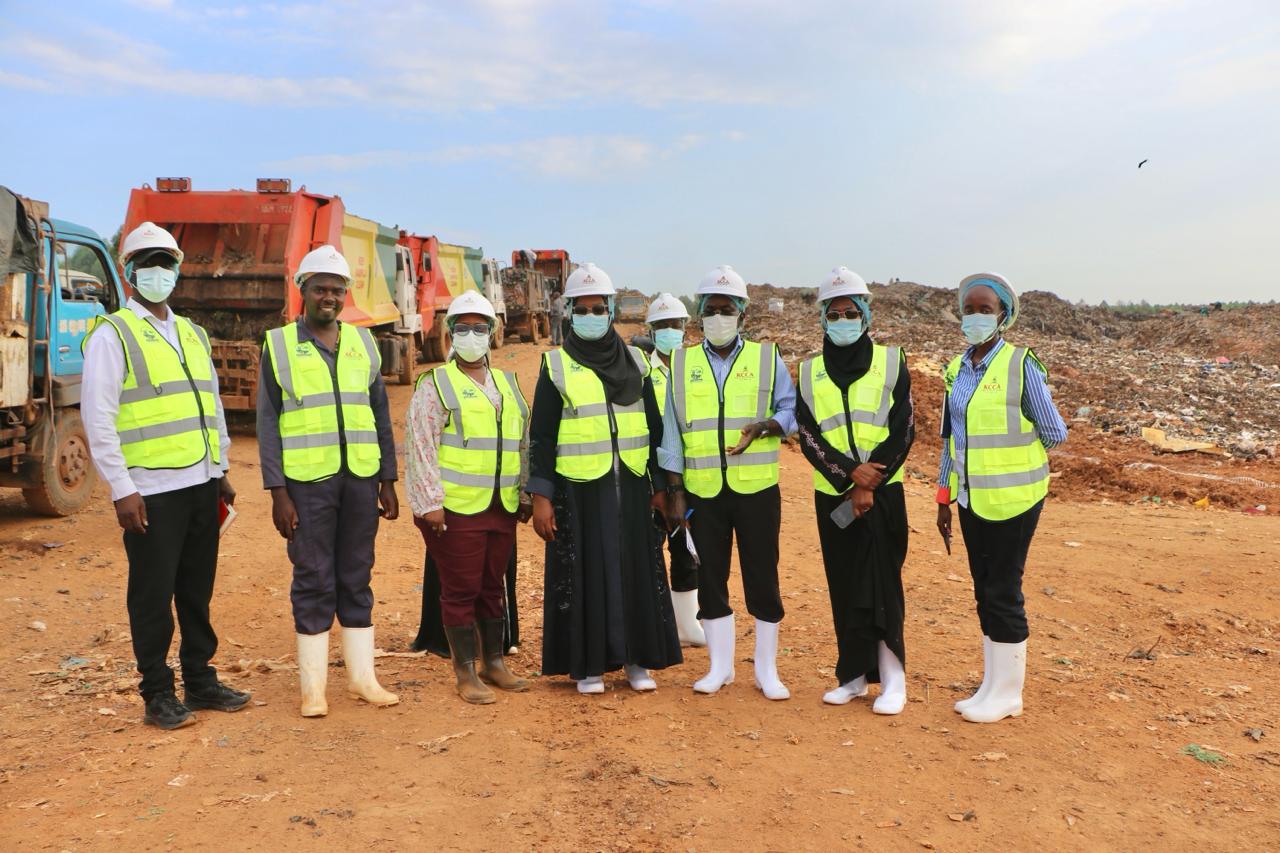
A recent visit to the Buyala Waste Management Facility by officials from the Ministry of ICT and National Guidance and other government agencies highlighted efforts to leverage digital technologies to improve efficiency in waste management.
The Buyala Waste Management Facility is emerging as a critical waste-handling hub for the Greater Kampala Metropolitan Area (GKMA), currently processing between 1,500 and 2,000 tonnes of waste daily.
Managed by the Kampala Capital City Authority (KCCA), the facility has become the primary destination for more than 150 trucks each day from areas including Kira, Nansana, and Mukono, as several regional landfills approach or reach full capacity.
Although the facility covers 230 acres, operations are currently being conducted on a five-acre section approved for emergency use by the National Environment Management Authority (NEMA). However, officials say they are moving away from traditional dumping methods.
KCCA has developed a master plan to transform Buyala into a modern waste management facility with dedicated hubs for composting, waste-to-energy conversion, and material recovery.
KCCA Executive Director Sharifah Buzeki said the authority is committed to modernizing waste management operations.
“We have a master plan and we are on the right track to ensuring that we have a modern waste management facility. We are not going to continue working traditionally like this. We are aiming to establish a modern waste management facility that will include various hubs for waste composting, waste-to-energy production, and material recovery,” Buzeki said.
The facility also serves as an important economic hub. It currently supports 417 waste sorters and 57 traders who recover recyclable materials for industrial reuse. These workers earn an estimated UGX 40,000 to UGX 50,000 per day, contributing to a growing circular economy.
To improve operations, officials are proposing the automation of the facility’s weighbridge to accurately track the source and volume of waste entering the site. They are also considering the use of sensors to monitor gas toxicity and pollution levels.
Government officials say a data-driven approach will improve transparency and support planning for future waste management facilities across the country.
Permanent Secretary in the Ministry of ICT and National Guidance, Dr. Aminah Zawedde, said digital technologies could significantly enhance decision-making in the sector.
“We have seen the potential of utilizing digitization to improve efficiency and support data-driven decision-making. This will help us determine the amount of waste being handled at the facility and understand how many people are benefiting from its operations,” Zawedde said.
She added that accurate data on waste volumes, employment levels, and operational needs would help government determine the number of similar facilities required nationwide.
“If we know exactly how much waste is coming in, how many people are employed, and what additional support is needed based on the data collected, it will greatly help us determine how many more facilities like this Uganda needs,” she said.
By leveraging science, technology, and innovation, the government hopes to transform waste management into a sustainable industry that contributes to Uganda’s goal of attaining middle-income status.