By Samuel Ssenono
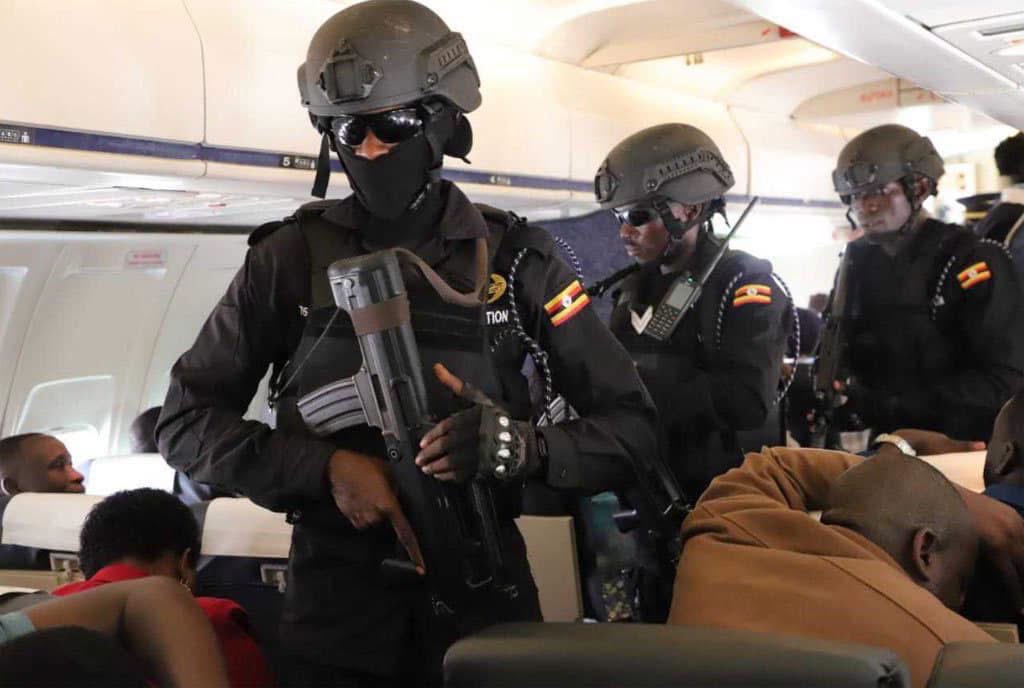
Entebbe International Airport has carried out a full-scale security exercise, testing how airport agencies would respond to a hijack incident involving a commercial aircraft.
The drill, held on Friday, June 26, 2026, was coordinated by the Uganda Civil Aviation Authority and ran for about two-and-a-half hours.
Code-named “EX 2026”, the exercise started at about 12:14pm and was built around a mock Fenna Airlines flight, FY 506, with 67 people on board.
In the simulation, the aircraft was preparing for departure when a hijacker gained access to the cockpit and took passengers hostage. Air Traffic Control was then alerted, setting off emergency procedures across the airport.
The exercise brought together security agencies, airline operators, ground handling companies, health teams, air traffic controllers and other government agencies that form part of Entebbe’s airport emergency system.
In aviation, an emergency plan is only as useful as the ability of different units to act together under pressure. The control tower must alert the right command channels, security teams must secure the aircraft and surrounding zones, medical teams must stand by, airline staff must account for passengers, while airport management keeps the rest of the aerodrome safe.
The practice of testing airport security and emergency plans became a major part of international aviation after the wave of aircraft hijackings and attacks that hit global air travel from the late 1960s into the 1970s. That period forced governments and airports to move aviation security from routine policing to a coordinated system involving airport authorities, airlines, intelligence, police, military units and civil aviation regulators.
The International Civil Aviation Organization later strengthened this framework through aviation security standards, requiring contracting states to put in place airport contingency plans and test them regularly. For international airports, such exercises are meant to expose weak points before a real incident occurs.
At Entebbe, the June 26 exercise tested command, communication, response time, passenger handling, aircraft isolation and coordination between agencies.
Speaking after the drill, UCAA Director General Fred K. Bamwesigye commended the participating stakeholders, including joint security agencies, airline operators, ground handlers, health personnel and other government agencies, for testing and evaluating their response capability under the Airport Contingency Plan.
UCAA said the exercise is a mandatory requirement for international airports in ICAO contracting member states and is conducted to test emergency plans and procedures every two years.
The authority last conducted a full-scale security exercise at Entebbe International Airport on October 26, 2023