By Samuel Ssenono
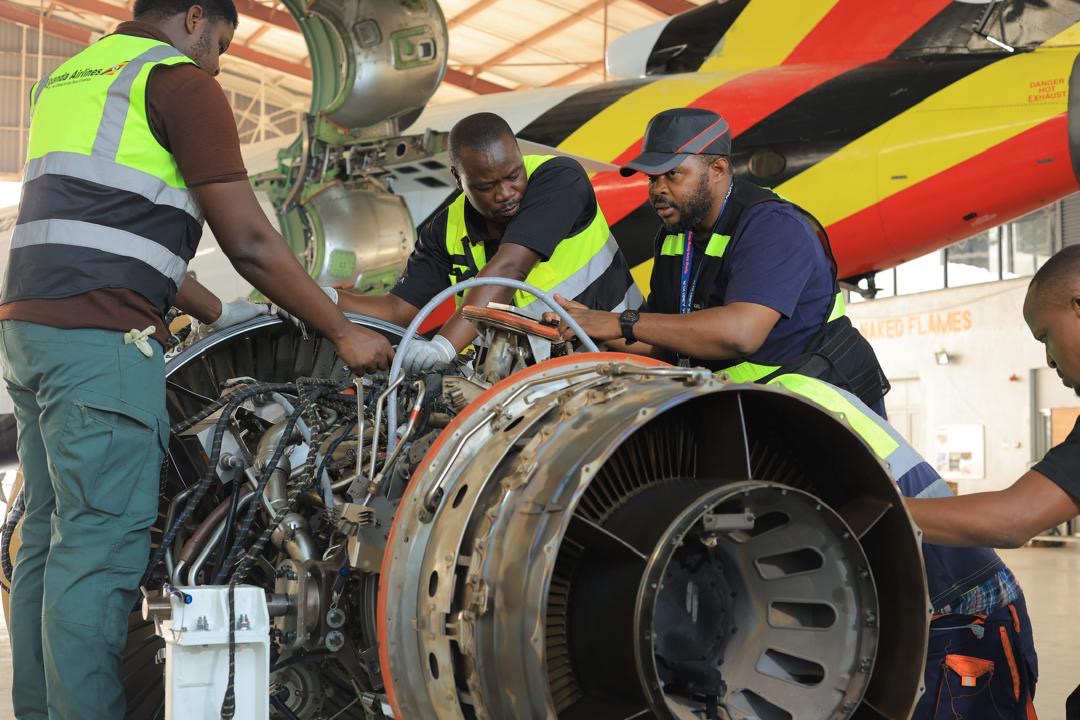
A new aviation industry report has warned that engine maintenance bottlenecks could continue disrupting single-aisle aircraft operations well into the next decade unless manufacturers, airlines, lessors and maintenance providers move faster to ease pressure on the supply chain.
The report, published by IATA, focuses on maintenance, repair and overhaul challenges facing the latest engines powering aircraft such as the Airbus A320neo, Boeing 737 MAX, Airbus A220, Embraer E2 and Comac C919.
It says the rapid growth of new-generation single-aisle fleets has placed heavy pressure on engine shop capacity, spare parts supply and aircraft availability.
The pressure has been most visible on Pratt & Whitney’s Geared Turbofan engines, where design maturity and production quality issues forced many aircraft out of service. At the peak in 2025, the report says 648 GTF-powered aircraft were grounded while waiting for engine shop visits.
IATA says the challenge has been driven by a combination of ambitious aircraft delivery targets, early-life engine issues and production quality problems that reduced time on wing below industry expectations. The result has been a rush for shop visits, longer turnaround times and a shortage of serviceable spare engines.
The report also notes that CFM’s LEAP engines, used on the A320neo, 737 MAX and C919, have faced early-service issues, especially in hot and dusty operating environments. These have led to increased inspections, early engine removals and operational pressure on airlines in affected regions.
The warning comes as airlines continue shifting from older A320ceo and 737NG aircraft to newer A320neo and 737 MAX families. IATA says LEAP and GTF fleets are expected to grow rapidly, with annual delivery targets close to 2,500 LEAP engines and 1,200 GTF engines.
That growth will drive a sharp rise in engine shop visits. The report forecasts annual visits could peak at more than 5,000 for LEAP engines and more than 2,000 for GTF engines by 2040.
Engine maintenance is already one of the most expensive parts of airline operations. The report puts the global engine MRO market at about USD 50 billion in 2024, accounting for 40 to 50 percent of total aircraft MRO spending. A typical engine shop visit can cost more than USD 3 million to USD 4 million, depending on the engine type, work scope and parts required.
Although engine manufacturers are expanding their own maintenance networks and working with partner shops, IATA says capacity expansion alone will not solve the problem. Spare parts shortages continue to limit the impact of new capacity, while turnaround times remain longer than normal.
The report also raises concern over limited access for independent maintenance providers. It says some aftermarket practices, including restrictive licensing and all-inclusive power-by-the-hour contracts, have reduced competition and made the system less resilient when demand spikes.
IATA is calling for wider access to spare parts, faster approval of repair instructions, more use of serviceable used parts and fairer access for independent MRO providers.
The report points to the IATA-CFM agreement, first signed in 2018 and renewed in January 2026, as a model for more open aftermarket access. Under that approach, independent shops can access engine manuals, spare parts and technical support, while airlines and lessors retain the right to use approved non-OEM parts and repairs.
IATA also wants airlines and lessors to secure long-term access to spare parts price catalogues before buying aircraft or engines. The report says such protections would help operators control costs and give independent MRO providers a fairer chance to compete.
For airlines, the issue is no longer technical alone. Engine shortages can force carriers to keep older aircraft flying, extend leases, cut capacity or lease extra aircraft to protect schedules.
The report warns that with global traffic and aircraft fleets still growing, the industry must act now to avoid a repeat of recent grounding shocks.
Its central message is clear: new aircraft deliveries will not be enough if the engine maintenance system cannot keep pace.