By Kooko Lawrence
The Government has backed proposals to reform Uganda’s pension system to provide retirees with regular income after retirement.
Finance, Planning and Economic Development Minister Henry Musasizi says the reforms would help retirees maintain a steady income while also supporting the growth of Uganda’s capital markets.
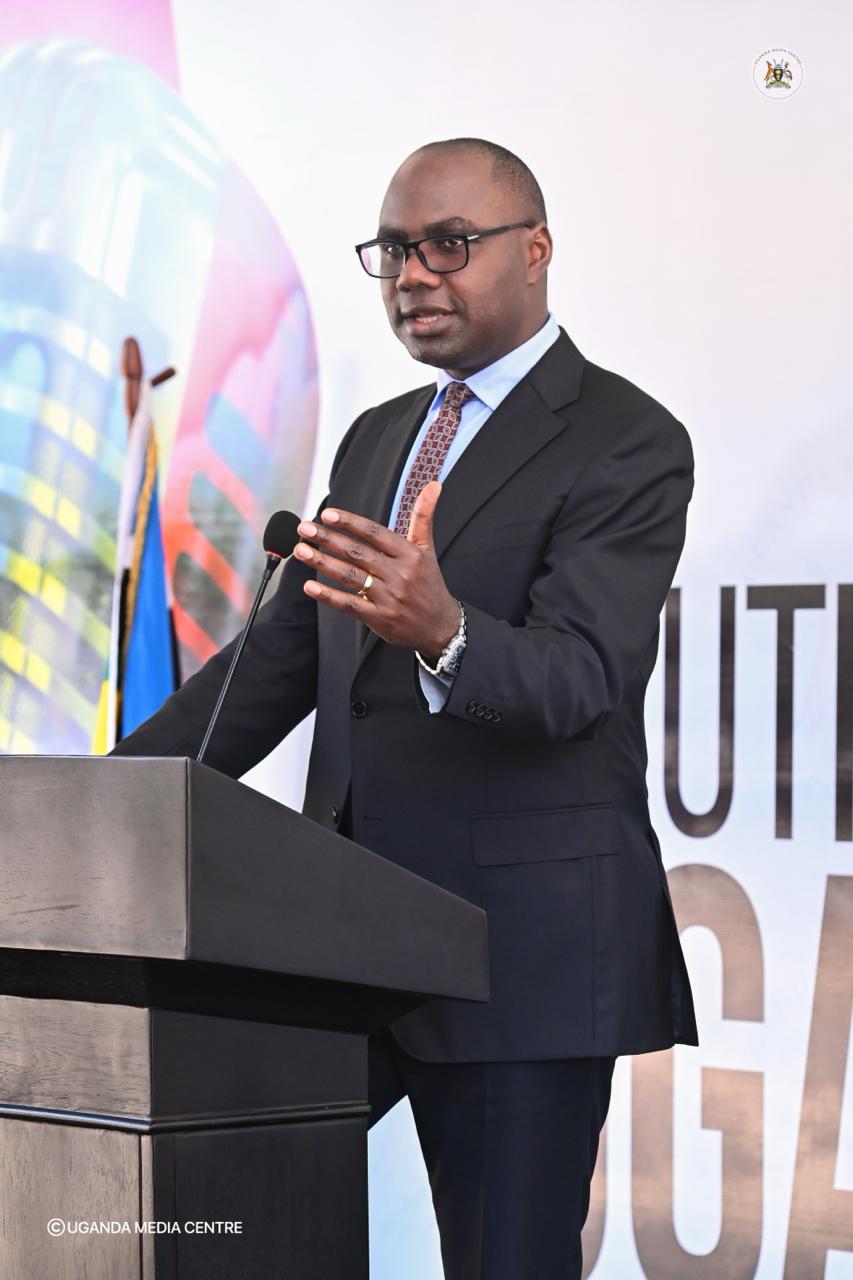
Musasizi was speaking at the Uganda Media Centre in Kampala during the launch of activities to mark 30 years of the Capital Markets Authority.
He said retirees should be able to receive what he described as “replacement income” for a period after leaving employment.
“If we are to guarantee good life during retirement, people should retire and remain on what we call replacement income. You remain on a salary when you are not working,” Musasizi said.
He said lump-sum payments can expose retirees to poor investment decisions, particularly where beneficiaries have limited experience in managing businesses or investments.
Musasizi directed officials in the Ministry of Finance to explore reforms that would make the pension sector more responsive to Uganda’s economic needs.
His remarks followed a proposal by former CMA Chief Executive Officer Keith Kalijera, who also called for a shift towards regular retirement income.
Kalijera said such reforms could increase the pool of long-term institutional capital available to the country’s capital markets.
Musasizi also backed greater integration of capital markets across the East African Community.
He said Uganda should work with other EAC partner states towards greater convergence of capital-market systems, including exploring the establishment of an East African Capital Markets Authority.
The Minister said deeper regional integration would widen the investor base, improve market liquidity and give businesses access to larger pools of capital.
He challenged the Capital Markets Authority to study developments in Kenya, Rwanda and Tanzania and identify areas where regional capital-market systems can be harmonised.
The proposals come as Uganda seeks more long-term capital to finance its ambition of building a US$500 billion economy by 2040 under the Tenfold Growth Strategy.
Musasizi said long-term financing will be needed for infrastructure, industrialisation, commercial agriculture, tourism, energy, housing, manufacturing, technology and innovation.
He said government expenditure, bank lending and capital markets will all have a role in financing that growth.
According to Musasizi, Uganda’s domestic market capitalisation stood at Shs24.28 trillion by August 2026, while the corporate bond market had mobilised Shs290 billion.
Collective investment schemes stood at Shs7.08 trillion, while total market capitalisation was reported at Shs50.67 trillion.
The Minister also reported 273,774 Securities Central Depository accounts and 180,452 collective investment scheme accounts.
CMA Chief Executive Officer Josephine Osia said the authority wants to increase participation in collective investment schemes to one million funded accounts.
She also announced plans to grow collective investment scheme assets beyond Shs12 trillion, support the operationalisation of Uganda’s inaugural sovereign Sukuk and facilitate the issuance of at least one new major market instrument.
Possible instruments include a Real Estate Investment Trust, infrastructure bond or green bond.
CMA Board Chairman Saul Seremba said public awareness remains a major challenge for the sector.
He called for stronger financial literacy and wider participation by Ugandans in the capital markets.