By Wadulo Arnold Mark
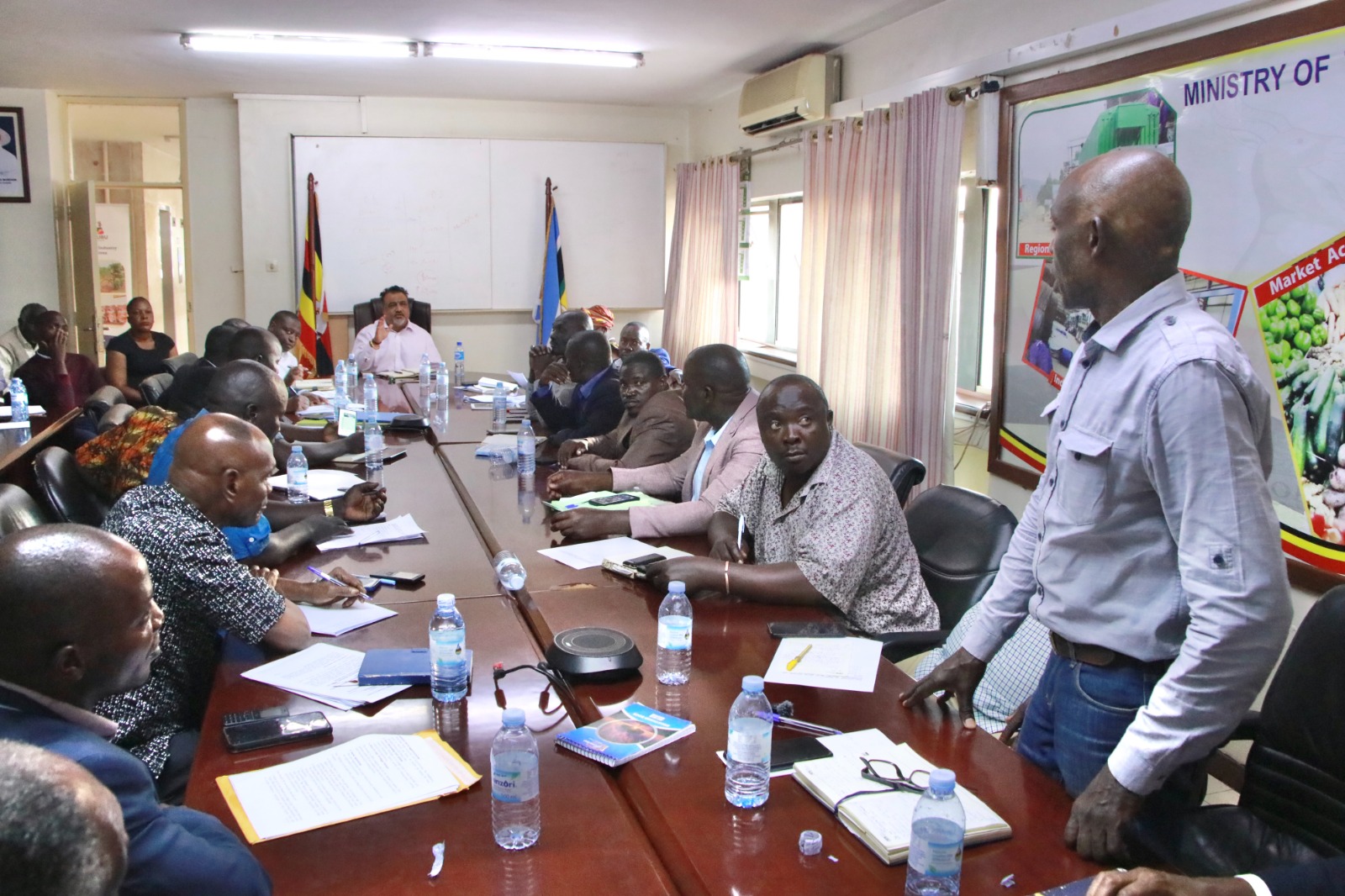
KAMPALA – Uganda’s sugar industry, long crippled by fragmented regulation, tax leakages, and hostile relations between millers and growers, is undergoing a major regulatory overhaul. The Ministry of Trade, Industry and Cooperatives has launched a dual offensive, holding consecutive high-level meetings with sugar millers and sugarcane growers to enforce compliance with the newly amended Sugar Act and introduce a digitized tracking system to stabilize the sector. Speaking on behalf of the government, Hon. Sanjay Tanna, the Minister of Trade, Industry, and Cooperatives, issued stern warnings to recalcitrant players, promising to protect both national revenues and the livelihoods of local farmers.
The structural disorder was laid bare during the sessions, where officials revealed that a lack of centralized data has severely hindered planning. “We do not have correct data of the number of sugar cane growers in this country,” Minister Tanna admitted, noting that uncoordinated production has historically triggered volatile price fluctuations. This supply-demand mismatch has allowed some millers to exploit growers.
Taka Mugogo, Chairperson of the Greater Busoga Sugarcane Growers Cooperative, argued that “this system would best work under organized farmers’ groups”. He accused millers of taking advantage of growers’ disorganization to slash prices. Indeed, despite an official minimum price agreement of UGX 125,000 per ton, growers complained that millers unilaterally deduct “5% to 10% claiming that it is Garia [dirt]” and buy cane for as low as UGX 90,000 per ton.
Minister Sanjay Tanna took aim at millers for engaging in unfair practices, including “cane poaching” and operating a shadow economy. He warned against those running “two parallel systems—a sugar industry during the day and then you have a sugar industry during the night”. Unregistered, immature cane is harvested illegally, bypassing the digital tax stamp system and official weighing scales linked to the Uganda Revenue Authority (URA).
This informal trade of sugar, molasses, and ethanol reportedly drains 20% of the industry’s potential GDP contribution. “If we cannot regulate ourselves and greed drives us into doing unlawful and unscrupulous things then it is bad for the whole industry,” Minister Tanna warned. He added that the ministry is not there to fight any industry but to facilitate and support sustainable growth.
The meeting with millers also reviewed a provision in the Act requiring millers to source at least 50% of their sugarcane from their own nucleus estates within three years . Stakeholders urged the Minister to put his foot down and revoke or reduce the operating licenses of any factories that fail to meet this threshold
To bridge these gaps, the Ministry has proposed a mandatory digital registration and traceability system. Using GPS mapping and satellite imagery, the system will record all players in the sugar value chain, that is; every farmer’s identity, cooperative affiliation, and plot location, tracking crop growth from day zero as well as all the millers, their crushing capacity and contracts held with farmers that supply them cane.
Under the Sugar Act, licensed millers are strictly prohibited from buying cane from unregistered growers. To enforce this, Minister Tanna issued a zero-tolerance directive: “The one who cuts premature cane… we will tell the miller do not buy… if they go and buy immature cane, we cut you for the first time penalty, second time penalty… third time we lock you down”. Furthermore, the law mandates that millers secure 50% of their cane from their own nucleus estates within three years or risk license revocation.
This digital drive aligns with the work of the Uganda Sugar Industry Stakeholders Council, officially inaugurated under the amended Sugar Act of 2025 to serve as a platform for government, millers, and growers. Tasked with developing a comprehensive master plan, the Council is implementing a statutory 50/50 revenue-sharing formula from sugar sales.
Minister Tanna pleaded for patience and cooperation, stating, “Give me one year to sort out this problem,” while emphasizing that the factories belong to Uganda’s economy regardless of who owns them. By aligning crushing capacity with mapped production, the Ministry hopes this coordinated system will finally restore fairness, curb tax evasion, and secure Uganda’s target of a ten-fold growth in sugar output.