By Wadulo Arnold Mark
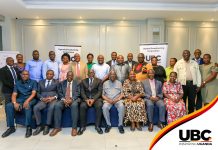
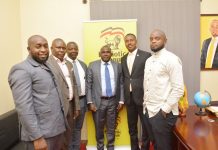
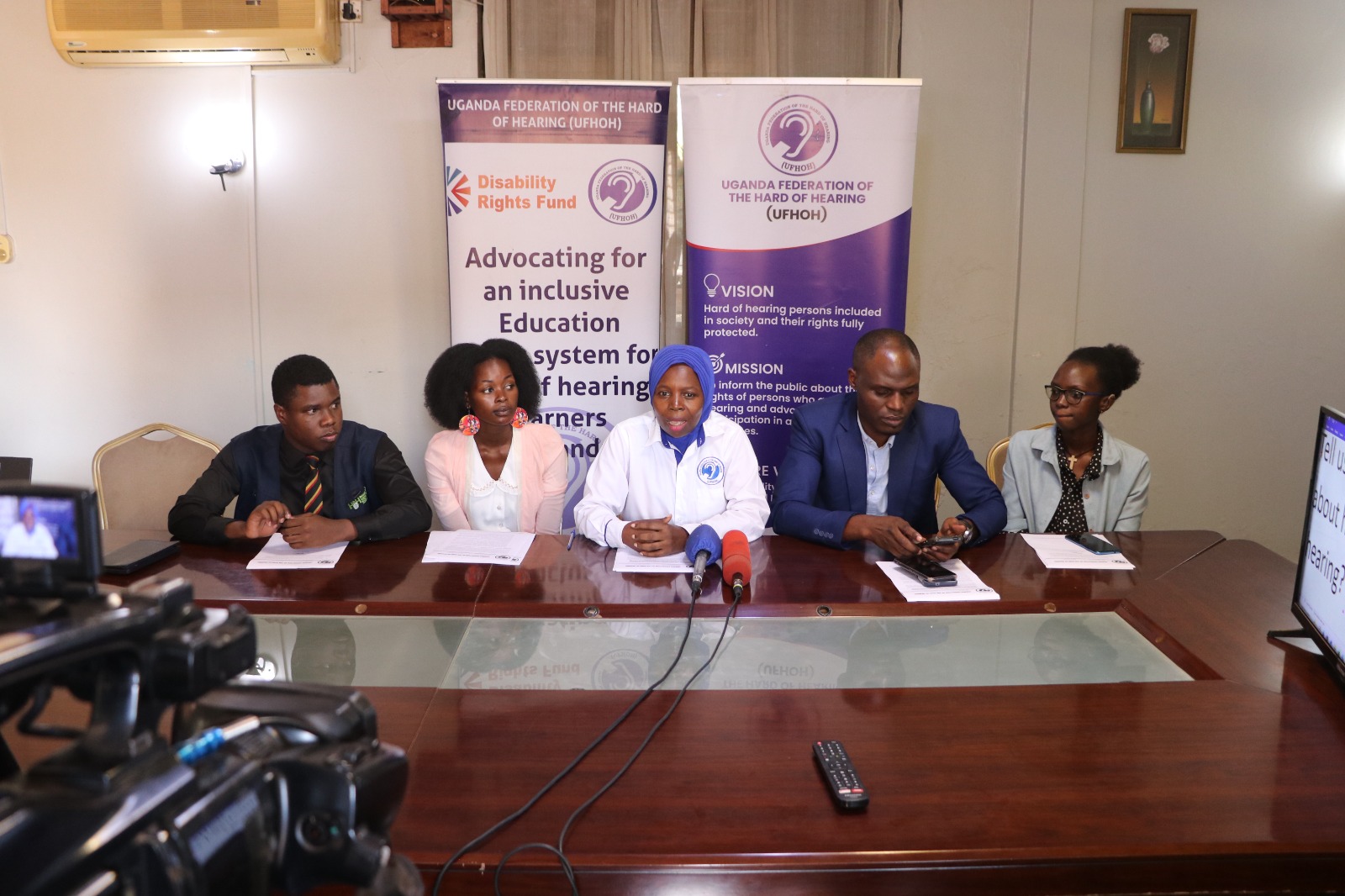
KAMPALA – The Uganda Federation of the Hard of Hearing (UFHOH) has called on the government to urgently include hard of hearing persons in implementing and monitoring Global Disability Summit commitments. Addressing a press conference at Sports View Hotel, Kireka on 15th September 2026, UFHOH leaders stressed that despite international pledges and statistical progress, tens of thousands of hard of hearing citizens remain excluded from mainstream socio-economic opportunities.
Nalubwama Mastulah, the Executive Director of UFHOH, highlighted recent statistical progress following the 2024 National Population and Housing Census conducted by the Uganda Bureau of Statistics (UBOS). For the first time, UBOS provided disaggregated disability data showing that 5.5 million Ugandans aged two and above live with a disability, including 273,167 individuals specifically identified as hard of hearing. However, Mastulah pointed out that the census failed to capture the vast unmet national demand for essential assistive technologies such as hearing aids, batteries, and hearing loops.
Mastulah expressed deep concern over unfulfilled international pledges following summits in London (2018), Berlin, and the 2025 Summit, which produced the Amman-Berlin Declaration setting a 15% target for disability-inclusive international development projects. She cited critical policy bottlenecks, including the failure to establish a statutory disability employment quota, non-equipping of regional orthopedic workshops, and delays in approving the National Inclusive Education Policy and a Reasonable Accommodation Policy.
Citing a 2022 employment study, Mastulah revealed that hard of hearing individuals are virtually absent from mainstream workplaces due to widespread societal misunderstanding. She explained that public institutions often conflate hard of hearing persons with deaf individuals who rely on sign language. Consequently, hard of hearing job applicants are incorrectly assigned sign language interpreters during interviews rather than live captioning or hearing loop systems, effectively denying them fair employment opportunities.
Elaborating on healthcare barriers, Moses Serwadda, the Program Manager at UFHOH, highlighted severe regional disparities in audiology services. Serwadda noted that audiologists remain concentrated in urban centers, leaving rural communities without medical support. Furthermore, he criticized supply chains like the National Medical Stores for prioritizing orthopedic devices while neglecting affordable hearing aids, batteries, and repair services.
Serwadda emphasized that effective rehabilitation extends far beyond issuing hearing devices, requiring sustained guidance and counseling to help individuals manage stress. “Rehabilitation itself is too big for the hard of hearing community because it goes beyond just giving a hearing aid,” Serwadda explained. “We need guidance and counseling services because stigma sometimes amounts to depression and leads to mental health issues”.
To address these barriers, UFHOH urged the government to fast-track outstanding summit commitments, recognize hard of hearing persons as an independent disability category, mandate inclusive teacher training, and install hearing loops in public spaces. UFHOH also called on media houses to spotlight these challenges and help “make the invisible visible”.