By Sarah Mawerere
Plastic is part of everyday lives, from packaging food and drinking water to making household items and essential products that are a necessity in homes, businesses and industries.
While plastics serve important purposes, their widespread use and poor disposal is posing a growing environmental threat.
Discarded bottles, polythene bags and other plastic waste find their way into water bodies, soil and wildlife conservation areas- putting wild animals and ecosystems at risk.
Chief Executive Officer and Founder-Conservation Through Public Health, Dr. Gladys Kalema Zikusoka, raised an alarm of the danger of plastics in wildlife.
“Plastics are indigestive and can harm wildlife silently without anyone noticing, and it eventually dies.” She noted.
A wildlife Veterinarian,-Dr. Kalema, said plastics can block the digestive system of an animal like elephant, affecting the intestines, thereby making it weak, and it will eventually die.
When the endangered species die silently, then the future generations reduce.
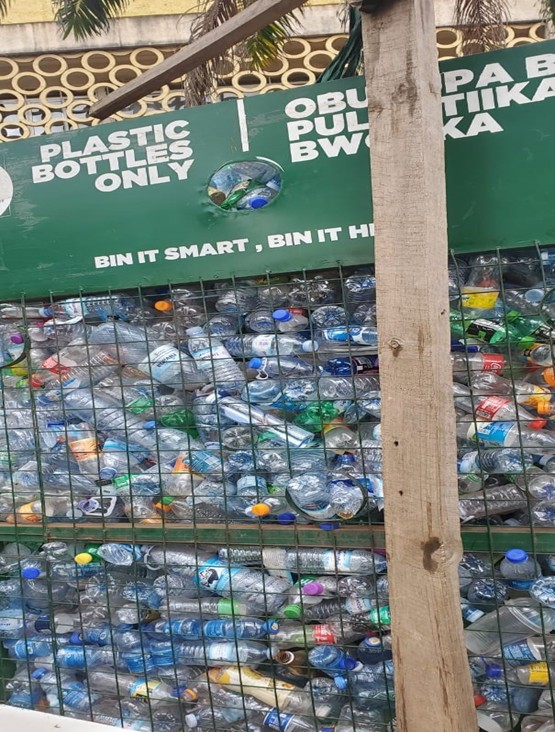
Amidst this growing challenge, young people and communities, join conservation efforts with the Uganda Wildlife Authority (UWA), collect discarded plastics and polythene bags.
Uganda’s WastePlus organization founded by young experts, transforms plastic waste into valuable resources through innovative recycling technology, sustainable manufacturing, and community-driven environmental solutions.
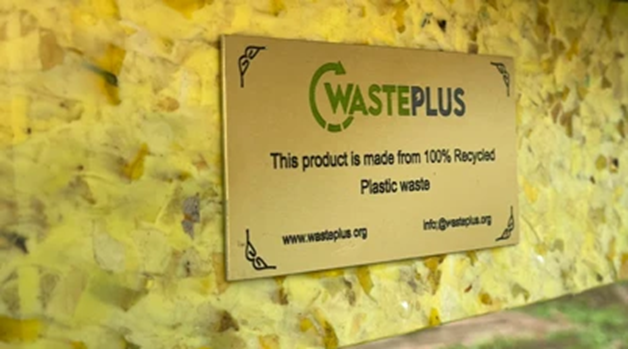
This initiative helps manage plastic litter and pollution, while turning discarded plastic waste into circular economy.
WastePlus Chief Executive Officer and Co-founder, Sinan Kitagenda, explained that the young people appreciate a healthy environment free of plastics. He added that turning the initiative into a circular economy.
“Young women and men do sorting by colour and type, then crush after washing into machinery, which gives products as wanted.” He said.
Kitagenda-a Conservation Biologist (Wasteplus), has turned circular economy into plastic waste management and sustainable innovation and environmental solutions.
“Together, we are building a cleaner, greener future for generations to come by protecting Flora and Fauna”. He alluded to the future.
“If plastics are eaten by wild animals, especially those that come near human settlements like the non-human primates, get entangled with a plastic or polythene and we lose the animal”. He noted.
He further said, some wastes contain food particles that could bring about earth warms. These may infect the wild animals and other wild species.
An alliance of local youth, backed up by the Uganda Wildlife Authority (UWA) and dedicated environmental civil society organizations, are stepping up, turning the simple act of plastic picking into a transformative community empowerment.
Women and youth clean and collect plastic waste and polythene materials (Kaveera) around Queen Elizabeth National Park and Murchison Falls National Park.
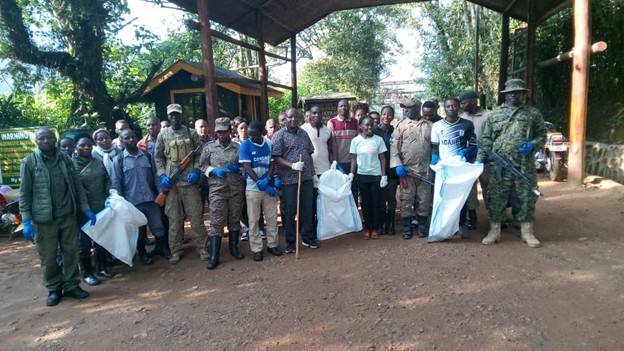
Commissioner Biodiversity Management -Uganda Wildlife Authority, John Makombo, noted that working with communities to clean up and around the conservation areas is a very good initiative in building partnerships and cordial relations.
He said, conservancies are being set up in the regions of Uganda for communities to love conservation, adding that this benefits them.
Community-led conservation on Market Days – a shared responsibility
Vendors and local volunteers sweep the grounds, picking up littered polythene bags (Buveera), plastic bottles and leftovers before the wind blows them into the park and not to be eaten by animals.
Lubwama, noted that the roadside markets accumulate plastic since many traders, buyers and community members flock the market.
“They come to pass time for their leisure and they buy drinks like water, soda and alcohol and biscuits, which are packed in polythene and sachets.” He said.
Animals like elephants, buffaloes, and antelopes that wander from Queen Elizabeth National Park, can accidentally swallow polythene bags while grazing. Plastics block digestive tracts, leading to starvation and death.
Lubwama however said, plastic litter is as a result of mind-set and lack of knowledge by the general public. “We find plastics like water bottles in the parks dumped by people”. He said.
Public notices stand in the park issuing a warning “DON’T LITTER”, butstill sections of the general public do not hid.
Public roads like the Mbarara-Kasese highway, Katunguru-Ishaka road, then to Kitagwenda from Rubirizi, pass through Queen Elizabeth National Park. Habits by travelers of throwing plastics and polythene wrappers through the windows of moving vehicles has not stopped.
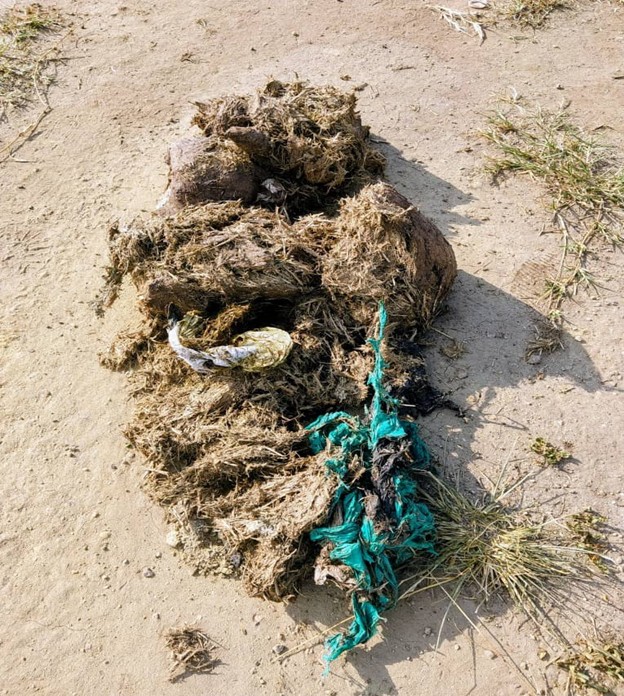
A community member in Rubirizi Emirian, said animals know; where people are, there is food.
“The regular market day make people clean up the garbage left behind after buying and selling, so we clean to keep the animals away from us”. She said.
The pain that wild animals and roaming domestic animals face
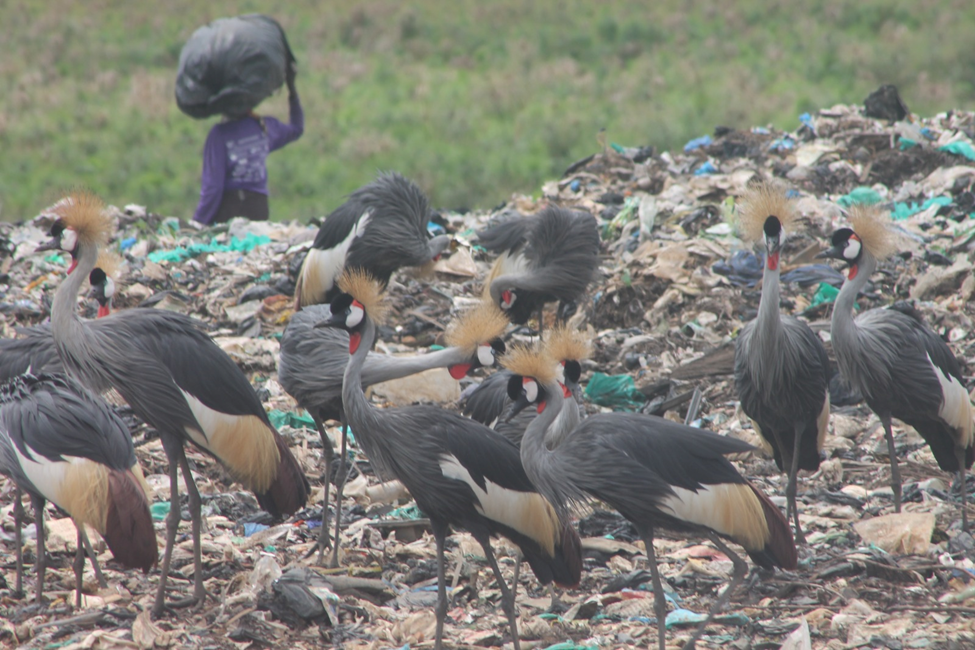
One of the most disturbing consequences of plastic pollution is wildlife’s ingestion of plastic. Animals often mistake plastic debris for food, leading to dire consequences.
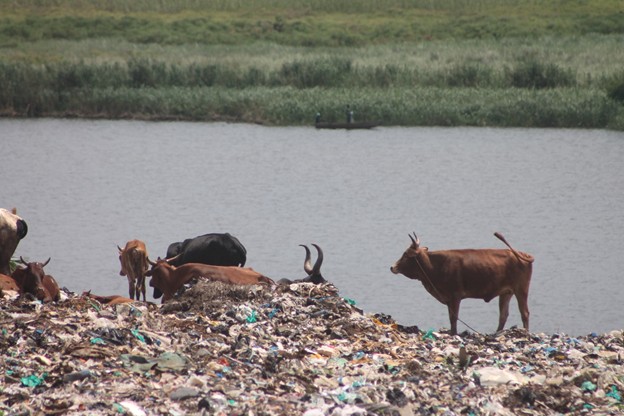
At the lake shores, discarded fishing nets, plastic ropes, and packaging materials are seen at shores of water bodies like Lake Victoria. These can be eaten by wild animals or they can become trapped in these materials, resulting in injuries and slow painful death.
Plastics and polythene picked is changed into another form for electric fence
Over 150 kilometers of electric fence has been put up in both Rubirizi and Kanungu Districts around Queen Elizabeth National Park with poles made out of plastics collected and transformed into poles.
According to Engineering Officer –Queen Elizabeth National Park who oversees the constructions of the work Engineer David Lubwama, these poles are plastic and cannot rot or eaten by termites like wood.
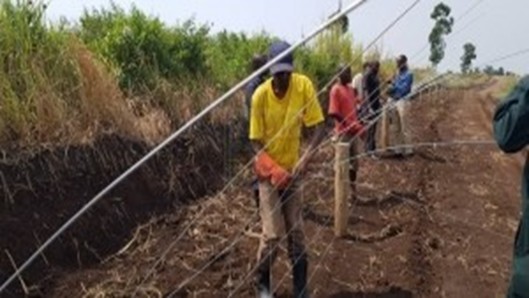
He further said, plastic poles cannot be stolen by the community members like they do to tree poles.
Plastic pollution not only directly harms animals but also contributes to habitat degradation. As plastic waste accumulates in ecosystems, it disrupts the natural balance and functioning of habitats.
The Conservation Impact
- Recycled poles resist rain, rot, and termites completely.
- Park authorities use the posts for long-lasting perimeter and electric fencing lines.
- Every kilometer of fencing locks away hundreds of kilograms of harmful plastic waste.
Leave No Trace
Although plastics may be difficult to eliminate completely, controlling their use, improving waste management and promoting recycling are essential to protecting the environment.
The Uganda Wildlife Authority enforces strict anti-littering and “leave no trace” policies inside national parks or conservation area, restricting single-use items where possible.
Uganda Wildlife Education Center (UWEC)-Entebbe, emphasizes: “No Leaving Anything in the Conservation area apart from Your Foot Print”.
This translates to no littering, being cautious of plastics litter and other wastes. This is aimed at keeping the wildlife center clean and protected against the pollutants.
More to the caution issued, observance of how and where to drop plastics or waste is observed
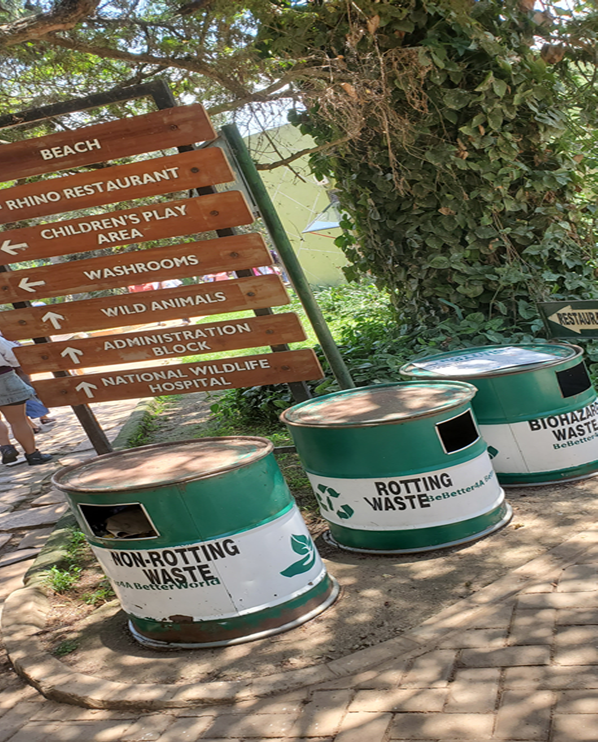
Uganda generates around 600 metric tons of plastic waste every day, with only about 40% properly collected or recycled according to reports from the National Environment Management Authority (note: source data via National Strategy For Management Of Plastic Pollution).
The 2009 Finance Act’s Section 2 forbids the importation, local manufacture, sale, or use of plastic bags or bags made of polymers of ethene and polyethene.” The proposed ban was directed at stopping polythene papers (Kaveera) and alcohol sachets, which have turned out to be most items used therefore creating a lot of waste countrywide.
In general, the daily usage volume of plastic waste in Uganda is estimated to be 600 metric tons according to Uganda Biodiversity Fund. This comes from the increasing industrial production of plastics in form of soft drinks and snacks which feeds the traders operating shops both retail and wholesale.
General Cleanups in countries aim to tackle plastic waste
Uganda started on a journey of carrying out countrywide cleaning done every last Saturday of month. It aims to clean up and make the community change on the way waste is disposed, A gradual process through, requiring more sensitization and commitment.
Cleanup Kenya’s journey began in 2015, with a mission to champion sustainable public sanitation, tackling littering and illegal dumping, through advocacy and later started conducting community cleanups.
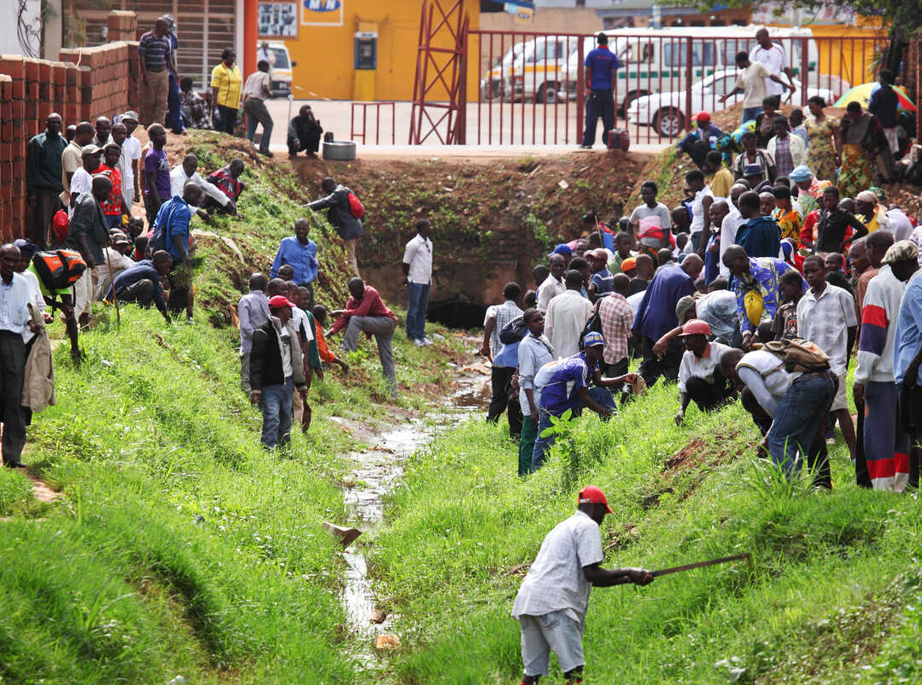
In Rwanda, “Umuganda,” a community cleanup held on the last Saturday of every month. It is one reason that Rwanda is renowned in Africa for its cleanliness.
It is enforced by security (police) to monitor the streets and can stop Rwandans who are not participating and make them clean up on the spot. One reason for the country’s cleanliness is a decade-long ban on plastic bags.
Global talks about plastic
Plastic is a global issue, while the harms of plastics are global, production is dominated by a small number of countries and companies.
Just seven countries were responsible for 66% of global plastics production in 2024, based on data from Eunomia, an environmental consultancy. China, the US and Saudi Arabia are the largest producers, together producing more than half of the world’s plastics.
Saudi Arabia, Iran and Russia, key opponents of measures to limit plastic production, rank third, tenth and eleventh in the world, respectively.
The Global Plastics Treaty
In March 2022, at the resumed fifth session of the UN Environment Assembly (UNEA-5.2), a historic resolution was adopted to develop an international legally binding instrument on plastic pollution, including in the marine environment.
The treaty takes a comprehensive, addresses plastic from design and production to disposal and waste management.
This resumed session follows the deadlock in Busan, where oil-producing countries successfully stalled progress, leaving ambitious nations frustrated but determined to push forward.
The High Ambition Coalition, an alliance of countries led by Norway and Rwanda advocating for strong regulations, has demonstrated that there is broad support for a comprehensive and binding treaty.
Every piece of plastic or polythene ever made, still exists in some form today or tomorrow. If unnecessary plastics are discouraged, responsible disposal enforced, local initiatives supported and corporate transparency taken up, together, can stop the huge plastic waste.