By Tumwine Byaruhanga
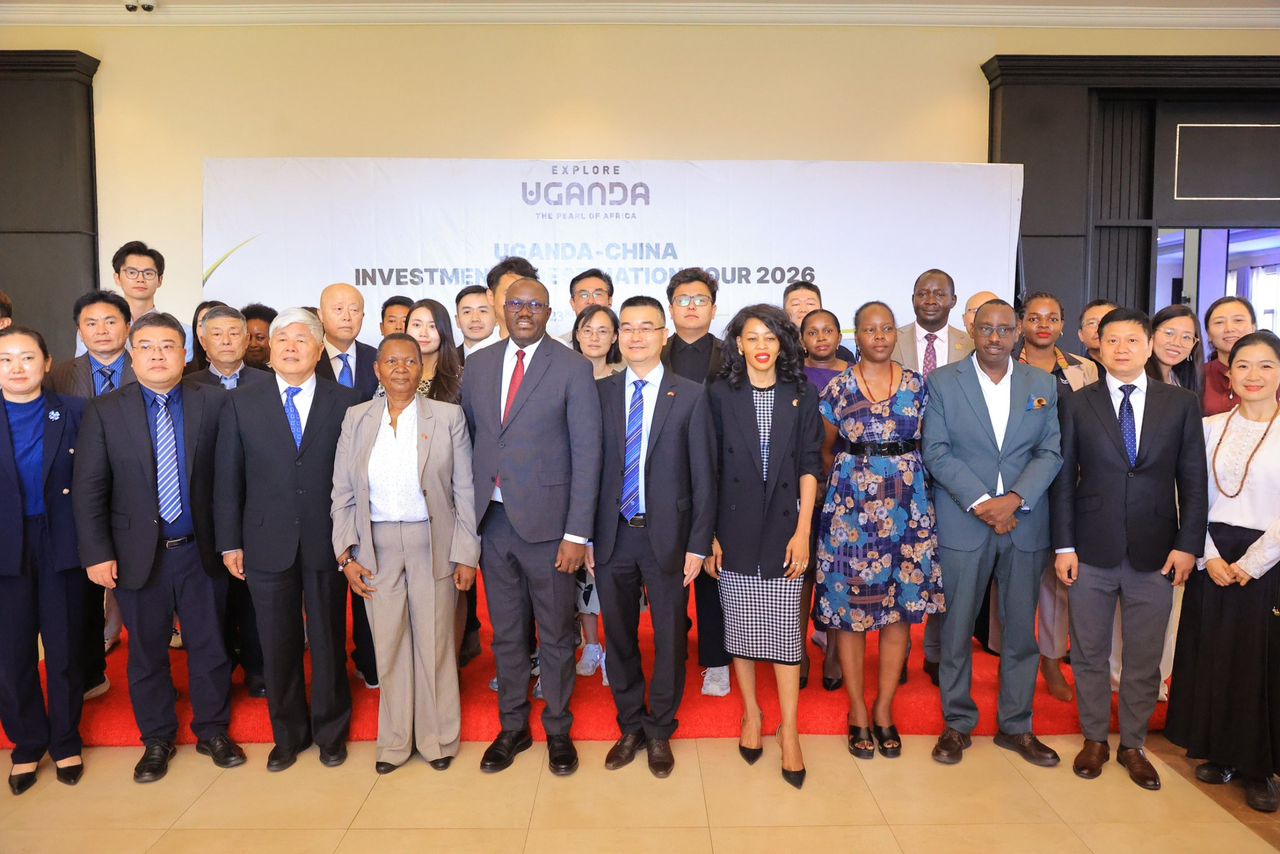
Uganda has stepped up its investment pitch and export drive at the Uganda–China Coffee, Investment and Destination Conference in Kampala, bringing together government officials and a Chinese business delegation.
At the meeting held at Mestil Hotel on April 21, the Permanent Secretary in the Ministry of Foreign Affairs, Vincent Bagiire Waiswa, said the forum builds on growing Uganda–China ties and provides a platform to advance trade and investment.
He said the visiting delegation’s country tour offered a first-hand view of Uganda’s potential, from its coffee heritage to tourism sites such as the Source of the Nile, and urged investors to move beyond trade into long-term partnerships, with government support assured.

Bagiire highlighted opportunities in the coffee sector, pointing to Uganda’s capacity to supply high-quality varieties across a liberalised value chain covering production, processing, branding and export.
The Charge d’Affaires ad interim at the Chinese Embassy, Fan Xuecheng, said bilateral relations continue to grow on the back of trade, investment and tourism.
He cited Uganda’s political stability, economic growth of over 6 percent and a young workforce as factors attracting Chinese investors.

Fan said trade between Uganda and China reached 2.1 billion dollars in 2025, a 43.5 percent increase, with Uganda’s exports to China rising, led by coffee and supported by products such as fish and chilli.
He noted that China’s zero-tariff policy is opening the market further to Ugandan goods, while ongoing work on sanitary and phytosanitary protocols is expected to expand exports to include fruits, grains and oilseeds.
Fan said China is ready to import more Ugandan products and deepen cooperation, and commended the Buy Uganda, Build Uganda initiative.

In a separate presentation, the Deputy Director for Investment Promotion at the Uganda Investment Authority, Rita Nabateregga Mugula, outlined Uganda’s investment environment, highlighting an open regime that allows full foreign ownership and free repatriation of profits.
She said the economy, valued at about 61 billion dollars, continues to register steady growth with low inflation, pointing to resilience and investor confidence.
Mugula said Uganda’s market extends beyond its borders through the East African Community, the Common Market for Eastern and Southern Africa and the African Continental Free Trade Area, giving access to more than 600 million consumers.
She highlighted priority sectors including agro-industrialisation, tourism, manufacturing, oil and gas, infrastructure, and science and technology, alongside bankable projects in value addition, mineral development, industrial production and real estate, where demand remains high due to a housing deficit of over two million units.
She also cited tax incentives, serviced industrial parks and the One Stop Centre as part of measures to support investors.
Uganda’s natural assets, including the River Nile and Lake Victoria, were also presented as part of the country’s tourism and investment appeal.