By Wadulo Arnold Mark
July was abundant this year. It was the first time I was going to fly on an African airline since I was a child. I had last boarded Kenya’s KQ regional aircraft almost 21 years ago while visiting Mombasa with Mum. But today I will write about my recent experience flying with Ethiopian Airlines, connecting flights from Entebbe to Kuala Lumpur through Addis Ababa and Singapore.
Ethiopian Airlines recently marked 80 years of commercial flying, with a reputation for being the dominant, most successful, and most reliable carrier in Africa. This fact is so telling of its reputation, especially when you realize that global commercial aviation is only 112 years old. It is why I’m compelled to share this story.
“Passengers: Juliana, Terry,…and Wadulo Arnold Mark! This is a last boarding call for Ethiopian Airlines Flight 335 at Gate 2!”
The young female voice on the loudspeaker cut through the terminal.
The announcement hit me like a physical shock. I couldn’t believe I had missed the first call. “Was there even one?” I wondered, frantically ripping my charger from the power station and sprinting toward the announced gate.
When I arrived, the gate agents checking boarding passes before the airbridge greeted us- the late ones, with a telling silence. I had to ask if an initial call had actually been made, especially since the airline had previously announced that the flight would be delayed.
I was passed, so I quickly threw on my backpack, strapping it securely over my left shoulder, and marched through the airbridge, walking through that massive tunnel with muchexcitement.
Despite my excitement, I was really looking forward to a power nap on the flight, or maybe catching a movie. But when I found my seat, reality hit me. The economy cabin of Ethiopian’s Boeing 737 MAX 8 doesn’t come with seatback screens. Instead, small overhead monitors dropped down just to show the safety video and flight map.
If I wanted a dedicated personal TV screen, I would have needed a ticket in Business Class. Gladly, I had the seat with a view of the carrier’s right wing near the emergency exit row.
The 2-hour, 10-minute flight to Addis was smooth, but I slept through most of it, only having a quick cappuccino and cornbread to excite the guts.
I must say the air crew on this flight are quite quick and agile in getting their way around the cabin—no wonder the duty-free shopping announcements become less of a priority.
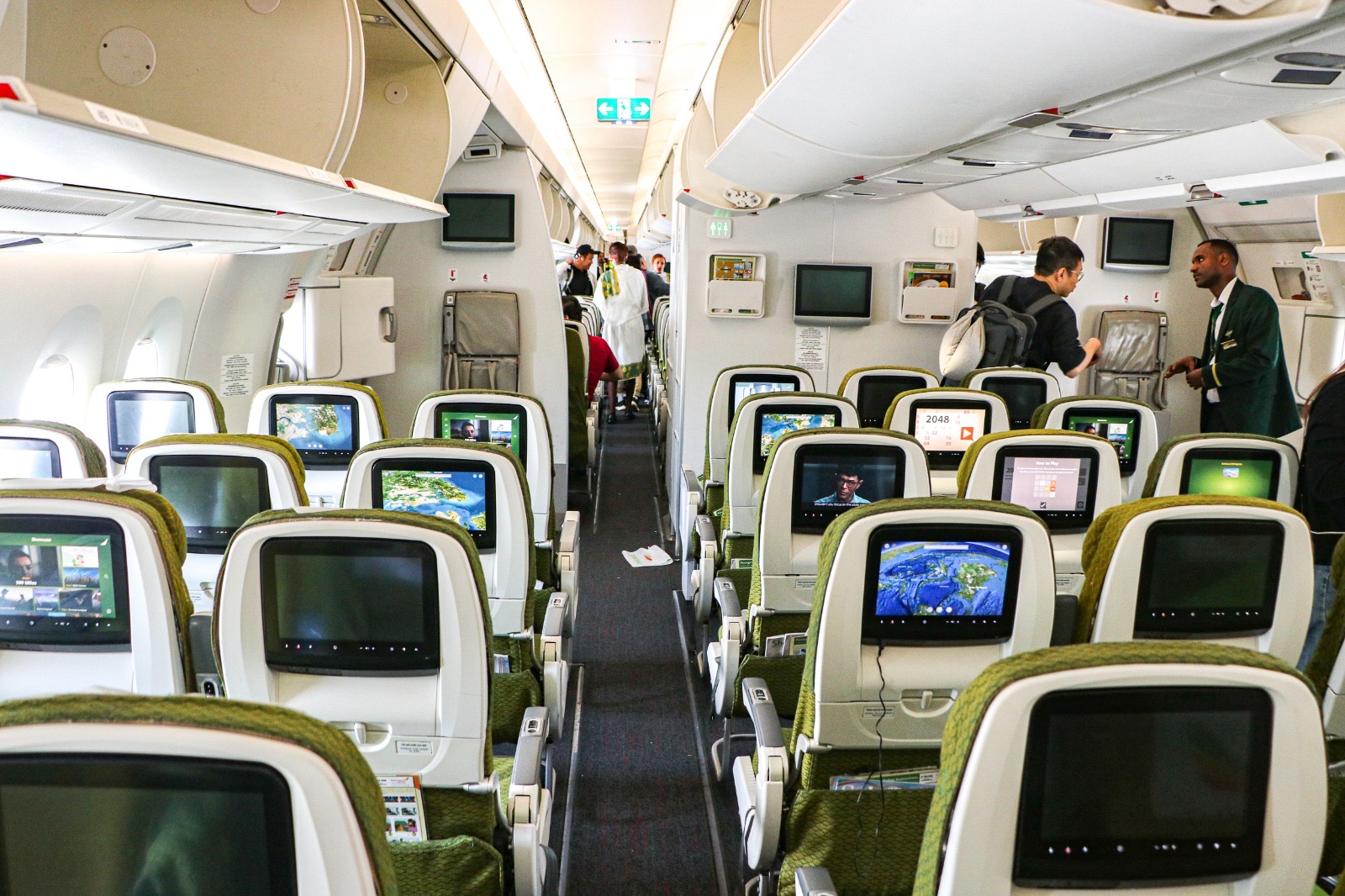
Amid the crew that wore green fitting suits was one you couldn’t miss, a slightly older Senior Hostess wearing a white Shemmauniform. It seems flight attendants who wear this traditional white uniform hold a specific, elevated role during the flight. These are the glimpses I caught during my half-asleep flight to Addis.
Screech!!!! We touched down on Bole International Airport successfully. The Ethiopian bird was landing home in Addis Ababa.
Just like my experience back at Entebbe, there was a familiar lag; we sat idly on the bus for almost 12 minutes before moving. We sat in a fleet of about three buses parked with engines running to ferry the massive crowd of passengers to the aircraft.I whispered to immediate neighbor, “Maybe the cargo is taking a while.” He nodded in agreement. Thankfully the engines finallyroared, and we were wheeling across the tarmac toward a much larger Ethiopian Airlines Airbus A350.
On board, the individual seatback screens stretching all the way from Business Class to Economy are hard to ignore. I scored another window seat, which allowed me to alternate between a good movie, the rolling clouds outside and a quiet nap.
“Chicken or beef sir?” a flight attendant’s voice broke through my daydream nap tenderly.
“Chicken,” I replied.
With agility and a smile, she picked and handed over a tray featuring a wholesome traditional chicken stew they call Doro Wat, alongside a warm corn bun, dessert, and a pack of fresh fruit. The perfectly balanced taste of the orange juice was unforgettable.
I had earlier drifted off to sleep while watching a beautifully shot historical film. Waking up to this breakfast was the perfect excuse to finish watching the masterpiece that had lulled me to sleep an hour earlier.
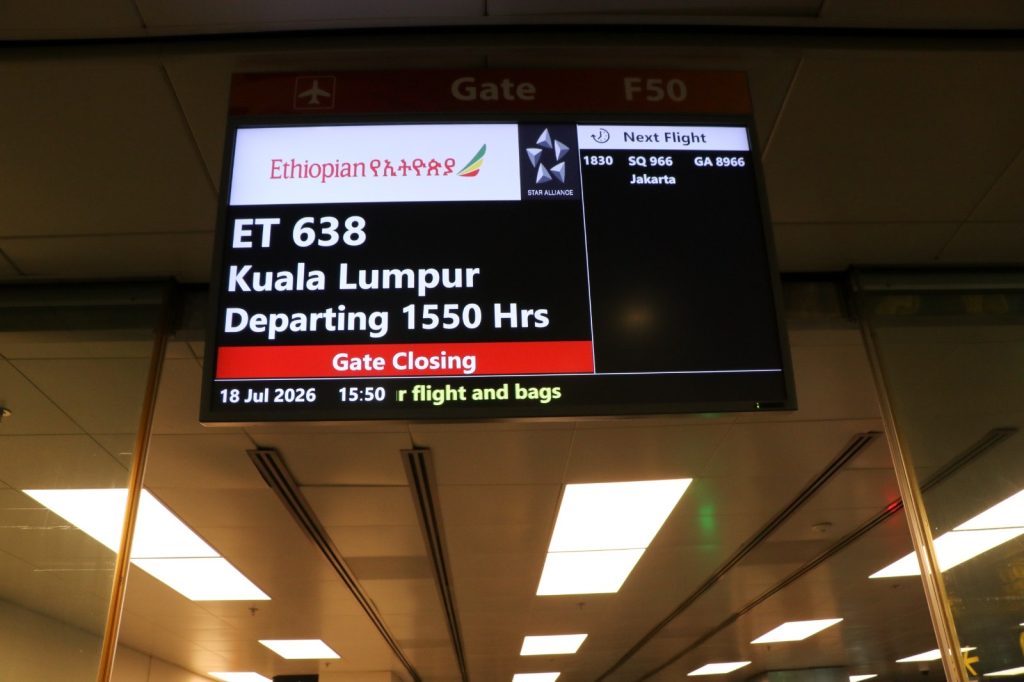
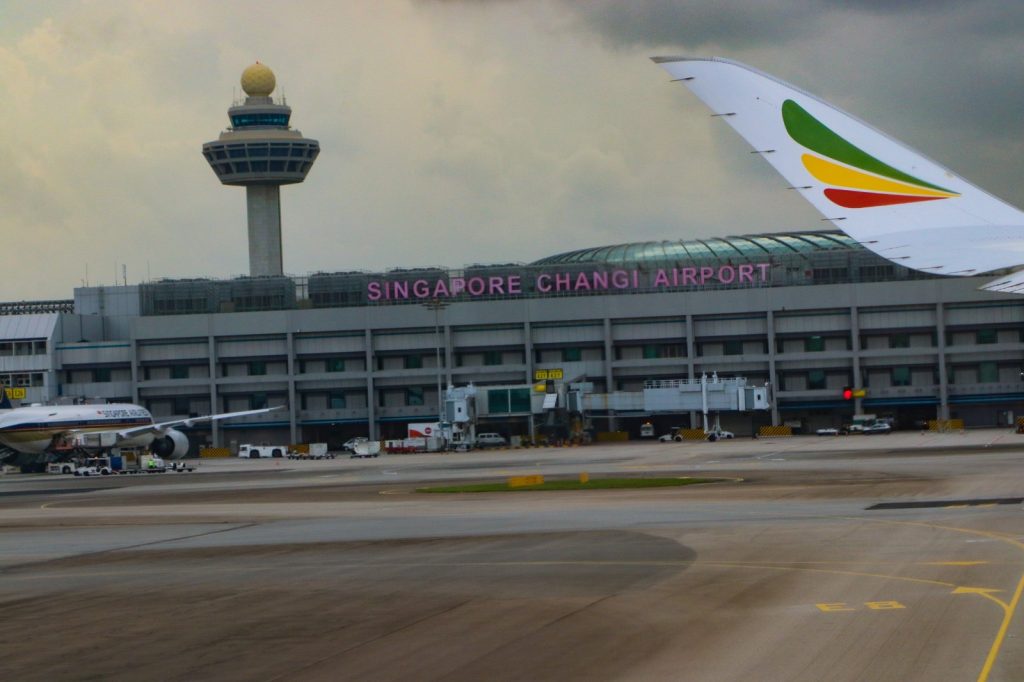
This 12-hour route had a slight twist though, a scheduled stop at Singapore Changi Airport before continuing to Malaysia. After buckling up for touchdown, we were asked to deplane for a quick transit security check.
In no time, we were back in the carrier with a few more passengers from Singapore to Malaysia.
Flying from Singapore’s Changi Airport to Kuala Lumpur feels much like flying from Kigali to Entebbe—a short regional hop of about an hour in the air (around two hours gate-to-gate). The main difference is that the flight heads northwest rather than northeast.
Ethiopian airlines somehow made a 15 hour + journey feel like 10. Time truly flew by, and the carrier confidently exceeded my expectations. Watching their crew handle the long-haul route with such professionalism made me realize that their 80 years of commercial flying experience really shows.
This is the first part of a memoir documenting the author’s experiences during a visit to Malaysia under the Malaysia Foreign Media Visitors Programme (MFMVP) 2026.