By Wadulo Arnold Mark & Moureen Babirye
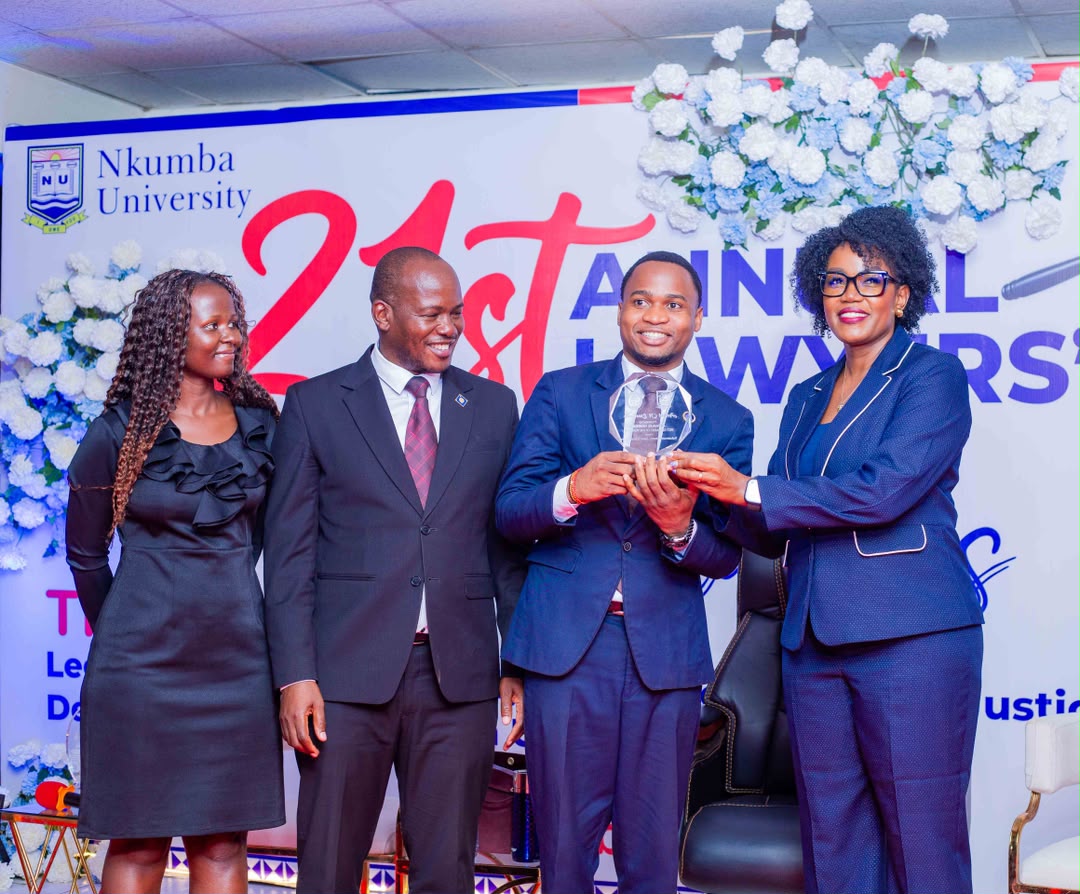
In a region hosting over 5.7 million displaced people—with Uganda alone sheltering two million—one might assume the definitive legal textbook on East African refugee law would be authored by a silver-haired professor laden with academic titles. Instead, it was written by a 24-year-old lawyer armed with a laptop, a year and a half of field research, and an acute irritation at having no reference book for his university course unit.
“When we were studying this course unit, we found out that there was a gap in the legal frameworks,” recalls Mwanje Gideon, a lawyer, legal commentator, and former president of the law student association in Uganda. “There was no book of reference that academicians or students could refer to when dealing with this course. It was a gap that I intended to bridge”.
That determination birthed Refugee Law in East Africa, a textbook launched on November 1. To write it, Mwanje didn’t merely sit in air-conditioned libraries; he toured refugee camps across Uganda, consulted scholars, and collaborated with classmates. The response was immediate and overwhelming: Ugandan university libraries snapped up bulk copies, non-governmental organizations bought in volume, and, in a poignant twist, refugees in Libya even purchased copies to donate to universities across Uganda and Rwanda.
Yet, the most frequent reaction wasn’t just praise for its legal rigor—it was pure disbelief at the author’s age.
“Everyone was shocked that this book has not been written by ‘Doctor’ this or ‘Doctor’ that, but by just a 24-year-old, imagine!” Mwanje chuckles. “It shows that young people can still write things that change the world… It’s not that only the old, the professors, the aged are the people who have the cup of wisdom”.
Beyond inspiring young scholars, Mwanje’s work takes a sharp, critical aim at the region’s outdated legal architecture. He points out a glaring absurdity: East Africa’s primary regional framework remains the 1969 OAU Convention on Refugee Problems—an instrument drafted over half a century ago.
“The crisis that was happening in 1969 is not a modern or current situation,” Mwanje observes, advocating for a fresh regional treaty. “We need to start blending and appreciating that people have moved on, crises have changed, and we need laws that model the people they govern”.
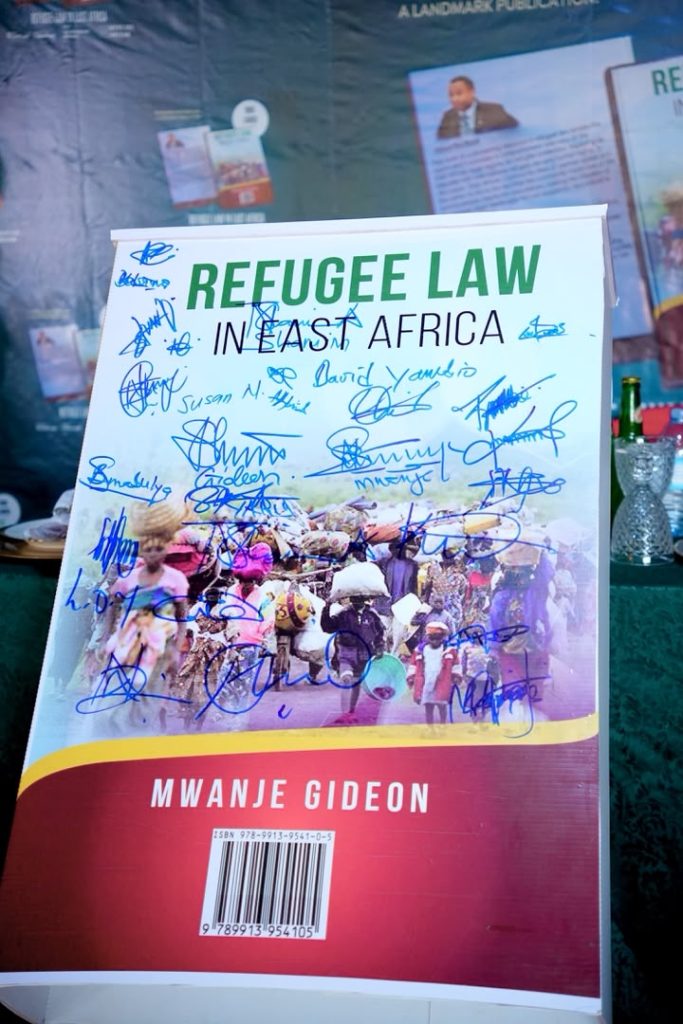
The book also dissects the stark contrast in policy across East Africa. While Uganda maintains a celebrated open-door policy, neighboring states like Kenya and Tanzania have historically leaned toward more conservative, camp-based restrictions. Mwanje argues for harmonizing these divergent approaches around Uganda’s model, insisting that refugees should be integrated into society rather than reflexively treated as national security risks.
Mwanje’s advocacy has quickly propelled him onto international stages, from West Africa to the African Union headquarters in Addis Ababa. There, he delivered a fiery message to African leaders regarding “externalization”—the practice where European powers offer financial deals to African governments to retain asylum seekers far from European borders.
“My advice to the chairman of the African Union was to deny these externalization policies and deals from European powers,” Mwanje says firmly. “These deals that European countries extend to African countries just in exchange for money and support… violate the non-refoulementprinciple as known to the international community”. Referencing Chapter 6 of his book, he emphasizes that under international law, no refugee should be forcibly returned or dumped into conditions of fear and persecution.
Feedback from readers and scholars is already pushing Mwanje to think bigger for his next edition. Suggestions include expanding the book’s scope from East Africa to a full Pan-African text, integrating East African Community (EAC) law to support regional political federation, and deepening practical litigation guides.
For a young lawyer whose work has already earned him speaking invitations at the AU and an upcoming conference at a UK university in July, the journey is just beginning.
“Most refugees don’t know their rights,” Mwanje reflects. “People need to pay attention… I believe the best is yet to come out of this field that most people have neglected to write about, yet it is so current in our societies”.