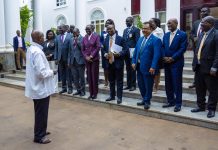
The Minister for the Presidency, Hon. Babirye Milly Babalanda, has tasked Resident District Commissioners (RDCs), Resident City Commissioners (RCCs) and security officials in the Greater Masaka sub-region to strengthen field monitoring, institutional coordination and accountability to ensure Government programmes deliver tangible results to citizens.
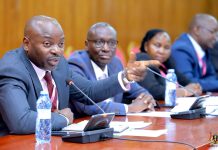
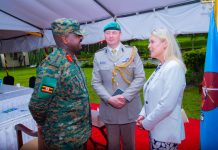
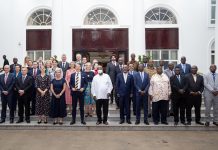
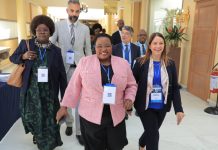
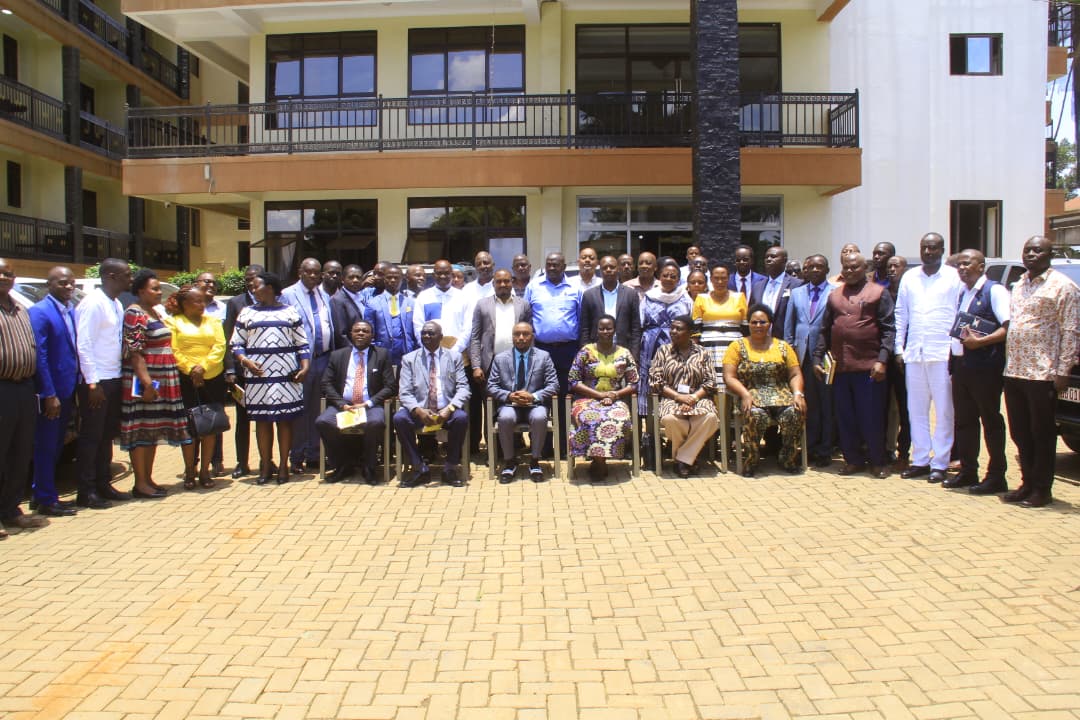
Hon. Babalanda made the call in her closing remarks delivered by the Minister of State for Economic Monitoring, Hon. Sandra Santa Alum, on Wednesday 30th September, 2026 at Solo Hites Hotel in Masaka City, during a three-day capacity-building workshop for RDCs/RCCs, their deputies and assistants, Regional Internal Security Officers (RISOs) and District Internal Security Officers (DISOs) in Greater Masaka sub-region.
The workshop, held from September 28 to 30, 2026 aimed at enhancing the participants’ capacity to monitor Government programmes, strengthen coordination and improve service delivery.
Hon. Babalanda said the success of the workshop would ultimately be measured by what participants do after returning to their respective areas of responsibility.
“The knowledge acquired, the challenges identified and the commitments made here must translate into better monitoring, stronger coordination, improved accountability, more responsive Government institutions and ultimately, better services and livelihoods for the people of Greater Masaka,” she said.
She urged RDCs and security officers to focus on identifying problems early, mobilising responsible institutions and following up interventions until tangible results are achieved.
According to Hon. Babalanda, the government has established programmes, institutions and systems to serve citizens, but the responsibility of district and city leadership is to ensure that these systems function effectively.
She challenged the officials to establish why Government programmes or projects may be underperforming, investigate gaps where resources have been provided without visible results, and document successful interventions for replication elsewhere.
Focus on Greater Masaka challenges:
Hon. Babalanda noted that Greater Masaka plays an important role in Uganda’s social and economic development, citing its agricultural potential, commercial activity, growing urban centres and entrepreneurial population.
However, she said the sub-region continues to face challenges including household poverty, youth unemployment and underemployment, land-related conflicts, urban pressures, environmental concerns, service-delivery gaps and accountability concerns in the management of public resources.
She called for stronger collaboration among RDCs, local governments, security agencies, technical officers, community leaders and other stakeholders.
“These challenges cannot be addressed by one institution acting alone,” she said, urging officials to ensure that responsibilities are clearly assigned and institutions do not operate in isolation.
She further said citizens should experience the presence of Government through functioning services, responsive institutions and timely intervention, rather than merely through Government buildings and official vehicles.
Hon. Babalanda also emphasised the relationship between peace, security and development, saying security should not be viewed only through the lens of crime, policing and enforcement.
She warned that poverty, unemployment, unresolved land disputes, social exclusion, misinformation, weak service delivery and unattended grievances can create vulnerabilities that may eventually develop into security challenges.
She therefore urged RDC structures and security agencies to strengthen preventive mechanisms, listen to communities, assess information carefully and ensure legitimate grievances are referred to institutions mandated to address them.
At the same time, she directed security officials to ensure that interventions remain professional, lawful and evidence-based, with respect for the rights and dignity of citizens.
“The objective of Government security structures is to protect the population, maintain public order and create an environment in which citizens can live and work peacefully,” she said.
RDCs urged to work with elected leaders:
Hon. Babalanda further called for constructive working relationships between RDCs, elected leaders, technical officers and security agencies, noting that each institution has distinct legal and constitutional responsibilities.
She cautioned against institutional rivalry, saying differences in mandates should not become sources of unnecessary confrontation.
“The people of Uganda are not interested in institutional rivalry. They want the Government to work,” she said.
She urged RDCs to maintain their institutional integrity while cooperating professionally with elected leaders and using appropriate channels to address disagreements and governance concerns.
She also tasked them with closely monitoring the performance of local governments without taking over the functions of technical officers.
Where officers fail to perform, she said, RDCs should ensure that such cases are documented and addressed through the appropriate structures.
As she closed the workshop, Hon. Babalanda said she expects to see improved reporting, greater field presence, stronger institutional coordination, closer monitoring of Government programmes and public assets, enhanced early warning and conflict prevention, and measurable improvements in the performance of Government institutions across Greater Masaka.
She urged the officials to return to their stations with “renewed determination, professional discipline and a clear commitment to results.”
The Head of the RDC Secretariat, Maj. Martha Asiimwe, said the three-day workshop had provided the participants with an opportunity to reflect on their mandate and strengthen their capacity to effectively execute their responsibilities.
“Over the past three days, we have dedicated time to reflect on our mandate. We have strengthened our understanding of the critical role we play in service delivery and in ensuring the effective implementation of Government programmes and projects,” Maj. Asiimwe said.
She said the training had further equipped the participants with the knowledge and skills required to advance the Government’s socio-economic transformation agenda.
“As foot soldiers of the NRM Government, we have been empowered through this workshop to support the vision and intentions of the Commander-in-Chief and President of the Republic of Uganda in driving socio-economic transformation,” she said.
The Masaka City Resident City Commissioner (RCC), Hajji Ahamada Washaki, assured the Minister that Greater Masaka remains relatively calm and secure, while also highlighting developments in the region.
“Greater Masaka is relatively calm and secure. We had a period of drought, but the situation is improving because the rains have started coming. In the recent general elections, Greater Masaka also performed well,” Hajji Washaki said.