By Joseph Mary Buwule
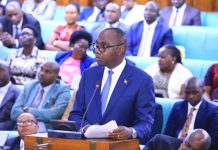
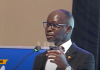
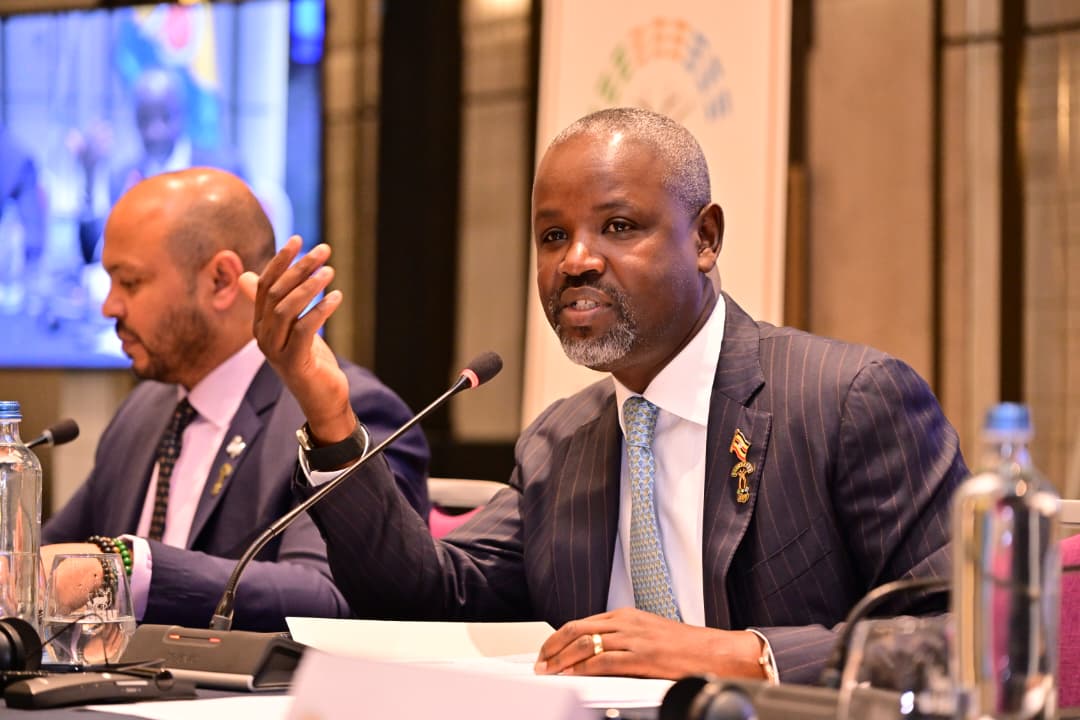
Uganda’s Deputy Speaker of Parliament and President of the Organisation of African, Caribbean and Pacific States (OACPS) Parliamentary Assembly, Thomas Tayebwa, has called on legislators from the three regions to unite and negotiate with the European Union as a single bloc to strengthen their influence on international trade, investment, climate finance and development.
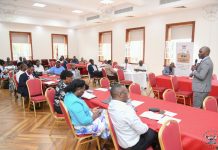
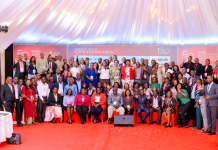
Tayebwa made the call on Sunday in Brussels, Belgium, while chairing the 65th session of the OACPS Parliamentary Assembly, his first session since assuming the presidency.
The meeting brought together 46 heads of delegation and more than 220 participants from the 79-member organisation to agree on common priorities ahead of the OACPS-EU Joint Parliamentary Assembly scheduled for November 9–13 in Brussels.
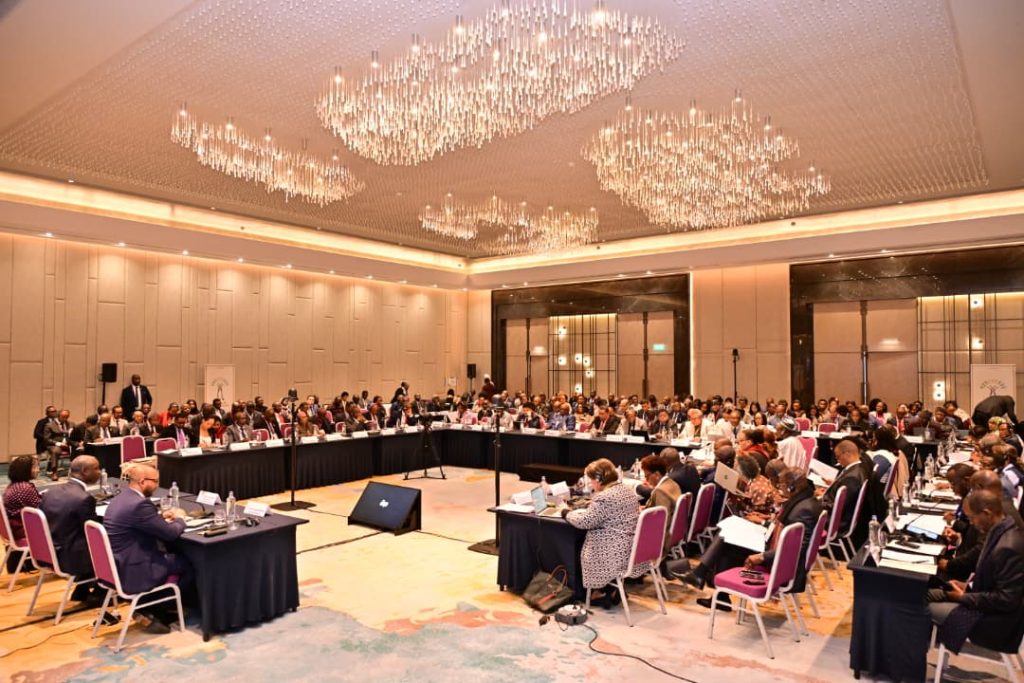
Tayebwa said the collective strength of Africa, the Caribbean and the Pacific, which represent nearly two billion people, should be reflected in their engagements with international partners.
He urged legislators to set aside individual national interests during negotiations and champion positions that advance the interests of the three regions.
“When we are engaging with our European countries, our partners, you will not hear them talking about their country. They will be talking about Europe as a region. We want in our engagement tomorrow with our European counterparts to be guided by unity,” Tayebwa told delegates.
“When you are speaking, you are speaking for Africa, you are speaking for the Caribbean, you are speaking for the Pacific, not just for your country. That’s the only way we shall be able to match these people,” he added.
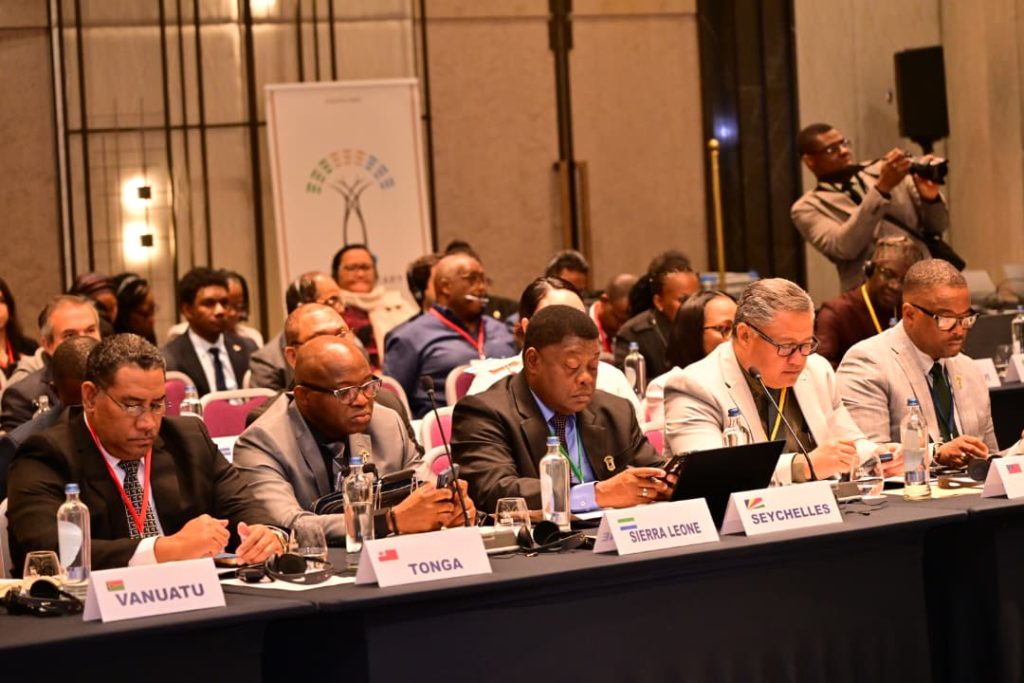
The OACPS brings together 79 member states across Africa, the Caribbean and the Pacific to promote cooperation and advance their common interests.
Tayebwa said the organisation must strengthen its institutional structures and redefine its role in international parliamentary diplomacy, particularly under the Samoa Agreement, which provides the framework for cooperation between the OACPS and the European Union.
The agreement covers key areas of mutual interest, including trade, investment, sustainable development, climate change, governance, peace and security.
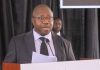
OACPS Secretary-General Moussa Batraki urged member states to turn the organisation’s diversity into a source of strength, saying solidarity was essential in advancing shared priorities.
“Our collective force resides precisely in this ability to combine the diversity of our priorities and the solidarity that unites our 79 Member States,” Batraki said.
He noted that the emerging parliamentary architecture under the Samoa Agreement requires the organisation to preserve its unity while allowing individual regions to articulate their specific interests.
Batraki cited the Caribbean-EU parliamentary meeting held in Antigua and Barbuda in February 2026, the Africa-EU parliamentary meeting in Eswatini in May 2026, and preparations for the Pacific region’s parliamentary engagement in Brussels.
Slow ratification of Samoa Agreement
Tayebwa also expressed concern over the slow ratification of the Samoa Agreement, warning that delays could undermine its full implementation and limit development opportunities for member states.
He informed delegates that the latest update presented to the OACPS Bureau indicated that only 15 OACPS member states and 15 EU member states had ratified the agreement, despite it approaching its second anniversary.
The OACPS Parliamentary Assembly President said he had written to speakers of parliaments across the organisation, urging them to support efforts to accelerate national ratification processes.
“I encourage colleagues to follow up with their national authorities so that ratification moves fast and we move from provision to full implementation,” he said.
Tayebwa challenged legislators to use their oversight role to demand accountability from their respective governments.
“When you go back, I will request you to ask your ministers in charge of foreign affairs, on the floor of parliament, to give you an update on how far they have gone with ratification. Because it unlocks a lot of opportunities for your country,” he added.
Batraki said although the Samoa Agreement had been provisionally applied since January 2024, full implementation requires ratification by at least 53 OACPS member states.
“We are still far from this goal. Your role in accompanying national procedures will therefore be decisive,” he told the Assembly.
Tayebwa pushes for financial independence
The Assembly also considered proposals to strengthen its financial sustainability and reduce dependence on external support, particularly from the European Union.
Tayebwa argued that the organisation’s institutional reforms and decisions would have limited impact without reliable and predictable funding to support its programmes and parliamentary activities.
“Reliable financing is essential if we are to organise our own activities and follow through on our priorities. We cannot continue to depend on external support only to determine when and how we meet,” he said.
His proposal for a common parliamentary fund received backing from the regional groups.
Pacific Regional Parliamentary Group President Renata Tamapua supported the establishment of the fund, saying contributions should take into account the financial capacities of member states, geographical constraints and high travel costs.
She emphasised the importance of predictable financing to enable the Assembly to sustain its activities between formal sessions.
The Caribbean group, represented by its president and Jamaica’s Deputy Speaker, Heroy Anthony Clarke, also endorsed the proposal, advocating for contributions from the three regions based on their respective capacities, backed by proper financial accountability.
The African group similarly supported independent parliamentary financing and proposed an initial fund of approximately one million euros beginning in 2027.
Climate finance, debt and digital development
Climate finance, debt sustainability, trade, investment and digital learning are also expected to feature prominently in the engagement between OACPS and European Union legislators.
Tayebwa said these issues have direct implications for national governments and parliaments, particularly in protecting vulnerable communities while pursuing sustainable development.
He called for approaches to climate financing that do not impose additional debt burdens on developing economies already facing financial constraints.
“Our discussions on climate finance and digital learning also concern choices we face in our own parliaments. That is how to protect communities without depending on debt, and how to strengthen the skills and institutions needed to serve them,” he said.
Batraki called for stronger parliamentary participation in international discussions on climate change, debt, trade, investment and food security.
He said legislators have a responsibility to ensure that international commitments translate into practical national policies that respond to citizens’ needs.
“Our parliaments must be able to contribute more to these international debates, promote common positions and ensure that commitments are translated into rational national policies,” he said.
The OACPS-EU Joint Parliamentary Assembly, scheduled for November 9–13 in Brussels, will provide a platform for legislators from both sides to discuss these priorities, strengthen cooperation and shape the future of relations between the two blocs.