Uganda’s coffee exporters have strengthened their foothold in the Asian market after securing new trade partnerships and branding collaborations at the China International Import Expo (CIIE) 2025) in Shanghai.
The Ugandan delegation, supported by the Ministry of Agriculture, Animal Industry and Fisheries (MAAIF), included exporters such as Meg Rai Coffee, Kwezi Coffee, Inspire Africa and Elgon Coffee.
They showcased Uganda’s coffee and other agricultural products, attracting both retail and commercial buyers.
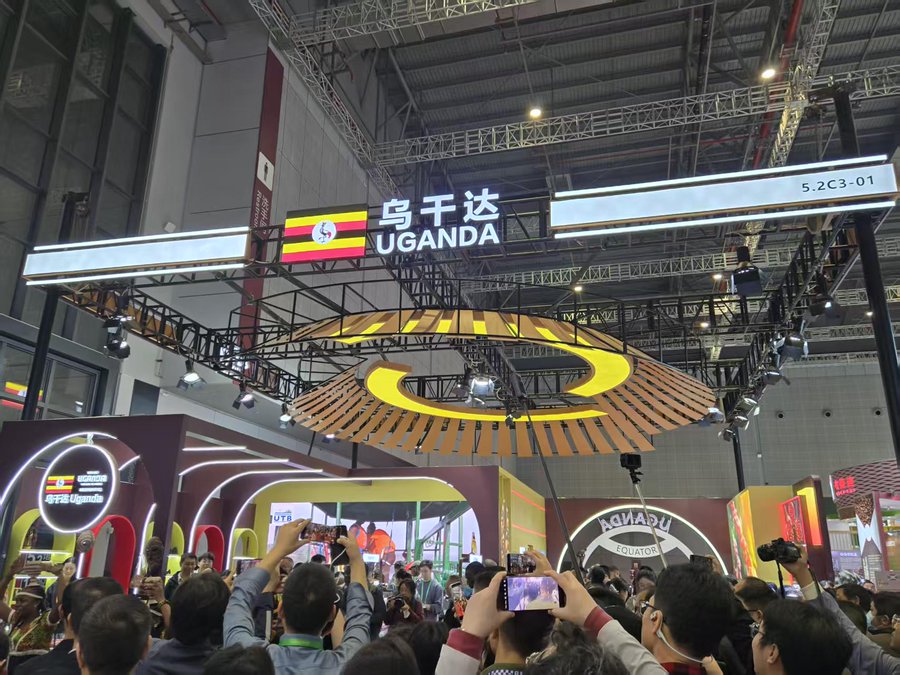
At the national pavilion, Uganda promoted its coffee under the agriculture–tourism–prosperity theme, displaying both green and roasted coffee alongside dried fruits and nuts. Delegates held business meetings with Chinese buyers, roasters, traders and logistics companies interested in sourcing Ugandan coffee and agri-products.
MAAIF also signed a partnership agreement with Cotti Coffee, a fast-growing Chinese coffee retail brand operating more than 7,500 coffee shops in 28 countries. The collaboration will promote Uganda’s coffee across Cotti Coffee’s outlets and strengthen cooperation in training, research, and technology transfer to support farmers and processors.
The agreement establishes a framework for market access, brand promotion and value addition, linking Ugandan producers directly with the Chinese market. It also covers farmer training, agro-processing, post-harvest handling and investment in modern facilities to preserve quality.
According to MAAIF, Uganda’s coffee exports to China have grown by 190 percent this year, reflecting strong demand for Ugandan beans across Asia.
Uganda’s presence at CIIE 2025 was among the most active in the agriculture section, featuring live demonstrations, tastings and business engagements with distributors and café owners. The delegation also participated in seminars on agricultural innovation, sustainable trade and digital commerce.
The Ministry noted that these efforts link directly with Uganda’s goal of expanding exports under the Nurturing Agriculture and Enriching Tourism pillars, using coffee and agro-products as key drivers of economic growth and international exchange.