Uganda’s Missions must increasingly be judged by their contribution to Uganda’s economic diplomacy agenda rather than by protocol activity alone.
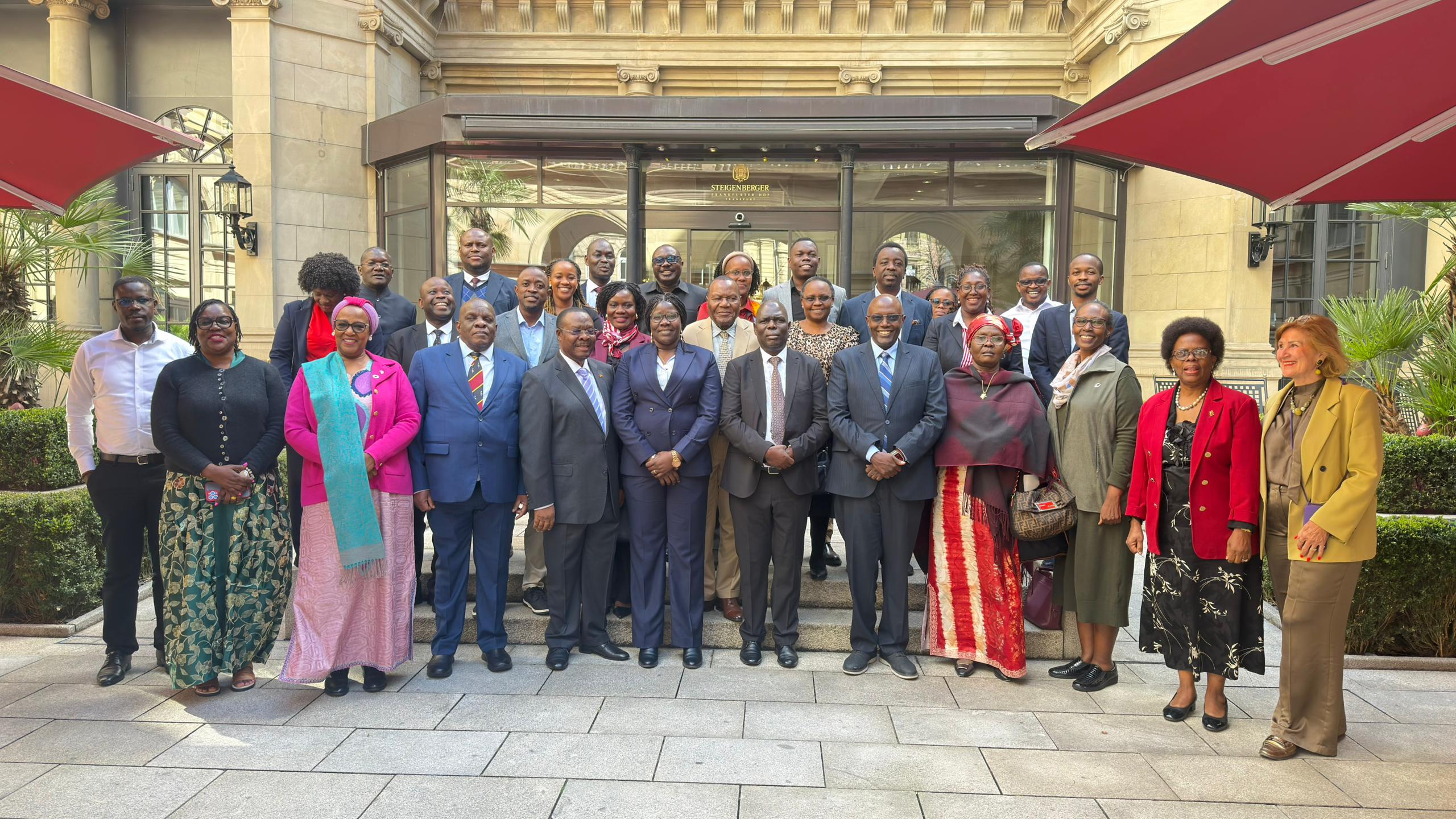
This was revealed by PS MoFA Bagiire Vincent Waiswa last week at a mid-term review retreat for Uganda’s 13 Missions in Europe and the Americas which took place from March 29th to April 3rd in Frankfurt, Germany in conjunction with the Ministry of Finance, Planning, and Economic Development under the theme “Unlocking Africa’s trade and investment potential from the interventions of ECD”
PS Bagiire recalled that in FY 2025/26, 34 Uganda Missions abroad received funding amounting to UGX 113.25 billion and that Missions’ future funding would, going forward be tagged to measurable results. “Uganda is at a moment where diplomacy must be felt not only in communiqués and meetings, but in factories opened, tourists received, exports increased, and jobs created back home,” he stressed in his opening remarks.
Uganda’s Economic and Commercial Diplomacy (ECD) Strategy for FY 2025/26–FY 2029/30 which was launched in August 2025 in Gulu, repositions diplomatic Missions as frontline delivery platforms for exports, foreign direct investment (FDI), tourism, science, technology and innovation (STI) partnerships, and climate finance. The strategy aligns diplomatic engagement with Uganda Vision 2040, the Fourth National Development Plan (NDP IV), and the Tenfold Growth Strategy, and seeks to make Uganda’s foreign service more commercially focused, results-oriented, and accountable for measurable economic outcomes. The strategy has seen Uganda’s Embassies implement an aggressive program in support of the ten-fold growth strategy using the ATMS as priority areas.
“The work of our Missions in Europe and the Americas can no longer be seen as routine representation alone,” said a tough speaking Bagiire to the assembled Heads of Mission, “You are posted in some of the world’s most influential markets, financial centres, innovation hubs, and tourism source countries. That means your work matters directly to the farmer in Kabale, the coffee exporter in Masaka, the tour operator in Kasese, the miner in Karamoja, and the young innovator in Kampala,” adding that “Our task is to turn diplomatic presence into economic value. We must become more intentional, more commercially alert, and more practical in how we pursue the four pillars of Economic and Commercial Diplomacy (ECD)”.
The retreat discussions were grounded in important economic indicators that illustrated both progress and urgency. Uganda attracted US$3.5 billion in FDI in 2025, while tourism generated US$1.5 billion from 1.64 million international visitors. The Heads of Mission, in turn shared challenges they are experiencing and discussed possible solutions.
The Retreat generated several key outputs among which included a comprehensive ECD reporting framework, with standardized templates, indicators, and timelines to improve transparency and accountability; a progress report capturing achievements, challenges, recommendations, and mitigation strategies to inform future programming, alongside an impact assessment report quantifying ECD’s contribution to Uganda’s economic growth, tourism, trade, and investment; a capacity-building plan comprising training modules and technical assistance to enhance the skills and knowledge of diplomats in ECD; and validated, harmonised ECD work plans for FY 2026/27 aligned to national priorities and budget allocations, thereby providing a clear and coordinated roadmap for implementation.
Head of the Economic and Commercial Diplomacy hub, Amb Richard Kabonero said that the Mid-term review served to ensure that all Embassies that received funds are operating in line with agreed strategic plans. In addition, the Missions were tasked to identify key opportunities for attracting FDI, Trade and Tourism and how best to position Uganda to harness the opportunities. “The Missions were informed that Economic and Commercial Diplomacy (ECD) funding for FY 2026/27 will be based on a strategic and evidence-based assessment, which includes a tiered decision matrix evaluating each mission against weighted criteria, including previous ECD performance, capacity to deliver, political and strategic factors, economic potential, and diaspora engagement,” he explained, adding that “This approach has ensured that funding supports Missions that drive maximum economic returns and advance the country’s interests.”