
By Sharon Kyomugisha
Uganda’s labour market remains heavily informal, with nearly nine in ten workers operating outside the formal economy, according to findings from the 2025 Labour Market Survey released by the Uganda Bureau of Statistics (UBOS).
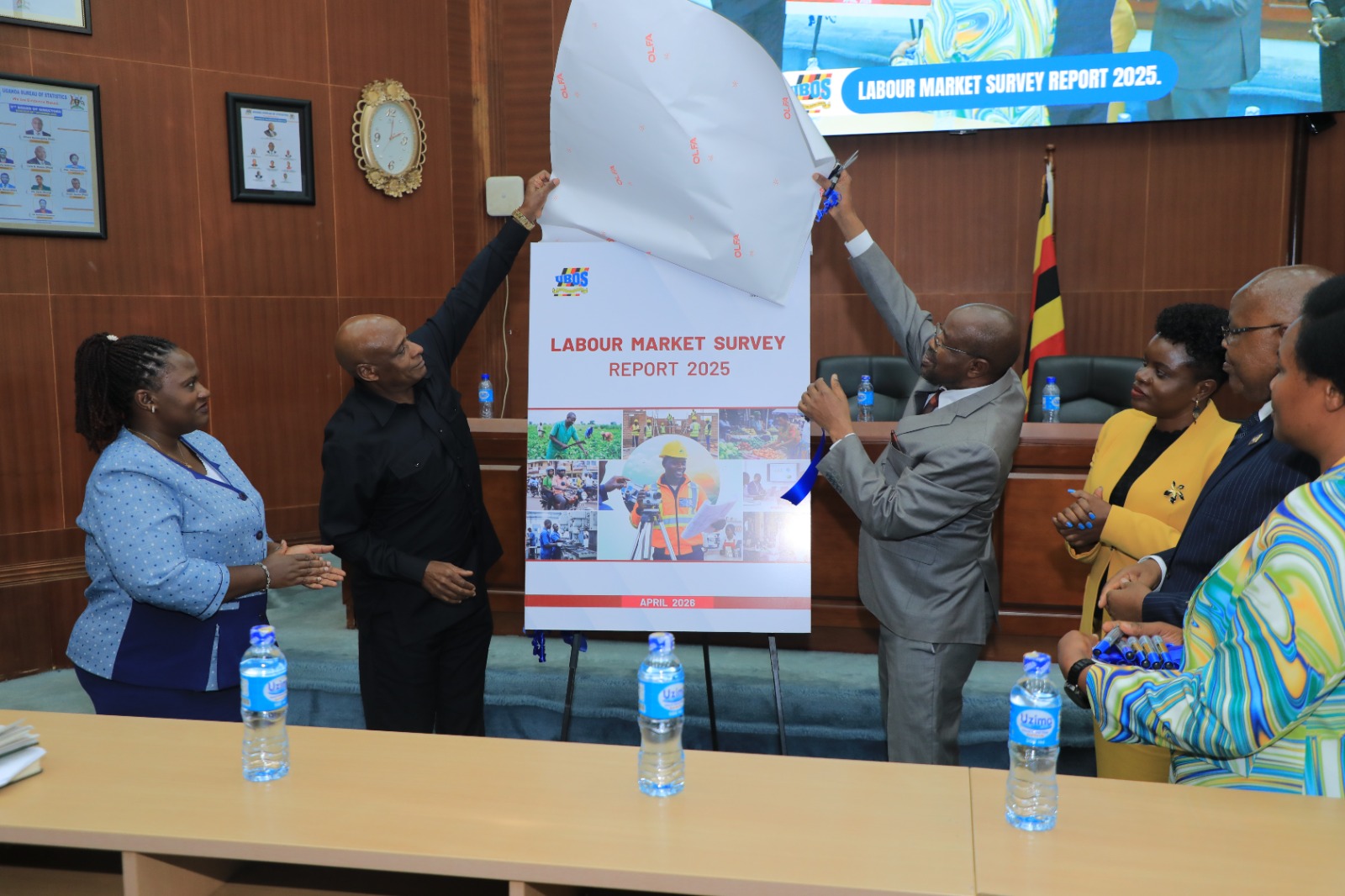
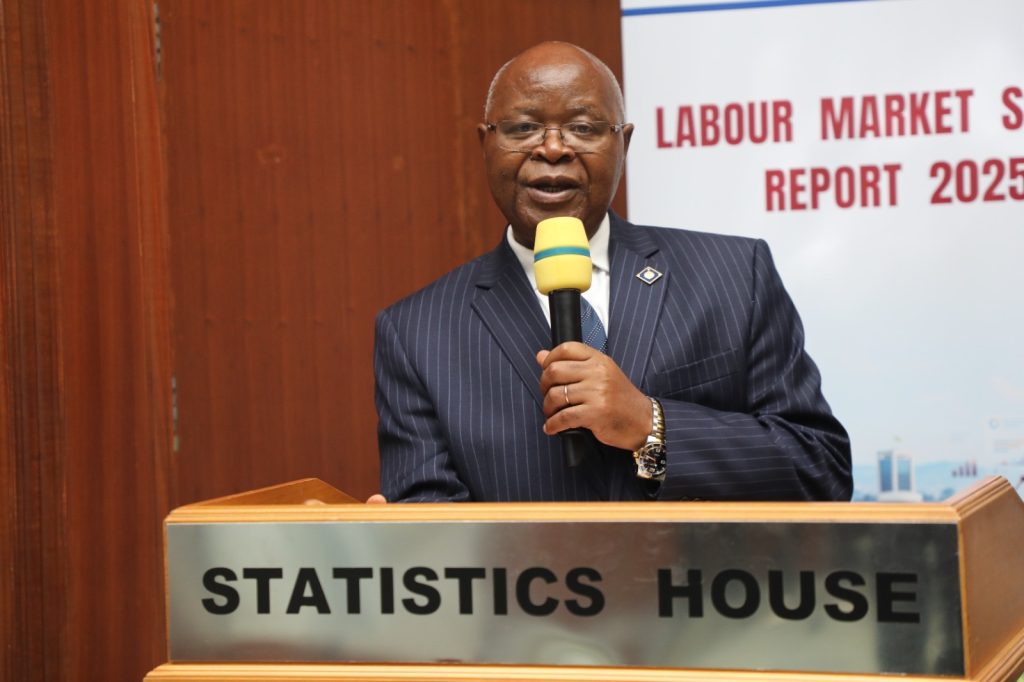
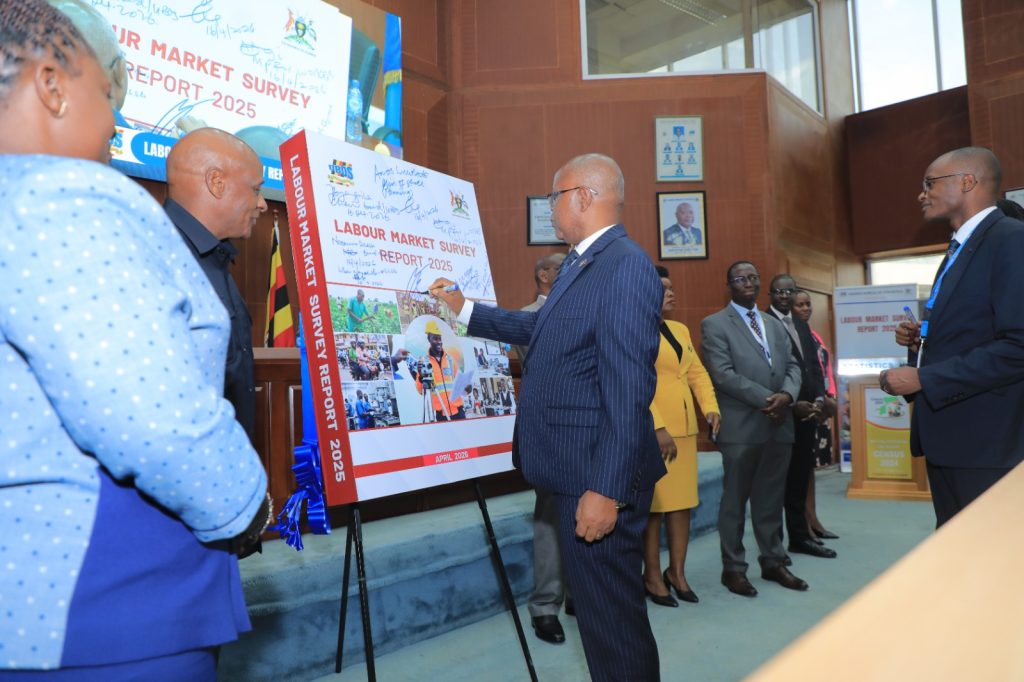
The report, presented at Statistics House in Kampala, gives a broad picture of employment trends, job creation, and workforce participation across the country, drawing from both households and businesses.
Informal sector takes the largest share
The survey shows that informal employment stands at 89.2% nationally, underscoring the continued dominance of small, unregistered businesses and self-employment.
Even when agriculture is excluded, informal work still accounts for 87.6% of employment, pointing to limited absorption into structured jobs.
In real numbers, informal establishments employ about 7.35 million people, compared to 2.37 million in the formal sector.
Most of these jobs are concentrated in the services sector, which employs the largest share of workers in both formal and informal businesses.
Unemployment remains steady but higher among women and youth
The national unemployment rate is estimated at 12.2%, with urban areas slightly higher than rural settings.
Women continue to face greater challenges in accessing jobs, with unemployment at 13.9%, compared to 10.8% for men.
Among young people aged 15 to 24, the situation is more pronounced, with unemployment rising to 17.9%, reflecting ongoing pressure on the job market as more youth enter the workforce.
Regional disparities are also visible. Some sub-regions such as Bukedi and Teso record significantly higher unemployment levels compared to areas like Bunyoro and West Nile.
Employment still tied to agriculture and low-productivity work
The findings show that employment in Uganda is still largely tied to subsistence agriculture and low-income activities.
A significant portion of the population is engaged in own-use production and subsistence work, rather than formal wage employment. This reflects limited industrial growth and slow expansion of high-value sectors.
The employment-to-population ratio stands at 44.7%, an indication of how much of the working-age population is actively engaged in productive work.
Job creation visible, but gaps remain
On the demand side, the survey shows 305,364 job vacancies in informal businesses and 155,240 vacancies in formal establishments.
Many of these openings are linked to business expansion and staff turnover. However, a number remain unfilled due to skills gaps and limited financial capacity among employers.
At the same time, businesses reported 46,217 jobs lost, largely due to layoffs and restructuring.
Industrial parks and formal jobs still limited
Formal employment remains concentrated outside industrial parks, which account for only a small share of total jobs.
Among industrial hubs, Namanve Industrial Park leads in employment numbers, followed by facilities in Mbale and Kapeeka, though overall contribution to national employment remains modest.
Survey coverage and approach
The Labour Market Survey covered over 9,800 households and thousands of businesses across all regions, using data drawn from the 2024 National Population and Housing Census.
UBOS says the survey will now be conducted more frequently, with plans to release labour market data on a quarterly basis to improve tracking of employment trends.
The bigger picture
The report paints a familiar picture: a young and growing workforce, limited formal job creation, and an economy still anchored in informal activity.
While there are signs of job openings and business expansion, the gap between labour supply and quality employment remains wide, particularly for young people entering the job market.