By Samuel Ssenono
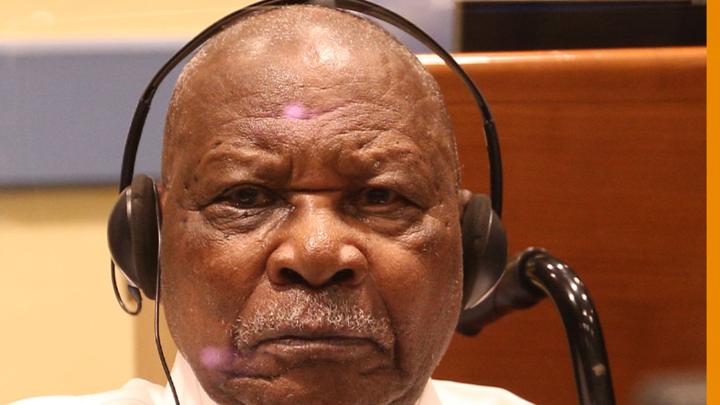
Félicien Kabuga, the Rwandan businessman accused of financing and fueling the 1994 Genocide against the Tutsi, has died in detention in The Hague, Netherlands, while awaiting provisional release to a country willing to receive him.
Kabuga died on Friday while hospitalized under the custody of the United Nations Detention Unit. Authorities in the Netherlands immediately opened the mandatory investigations required under Dutch law, while the President of the International Residual Mechanism for Criminal Tribunals ordered a full inquiry into the circumstances surrounding his death.
Judge Graciela Gatti Santana appointed Judge Alphons Orie to lead the inquiry.
Kabuga, who was born in 1935 in Rwanda’s former Byumba prefecture, had for decades remained one of the world’s most wanted fugitives over allegations linked to the genocide that claimed the lives of more than 800,000 people in 1994.
He was accused of genocide, conspiracy to commit genocide, direct and public incitement to genocide, as well as crimes against humanity including persecution, extermination and murder.
Prosecutors alleged that Kabuga used his wealth, business influence and political connections to finance and coordinate extremist networks responsible for mass killings during the genocide.
At the center of the accusations was his role in Radio Télévision Libre des Mille Collines (RTLM), the infamous radio station accused of broadcasting anti-Tutsi propaganda and encouraging killings during the genocide.
According to prosecutors, RTLM broadcasts identified targets, spread ethnic hatred and openly incited violence across Rwanda. Kabuga was accused of being one of the key financiers and political backers of the station.
He was also accused of supporting Interahamwe militias through funding, logistics, weapons procurement and transport networks used during the killings.
An international arrest warrant against Kabuga was issued in April 2013. After years on the run, he was arrested near Paris in May 2020 during a joint operation involving French authorities and prosecutors from the UN Mechanism.
He was transferred to The Hague in October 2020, where he appeared before the court and pleaded not guilty to all charges.
His trial formally opened in September 2022, but proceedings were repeatedly overshadowed by concerns over his deteriorating health and mental condition.
Court-appointed medical experts later concluded that Kabuga suffered from severe cognitive impairment and was unfit to stand trial. In August 2023, an appeals chamber upheld findings that he was unlikely to regain fitness, forcing judges to indefinitely stay the proceedings.
At the time of his death, Kabuga remained under detention as legal teams continued efforts to secure a country that would accept him on provisional release.
The International Residual Mechanism for Criminal Tribunals, which handled the case, was established by the United Nations Security Council in 2010 to complete the remaining work of the tribunals created for Rwanda and the former Yugoslavia after the closure of the original courts.