By Dorcus Kimono
Uganda has stepped up surveillance and preparedness measures following a confirmed Ebola outbreak in eastern Democratic Republic of Congo, with health authorities warning of a possible cross-border spread.
The Africa Centres for Disease Control and Prevention says it is closely monitoring the outbreak in Ituri Province and has activated regional coordination involving Uganda, South Sudan and the DRC.
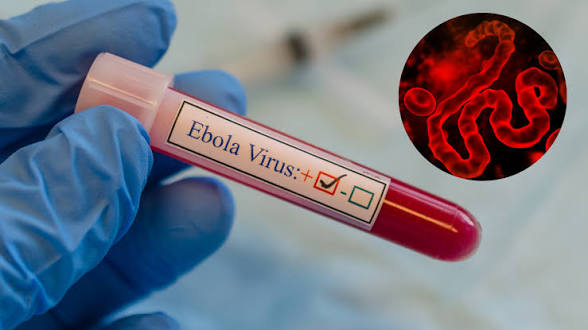
Preliminary laboratory results from the Institut National de Recherche Biomédicale in Kinshasa detected Ebola virus in 13 out of 20 samples tested. Officials say further sequencing is underway to establish the exact strain, although early findings point to a non-Zaire ebolavirus.
So far, about 246 suspected cases and 65 deaths have been reported, mainly in Mongwalu and Rwampara health zones. Four of the deaths have been laboratory confirmed.
Authorities say the outbreak remains a major concern because of the heavy movement of people between eastern Congo and neighbouring countries, especially Uganda and South Sudan.
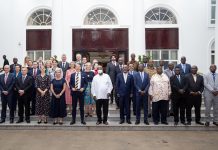
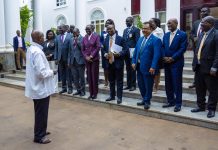
On Saturday evening, President Museveni met the national task force on epidemics in Nakasero to review the situation and discuss the country’s response.
“This evening, I met the task force on epidemics in Nakasero. We discussed the Ebola situation in the region, and we will communicate the way forward. There is no cause for alarm,” President Museveni posted on X.
The Uganda Media Centre later confirmed that a Congolese national who had crossed into Uganda died of Ebola at a Kampala hospital on Thursday.
According to the statement, the body was returned to the DRC the same day and all contacts, including health workers, relatives and friends, were traced.
“The Ministry is confident that there is no cause for alarm. The situation has been contained,” the statement read.
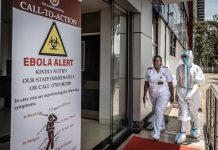
Ugandans have been advised to remain alert and report symptoms such as sudden fever, fatigue, chest pain, diarrhoea, vomiting, unexplained bleeding and yellowing of the eyes.
Africa CDC says the response in eastern Congo is being complicated by insecurity, population movement linked to mining activities, gaps in contact tracing and the proximity of affected areas to neighbouring countries.
An emergency coordination meeting bringing together officials from the DRC, Uganda, South Sudan, the World Health Organization and several international partners has been convened to strengthen surveillance, laboratory support, infection prevention and control, risk communication and cross-border preparedness.
“Africa CDC stands in solidarity with the Government and people of the Democratic Republic of the Congo as they respond to this outbreak,” said Africa CDC Director General Dr Jean Kaseya.
“Given the high population movement between affected areas and neighbouring countries, rapid regional coordination is essential.”
Health officials say Ebola spreads through direct contact with bodily fluids of infected persons or contaminated materials. Early detection, isolation, contact tracing and safe burials remain critical in containing outbreaks.