The Earth and Rights Initiative Uganda (ERI) has raised concern over increasing forest degradation in Ndorwa County, warning that continued destruction of natural forests could weaken the area’s ability to regulate climate and protect ecosystems.
ERI revealed that although forests cover only about 4% of Ndorwa’s landscape, they remain vital for carbon storage, watershed protection, and climate resilience within Uganda’s highland ecosystems.
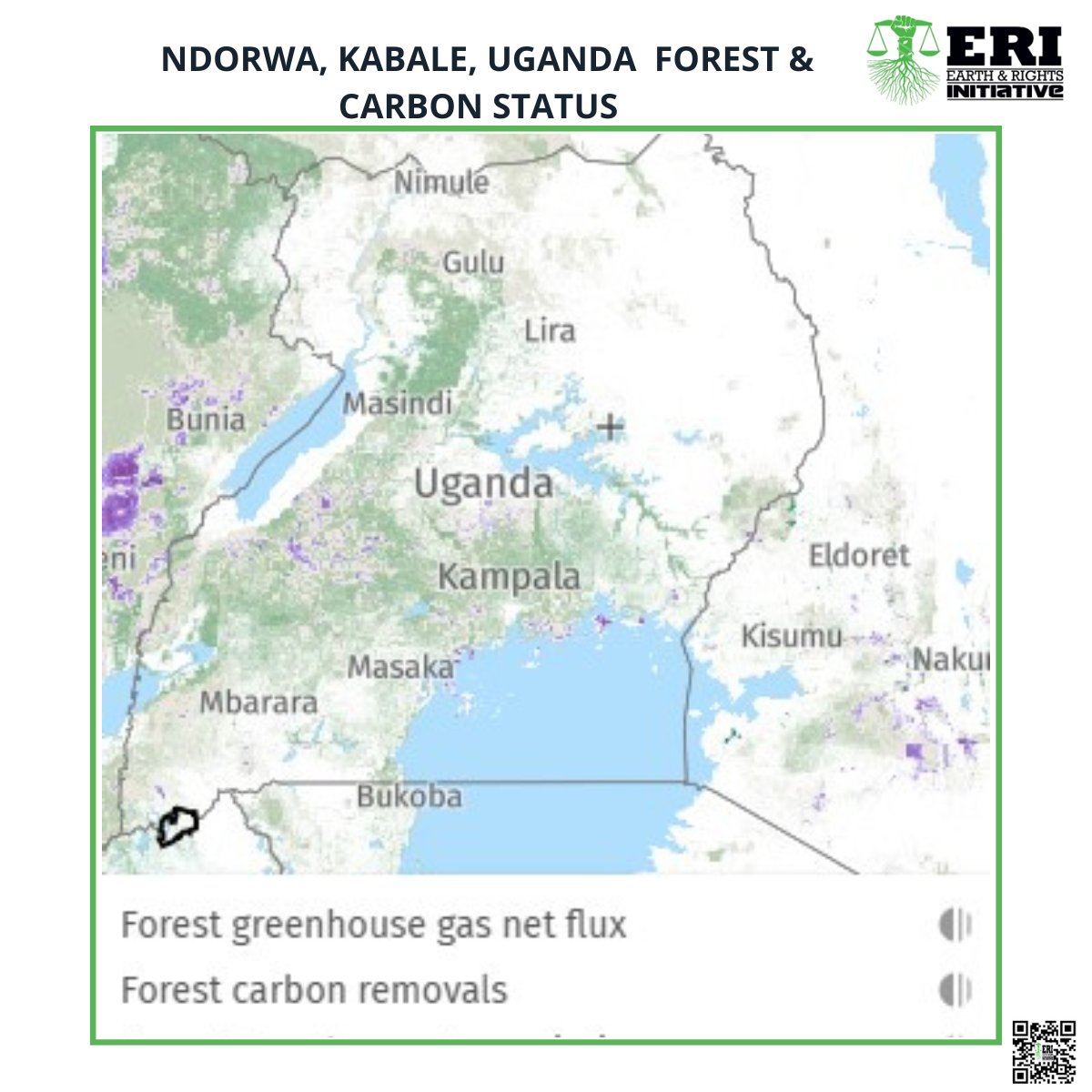
According to ERI’s latest forest carbon monitoring data, Ndorwa lost approximately 110 hectares of natural forest in 2025, resulting in an estimated 59 kilotonnes of carbon dioxide emissions. Environmental experts say this is significant for a district with only about 2,400 hectares of natural forest remaining.
Despite the loss, Ndorwa has remained a net carbon sink between 2001 and 2025, emitting an estimated 44 ktCO₂e annually while removing about 65 ktCO₂e per year, leaving a net sink of approximately -20 ktCO₂e annually. However, ERI warned that continued degradation threatens this important climate-regulating role.
The organisation identified logging as the leading driver of emissions in the area, contributing around 32 ktCO₂e annually, followed by permanent agriculture at 12 ktCO₂e, while settlements and infrastructure contributed approximately 240 tonnes of CO₂ emissions annually.
ERI further noted that Ndorwa’s forests currently store an estimated 1.6 million tonnes of carbon, including 880 kilotonnes stored in soils, 550 kilotonnes in above-ground vegetation, and 140 kilotonnes below ground.
The organisation has called for stronger forest governance and enforcement, increased support for climate-smart agriculture, protection of high-carbon ecosystems, and the integration of forest carbon monitoring into district planning processes.
ERI emphasised that protecting Ndorwa’s forests is essential not only for environmental sustainability and local community resilience, but also for supporting Uganda’s broader climate commitments.