By Samuel Ssenono
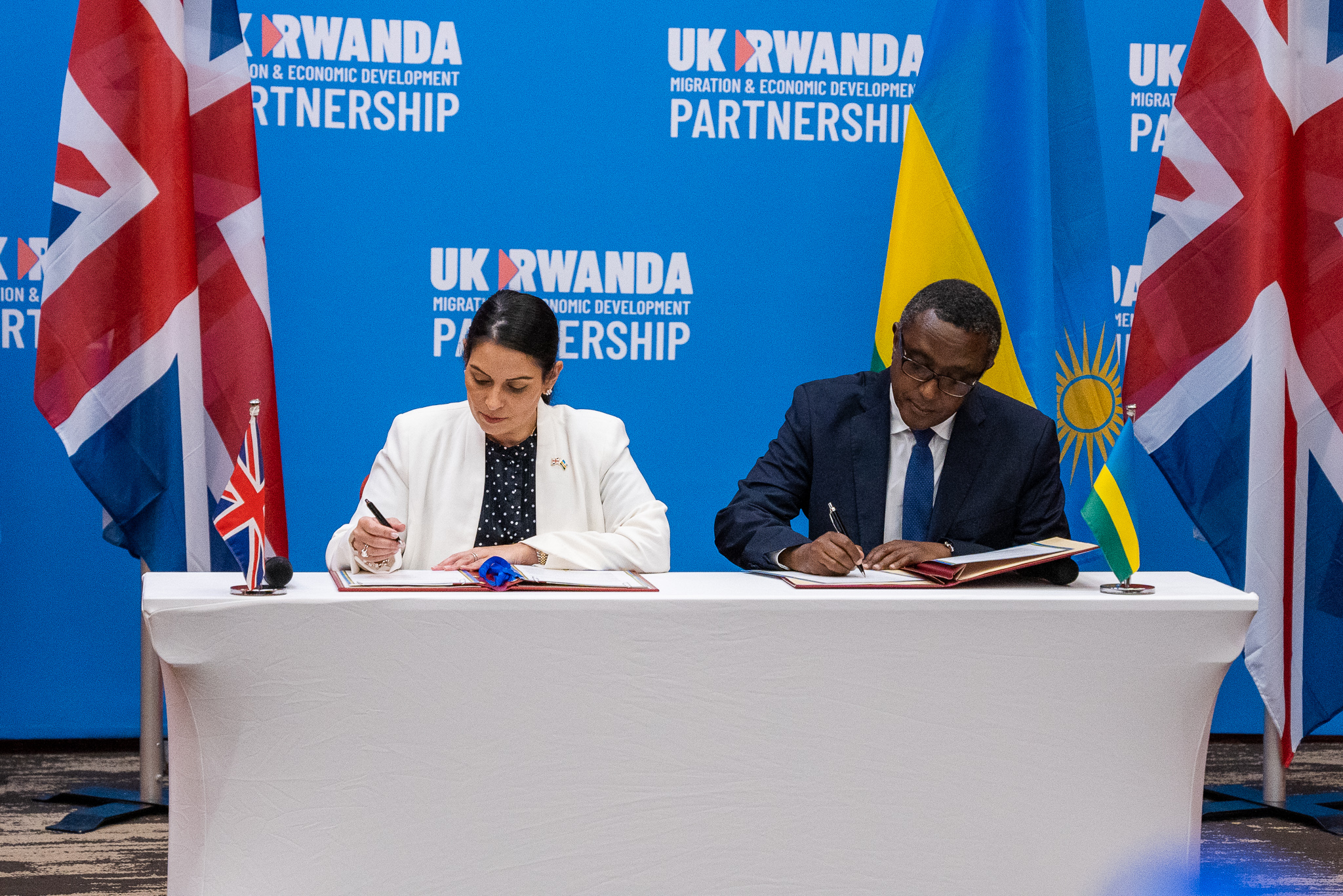
The Permanent Court of Arbitration has dismissed Rwanda’s claims against the United Kingdom in a dispute arising from the collapsed UK-Rwanda Asylum Partnership Agreement, bringing to a close a legal battle over payments and obligations linked to the controversial migration deal.
In an award published by the Tribunal, the majority of arbitrators rejected Rwanda’s claim that Britain remained obligated to make payments under the agreement after it was terminated by the new UK government.
The dispute centred on whether the United Kingdom was still required to honour financial commitments made under the asylum partnership, which had been designed to relocate some asylum seekers from Britain to Rwanda.
Rwanda argued that Britain remained liable to pay £50 million for the second year of the agreement and sought a declaration that the payment was due. Kigali also argued that the UK should make a third-year payment of £50 million, or alternatively a prorated amount of £10.4 million following the agreement’s termination in March 2026.
Rwanda further claimed that Britain had breached Articles 18 and 19 of the agreement and sought compensation amounting to £6 million, alongside interest and other reliefs.
However, the Tribunal sided with the United Kingdom on all major claims.
It rejected Rwanda’s claim for the £50 million second-year payment and unanimously dismissed the claim for a third-year payment. The Tribunal also unanimously found that the UK had not breached Articles 18 and 19 of the agreement.
The panel further ruled that each party would bear its own legal costs while arbitration costs would be shared equally.
The arbitration proceedings were initiated in November 2025 under Article 22 of the Asylum Partnership Agreement after Rwanda challenged Britain’s compliance with obligations under the arrangement and related financial agreements.
The three-member Tribunal was chaired by Judge Peter Tomka, a former President of the International Court of Justice. Other members were Professor Mohamed Abdel Wahab of Egypt and Judge Joan Donoghue of the United States. Hearings were held at the Peace Palace in The Hague in March this year.
Despite the outcome, Rwanda pointed to a dissenting opinion issued by Professor Abdel Wahab, who disagreed with parts of the majority decision.
In a statement, Government Spokesperson Yolande Makolo said Rwanda respected the Tribunal’s award and considered the matter concluded, but noted that the dissent demonstrated that the legal questions before the court were far from straightforward.
Makolo said Professor Abdel Wahab found that diplomatic exchanges between Rwanda and the United Kingdom in November 2024 did not amount to a legally binding amendment of the 2024 Finance Agreement because the required concurrence of both parties had not been obtained.
According to the dissenting opinion, the £50 million second-year payment remained due and payable to Rwanda.
“While Rwanda respects the Tribunal’s award and considers the matter concluded, we note that the dissenting and separate opinion by Professor Mohamed Abdel Wahab shows that the issues before the Tribunal were complex and open to different legal conclusions,” Makolo said.
She added that Rwanda would continue to work constructively with international partners in line with international norms and mutually beneficial cooperation.
The ruling brings an end to one of the final legal chapters of the UK-Rwanda migration partnership, a flagship policy of the previous British government that was abandoned after a change of administration in London.