By Dorcus Kimono
The World Meteorological Organization (WMO) has warned that El Niño conditions are rapidly developing and could trigger extreme weather patterns, higher global temperatures, droughts and heavy rainfall in several parts of the world over the coming months.
In a climate update released from Geneva on June 2, the UN weather agency said there is an 80 percent likelihood that El Niño conditions will emerge between June and August 2026, with forecasts showing a more than 90 percent chance of the phenomenon persisting until at least November.
WMO said unusually warm ocean waters in the tropical Pacific are driving the development of the climate pattern, with subsurface temperatures in parts of the Pacific Ocean already exceeding six degrees Celsius above average.
UN Secretary-General António Guterres described the development as an urgent global climate warning, saying El Niño would intensify the effects of an already warming planet.
WMO Secretary-General Celeste Saulo warned governments and humanitarian agencies to prepare for worsening droughts, flooding and heatwaves.
“We need to prepare for a potentially strong El Niño event which will exacerbate drought and heavy rainfall and increase the risk of heatwaves both on land and in the ocean,” Saulo said.
According to the report, above-normal temperatures are expected across nearly all regions of the world between June and August.
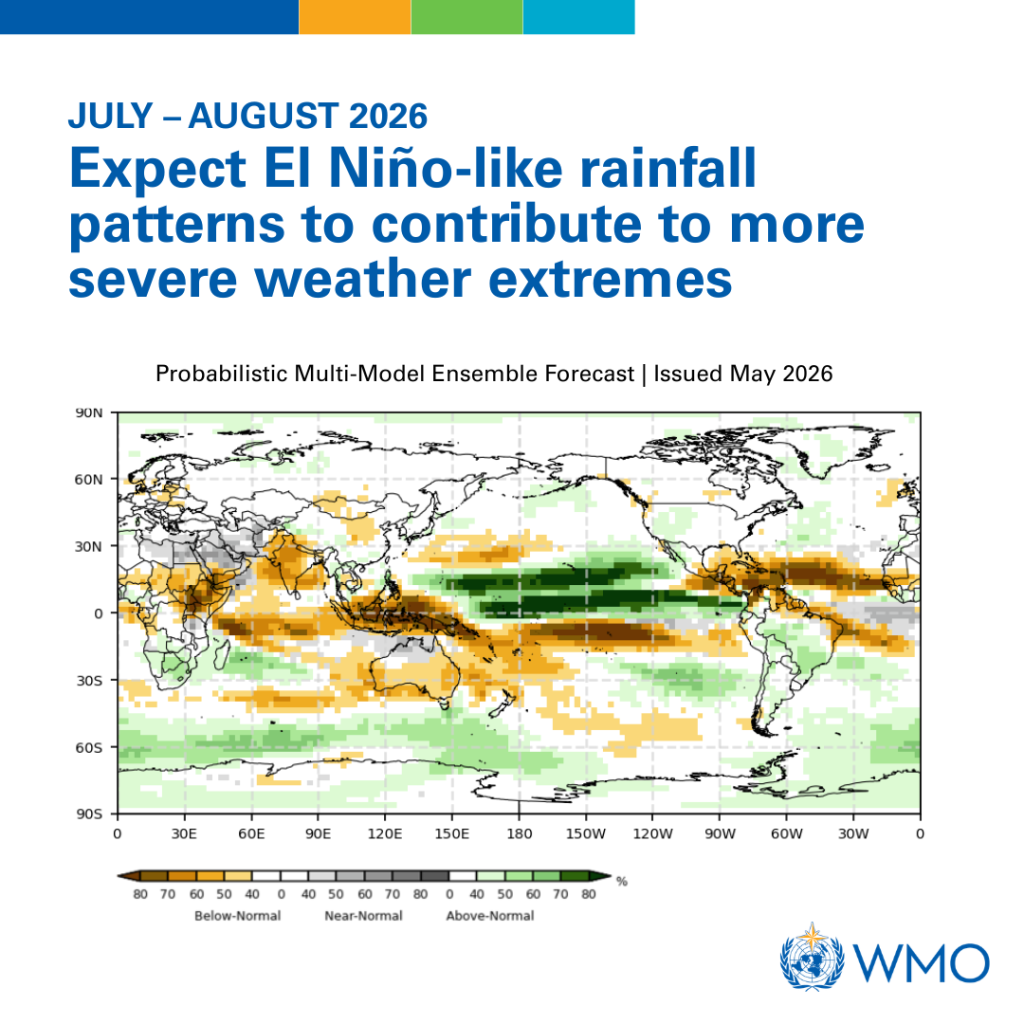
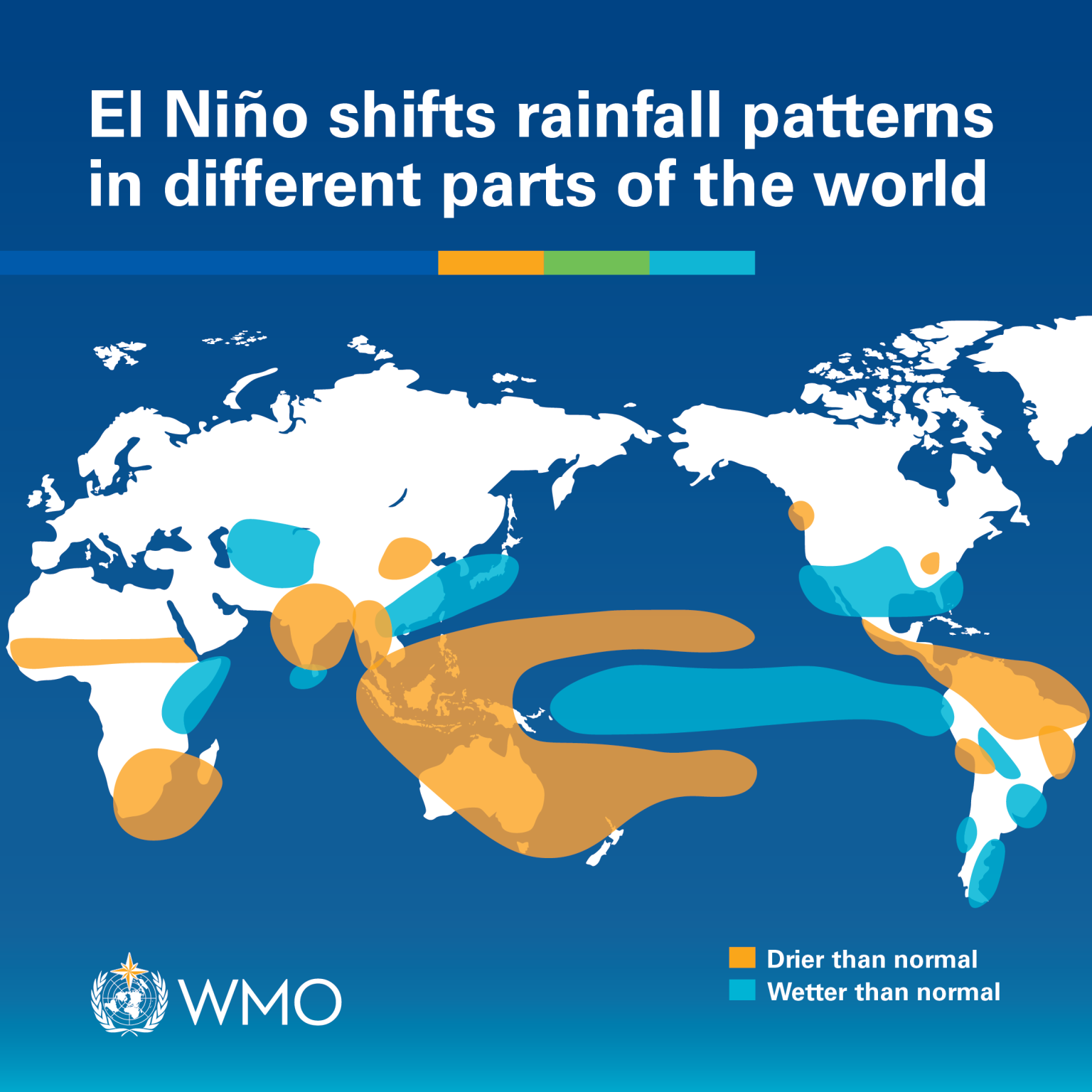
The agency noted that El Niño typically disrupts normal rainfall patterns globally, often bringing wetter conditions to parts of South America, the Horn of Africa and sections of Central Asia, while causing drier conditions across Australia, Indonesia, Central America and parts of southern Asia.
Regional climate outlook forums are already warning of below-normal rainfall in parts of the Greater Horn of Africa and South Asia during critical rainy seasons.
WMO said advanced seasonal forecasts and early warning systems would be critical in helping governments prepare and protect lives, food systems, water supplies and economies from the anticipated climate shocks.