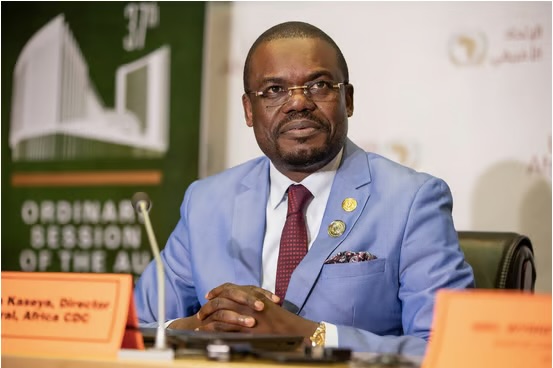
ADDIS ABABA, Ethiopia — The Director General of the Africa Centres for Disease Control and Prevention (Africa CDC), Dr Jean Kaseya, has called on the United States Government to review and lift the temporary Ebola-related entry restrictions imposed on Uganda, citing significant improvements in the country’s public health situation.
In a statement issued on Tuesday, Dr Kaseya said Uganda had made substantial progress in containing the outbreak and now meets the conditions for a fresh assessment based on the latest epidemiological evidence.
He noted that Uganda has not recorded a confirmed Ebola case since 21 June 2026, discharged its last patient and is currently observing the 42-day countdown required before an outbreak can be declared over.
According to Africa CDC, all 836 identified contacts have completed follow-up, while surveillance remains active in 36 high-risk districts and at 38 points of entry. Laboratory testing, infection prevention and control, case management, risk communication and community surveillance also remain in place.
Dr Kaseya attributed the progress to Uganda’s leadership, the efforts of health workers and communities, and close collaboration between Uganda, the Democratic Republic of the Congo, Africa CDC and international partners.
While acknowledging continued Ebola transmission in parts of the Democratic Republic of the Congo, he said Uganda’s ability to detect, report and respond quickly to suspected cases justifies a country-specific assessment rather than broad restrictions.
He urged governments to adopt public health measures that are proportionate to the level of risk and guided by scientific evidence. These include departure and arrival screening, traveller health declarations, exposure-based monitoring and rapid referral of symptomatic travellers.
Dr Kaseya said countries that report outbreaks promptly and respond transparently should be supported rather than penalised, arguing that evidence-based decisions strengthen international cooperation and encourage early reporting during future public health emergencies.
He added that Africa CDC is ready to share the latest surveillance data with the United States Department of Health and Human Services and the U.S. Centers for Disease Control and Prevention, facilitate technical consultations and support any further verification required.
“Uganda’s progress deserves recognition. Vigilance must continue. Every public health decision must remain grounded in science, proportionality and partnership,” Dr Kaseya said.