By Lawrence Kooko
East African Community partner states have committed to increasing education financing, improving foundational learning, strengthening teacher development and expanding digital learning across the region.
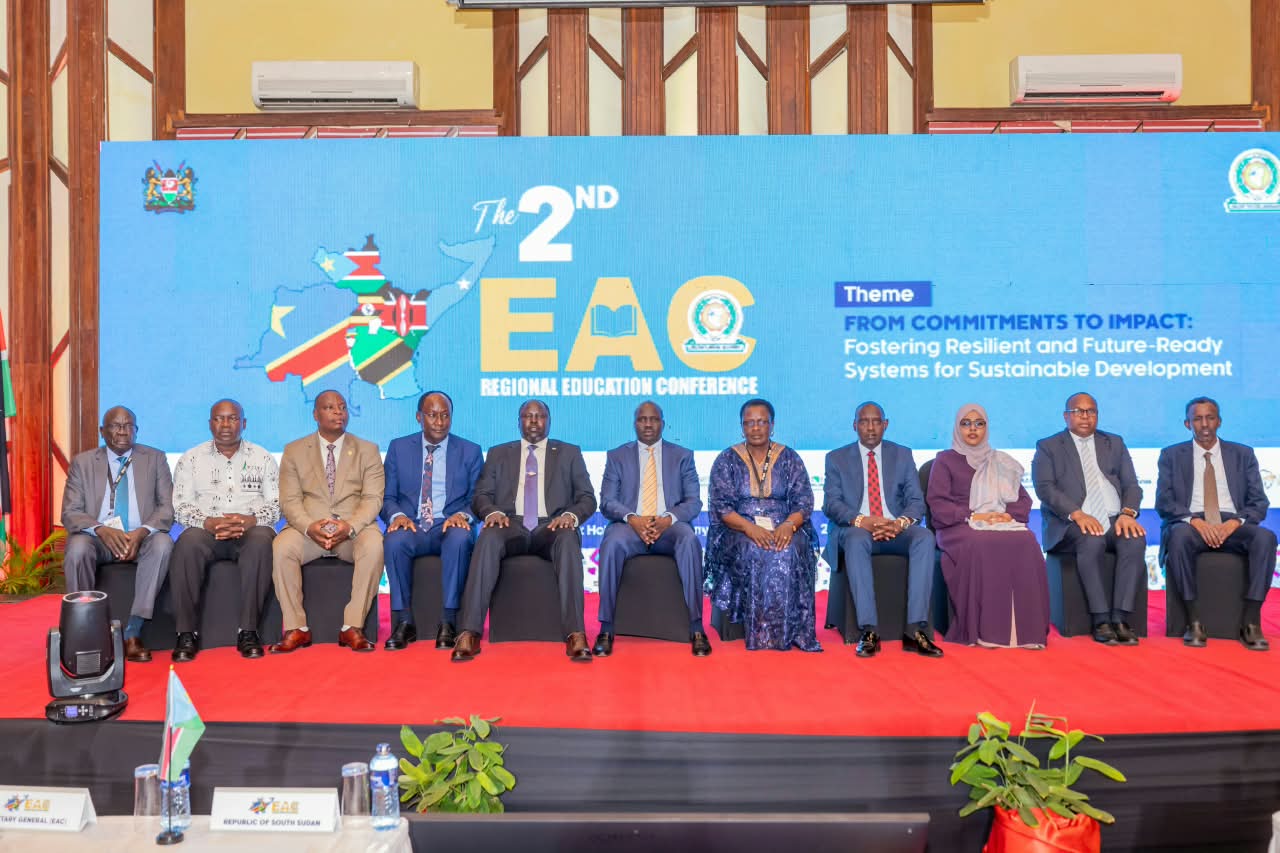
The commitments are contained in the preliminary communiqué of the Second EAC Regional Education Conference, held in Nairobi from August 25 to 28, 2026, under the theme, “From Commitments to Impact: Fostering Resilient and Future-Ready Systems for Sustainable Development in East Africa.”
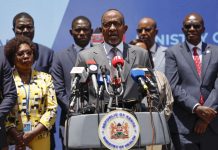
Presenting the communiqué, Tanzania’s Deputy Permanent Secretary in the Ministry of Education, Science and Technology, Professor Daniel Elias Mushi, said the commitments build on resolutions from the inaugural conference held in Arusha in 2024.
The communiqué notes progress in education financing, early childhood education, foundational learning, inclusive education, digitalisation and regional cooperation.
However, EAC countries continue to face inadequate and unpredictable funding, teacher shortages, infrastructure gaps and weak transition from education and training into employment.
Children with disabilities, refugees, out-of-school children and other vulnerable learners also continue to face barriers to education.
Professor Mushi said unequal access to digital devices, internet connectivity and digital skills remains a major challenge. He also noted that several education interventions have remained at pilot stage instead of being rolled out at scale.
Partner states have agreed to improve implementation and accountability and make greater use of data to direct resources to learners who face the biggest barriers.
A key commitment is the proposed East African Foundational Learning Initiative, which will support countries to prioritise basic literacy and numeracy in their national education plans.
The initiative will also focus on early childhood education, closing gaps between assessment results and classroom teaching, and expanding approaches that have demonstrated results.
The EAC also plans to establish an EAC Basic Education Council to improve coordination and cooperation among partner states.
On teachers, governments committed to improving recruitment, retention and deployment, while strengthening teacher training and continuous professional development through coaching and mentorship.
The communiqué also calls for better sharing of education data and research across the region. Partner states will work towards linking education management information systems, national statistics and learning assessments to better identify learners who are being left behind.
Countries will also establish or strengthen national governance frameworks for artificial intelligence in education, including ethical and accountability standards.
On financing, partner states committed to progressively increasing and protecting domestic education spending towards the 20 per cent minimum benchmark, while improving budget execution, efficiency and value for money.
The EAC Secretariat will track implementation through an accountability framework with measurable national and regional targets towards 2028.
The commitments will also be cascaded from national governments to local governments and communities.
Uganda will host the Third EAC Regional Education Conference in 2028, where partner states will review progress on the commitments and agree on the next priorities.