By Buwule Joseph Mary
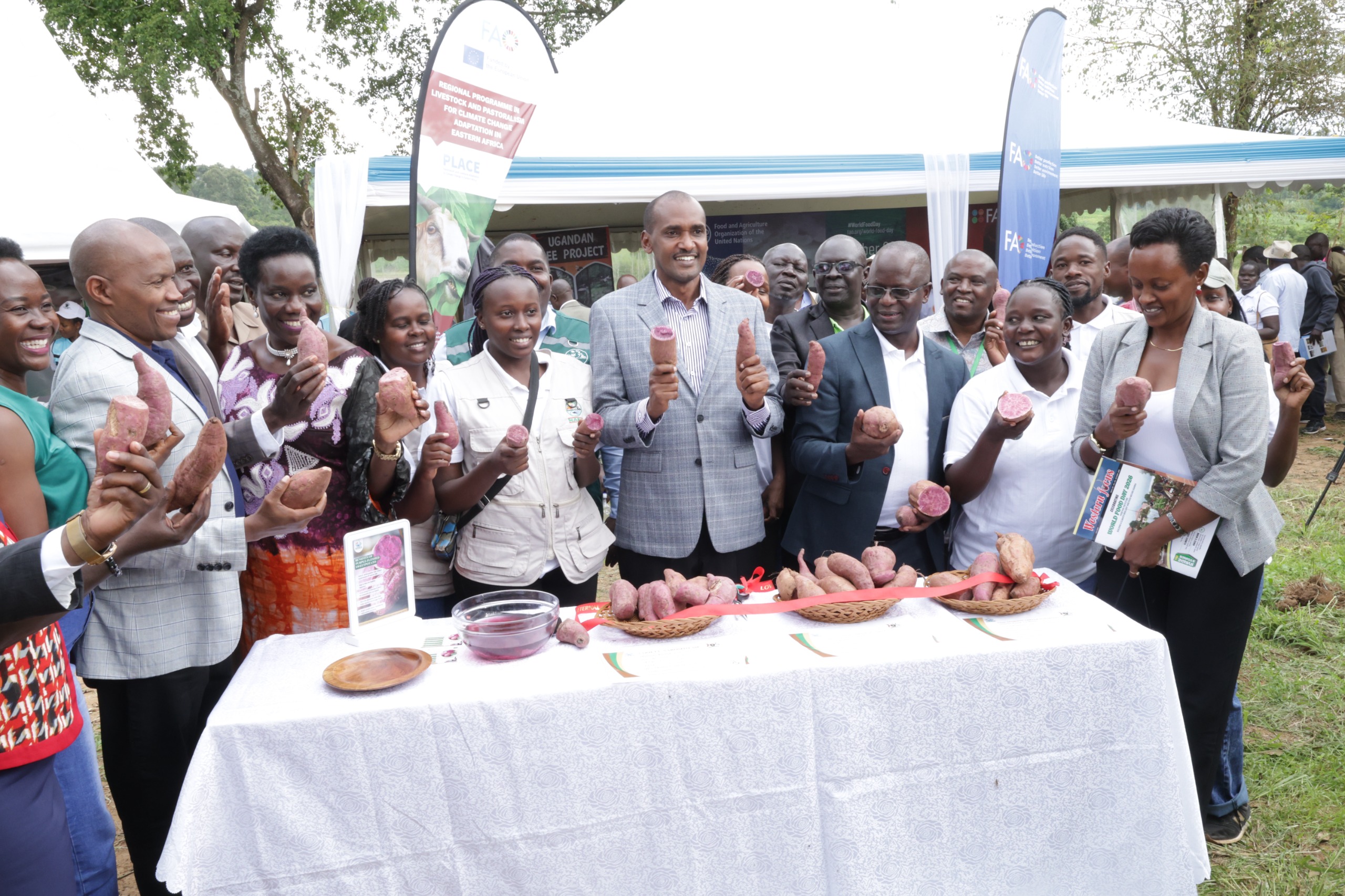
MBARARA, UGANDA — Uganda has unveiled three new improved purple-fleshed sweet potato varieties as the country commemorated World Food Day 2026, with the new varieties expected to contribute to improved nutrition, food security, household incomes and climate-resilient agriculture.
The new varieties, which are rich in important nutrients including zinc and vitamins A and C, were unveiled during national World Food Day celebrations held at the Mbarara Zonal Agricultural Research and Development Institute (Mbarara ZARDI), formerly known as Mbarara Stock Farm.
The celebrations also marked 100 years of Mbarara ZARDI, making the occasion both a celebration of Uganda’s agricultural research achievements and a platform for showcasing new technologies and innovations developed to support farmers.
The Minister of Agriculture, Animal Industry and Fisheries said the introduction of the three purple-fleshed sweet potato varieties demonstrates the importance of scientific research in addressing Uganda’s food, nutrition and agricultural challenges.
He said the varieties contain antioxidants that can contribute to healthier diets and urged farmers to embrace improved varieties developed by agricultural research institutions.
The Minister appealed to political leaders, agricultural scientists, extension workers and farmers to mobilise communities to produce more food for both household consumption and the market.
He said Uganda has enormous agricultural potential, noting that out of approximately 40 million acres of arable land available in the country, only a relatively small proportion is being effectively utilised for agricultural production.
He challenged extension workers and local leaders to encourage farmers to put more land into productive use while adopting modern farming technologies capable of responding to changing climatic conditions.
“We must be intentional as planners, scientists and leaders about the kind of farming we need today. The way we farmed 30 years ago is not the way we should farm now,” the Minister said.
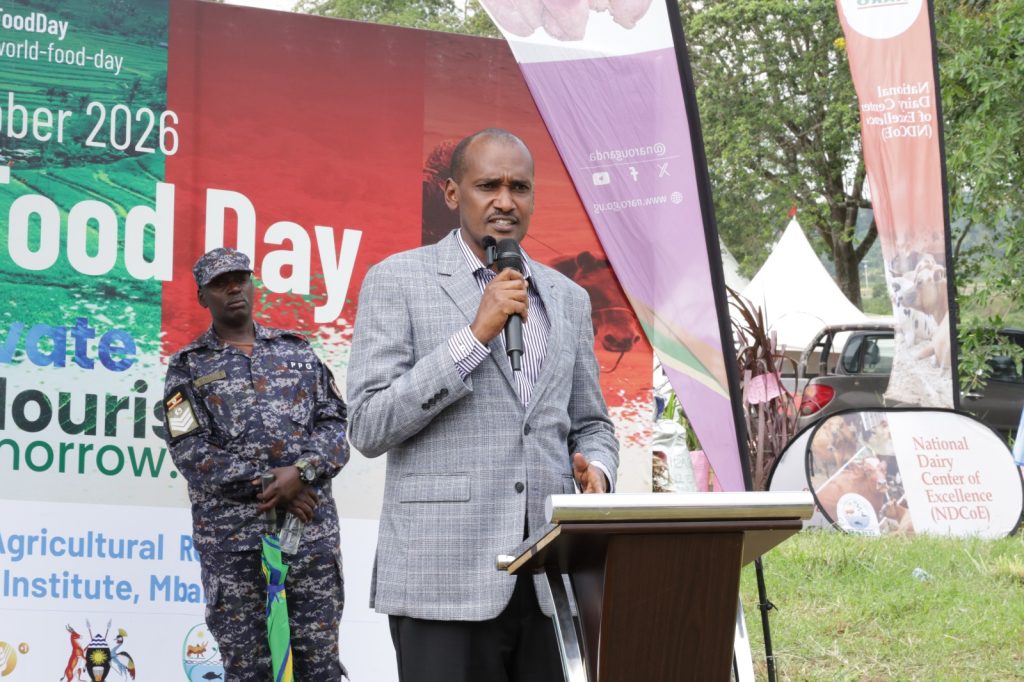
Minister calls for four pillars of farming
The Minister called for a balanced approach to agricultural production based on four major pillars: food security, income security, animal-feed security and environmental security.
He warned against concentrating too heavily on individual cash crops at the expense of food production.
While recognising the importance of coffee, cocoa and other commercial crops in generating household income and foreign exchange, he urged farmers to maintain production of essential food crops such as cassava, bananas, sweet potatoes and millet.
He said agriculture should be treated as an integrated system in which farmers produce food for household consumption, crops for income, feed for livestock and agricultural products while protecting the environment.
The Minister noted that the traditional distinction between food crops and cash crops is increasingly changing because crops such as bananas, milk and other agricultural products can simultaneously provide food and income.
He encouraged farmers to diversify their production so that they are not vulnerable when the price or production of one commodity falls.
Research must reach the farmer
The Minister said agricultural research must move beyond laboratories, academic publications and demonstration plots to reach ordinary farmers.
He challenged scientists to develop practical technologies and innovations that farmers can afford, understand and apply.
He said research should not only satisfy academic requirements but should also have direct livelihood value.
“When I see those potatoes and you tell me they are rich in antioxidants that reduce the risk of cancer, that is the kind of research we need,” he said.
He said scientists have a responsibility to develop food varieties that can improve nutrition and help communities respond to emerging health and environmental challenges.
The Minister also urged agricultural researchers to develop specialised products that respond to changing consumer needs, including speciality tea varieties with reduced or no caffeine.
He said Uganda must continue investing in research that creates new opportunities for farmers, processors and consumers.
Irrigation becomes a major Government priority
The Minister said Uganda can no longer depend entirely on rain-fed agriculture because weather patterns are becoming increasingly unpredictable.
He announced that Government is mobilising resources to significantly expand irrigation and water-harvesting infrastructure across the country.
He said the Ministries of Agriculture, Animal Industry and Fisheries and Water and Environment are working together to develop interventions that will give farmers greater access to water for agricultural production.
The planned interventions include supporting farmers who already have dams, harvesting water from streams and rivers in sustainable ways, rehabilitating existing irrigation schemes and expanding systems that can convey water directly to farmers’ gardens.
Government also intends to profile existing irrigation schemes across the country, assess their potential and rehabilitate or expand those that require improvement.
The Minister said the changing climate has made irrigation an increasingly important component of modern agriculture.
He explained that Uganda previously benefited from relatively predictable rainfall patterns and two agricultural seasons, which made rain-fed farming possible for many years.
However, changing weather patterns now require greater investment in irrigation, climate-smart agriculture, agricultural research and technologies that enable farmers to make informed decisions.
Mbarara ZARDI celebrates 100 years of agricultural research
The World Food Day celebrations coincided with the 100th anniversary of Mbarara Zonal Agricultural Research and Development Institute, formerly known as Mbarara Stock Farm and locally remembered as “Famu y’Omuzungu.”
The Minister described the centenary as a major milestone in Uganda’s agricultural history.
He said Mbarara ZARDI is older than many of the country’s modern political and administrative institutions and has witnessed generations of agricultural transformation.
He commended generations of researchers, technicians, extension workers, farmers and public servants who have contributed to the institute’s legacy.
The Minister urged NARO and Mbarara ZARDI to strengthen the institute’s position as a centre of excellence for dairy research, livestock breeding and modern agricultural production.
He called for increased investment in improved livestock genetics, including embryo transfer, superior breeds and structured breeder networks that can enable farmers to access high-quality animals.
He also urged the institute to work closely with farmers who have already invested in modern livestock production.
FAO calls for innovation that reaches farmers
Representing the FAO Country Representative in Uganda, the Assistant FAO Representative for Programme, Martin Ameo, said FAO was honoured to join Government and partners in commemorating World Food Day and celebrating the 100th anniversary of Mbarara ZARDI.
He delivered remarks on behalf of FAO Representative in Uganda Ezana Kassa, who was away.
Ameo said this year’s World Food Day theme, “Innovate Today, Nourish Tomorrow,” challenges countries to build agri-food systems that are productive, inclusive, resilient and sustainable.
He said innovation should not only be understood as technology but should also include new approaches to financing, organisation, knowledge transfer and service delivery.
According to FAO, innovation only becomes meaningful when it reaches farmers, processors and consumers and improves productivity, incomes, nutrition and livelihoods.
He said Uganda already has many agricultural technologies and solutions capable of addressing food insecurity, climate change, food loss and nutrition challenges, but access remains a major barrier.
FAO called for proven solutions to be made affordable, practical and suitable for the conditions in which farmers operate.
Ameo said innovations must move from research institutions and demonstration plots into farmers’ fields.
FAO also highlighted its collaboration with Mbarara ZARDI in livestock development, including the introduction of improved “big ear” goats through South-South Cooperation between Uganda and China.
The goats are being handled at the institute for breeding purposes, with FAO monitoring the programme and supporting efforts to ensure that the intervention delivers benefits to farmers.
FAO further emphasised the importance of improving food safety, reducing post-harvest losses, protecting soils and water, improving animal health and using weather information to guide agricultural decisions.
The organisation said its work is guided by four priorities: better production, better nutrition, a better environment and a better life, leaving no one behind.
WFP highlights food insecurity and climate pressures
The World Food Programme also used the World Food Day commemoration to highlight the growing pressure on Uganda’s food systems caused by climate change, food prices, displacement and limited access to agricultural resources.
The WFP representative commended the Ministry of Agriculture, Animal Industry and Fisheries and NARO for hosting the celebrations at Mbarara ZARDI.
He said innovation is urgently needed to protect gains made against hunger and malnutrition.
WFP noted that food insecurity remains a concern in several parts of Uganda, particularly areas affected by drought and other climate-related shocks.
The organisation also highlighted the pressure faced by refugee-hosting communities as Uganda continues to host a large refugee population.
WFP said innovation is critical to building food systems capable of withstanding shocks and protecting vulnerable communities.
The organisation highlighted anticipatory action, digital cash assistance, local market support and livelihood programmes as examples of innovations designed to improve the efficiency and effectiveness of food assistance.
It also stressed the importance of strengthening local markets so that farmers can produce knowing that reliable buyers are available.
WFP called for agricultural innovation to be inclusive, particularly for women farmers who face barriers to accessing credit, water, land and agricultural technologies.
The organisation also called for greater recognition of indigenous crops, local varieties and knowledge held by farming and pastoral communities.
NARO outlines agricultural research achievements
NARO Deputy Director General Dr. Kasimu said the organisation is strengthening agricultural research and technology development across the country.
He said NARO has established mother gardens and foundation seed systems designed to produce sufficient planting material for nursery operators and farmers.
He cited work in Kabale, Fort Portal, Arua, Bulindi, Hoima and other parts of the country as examples of efforts to strengthen the availability of quality planting materials.
Dr. Kasimu said NARO has also rebranded its research institutes around specific agricultural flagship areas, with Mbarara ZARDI increasingly positioned as a centre of excellence for dairy research.
He said NARO is continuing to implement Government directives on the establishment of a potato seed hub in Kabale, with laboratory infrastructure being developed to support production of potato seed for farmers in the highlands and other parts of Uganda.
He also highlighted progress in tea research, sugar research, poultry breeding, oilseed crops, honey, coffee, cocoa and wheat research.
NARO is undertaking breeding programmes for both highland and lowland wheat as part of efforts to reduce Uganda’s dependence on imported wheat.
Dr. Kasimu said the organisation’s mission is to innovate for sustainable agricultural transformation, enhance resilience and productivity, and develop value-addition technologies that can feed into industry.
He thanked the Minister for supporting agricultural research and advocating for increased investment in the agricultural sector.
A century of agricultural lessons
The centenary of Mbarara ZARDI provided an opportunity for stakeholders to reflect on a century of agricultural research and the role of science in transforming Uganda’s food systems.
The Minister said the history of Mbarara ZARDI demonstrates the importance of maintaining agricultural research institutions capable of responding to the changing needs of farmers.
He urged the institute to build on its historical achievements and prepare for the next 100 years by focusing on climate resilience, improved genetics, modern dairy production, animal nutrition, food safety, value addition and farmer-oriented technologies.
He said Uganda cannot afford to leave agricultural production entirely to chance at a time when climate change is disrupting traditional farming patterns.
The Minister also reminded Ugandans that food remains fundamental regardless of technological advancement.
He noted that technology can change how food is produced, processed and marketed, but cannot eliminate the need for food.
He therefore called for deliberate investment in agriculture as a foundation of national development.
Call for increased food production
The Minister concluded by appealing to farmers, extension workers, political leaders and researchers to intensify efforts to increase agricultural production.
He urged farmers to take advantage of improved technologies and varieties developed by NARO and other agricultural research institutions.
He also called for stronger collaboration between farmers and researchers so that innovations can be tested, refined and adopted under real farming conditions.
He said Government will continue investing in irrigation, research, improved seed, livestock breeding and other technologies designed to make agriculture more productive and resilient.
The World Food Day celebrations at Mbarara ZARDI therefore brought together two important milestones: the celebration of a century of agricultural research and the unveiling of new technologies designed to shape Uganda’s food systems for the future.
The three new purple-fleshed sweet potato varieties provided a practical demonstration of how agricultural science can respond to the country’s nutrition and food-security challenges.
As Uganda looks towards the future, stakeholders stressed that innovation must not remain in laboratories or research institutions. It must reach farmers, improve production and incomes, strengthen nutrition, protect the environment and ensure that safe, nutritious and affordable food is available to all Ugandans.