By Joseph Mary Buwule
The Food and Agriculture Organization of the United Nations (FAO) has launched a six-month Enterprise Acceleration Programme aimed at strengthening Uganda’s forestry and wood-based enterprises, improving their investment readiness and helping them gain access to finance.
The programme will support 54 enterprises operating across Uganda’s forestry and wood-based value chains, providing them with tailored business development assistance designed to improve their competitiveness, expand markets, attract investment and create employment opportunities.
The initiative is being implemented under the Sustainable Wood-Based Value Chains Project, with funding from the European Union and the Kingdom of Denmark.
The programme comes at a time when Uganda is seeking to increase the economic value derived from its forest resources by moving beyond the production and sale of raw materials towards greater processing, manufacturing and value addition.
Uganda’s forests and tree resources provide significant opportunities for employment, manufacturing, trade and rural livelihoods. However, stakeholders say that the full economic potential of the sector can only be realized if wood-based enterprises are able to operate efficiently, produce quality products, access markets and secure adequate financing to expand their operations.
Supporting enterprises to become investment-ready
Through the six-month programme, participating businesses will receive support based on their individual needs and areas requiring improvement.
The assistance will cover areas including operational efficiency, financial management and performance, market development, business growth and investment readiness.
The programme will also facilitate linkages between participating enterprises and financial institutions, investors and potential regional and international markets, giving businesses opportunities to explore financing and commercial partnerships.
The intervention is expected to help enterprises overcome some of the challenges that have traditionally limited the growth of small and medium-sized businesses in the forestry sector, including limited access to capital, inadequate business management systems, weak market linkages and insufficient preparedness to engage potential investors.
By strengthening these enterprises, FAO and its partners hope to encourage more domestic processing of timber and other forest products, enabling Uganda to retain a larger share of the economic value generated from its forest resources.
Government calls for stronger forest-based industries
Speaking at the launch, Issa Katwesige, Assistant Commissioner of Forestry, Planning and Development at the Ministry of Water and Environment, said Uganda needs to shift its focus from simply producing forest resources to developing competitive industries around them.
He said the country’s future forestry sector should be built around modern enterprises, value addition, employment and sustainable livelihoods.
“The future of Uganda’s forest sector lies not simply in growing trees, but in building competitive enterprises, modern industries, skilled jobs and sustainable livelihoods,” Katwesige said.
His remarks highlighted the importance of creating an environment in which enterprises can transform timber and other forest products into higher-value goods rather than exporting or trading largely in raw materials.
Such an approach, stakeholders say, could contribute to industrialization while creating additional employment opportunities along the forestry value chain.
EU highlights importance of investment readiness
The European Union also emphasized the role of investment-ready businesses in driving the growth of Uganda’s wood-based industries.
Cristina Banuta, Programme Manager at the European Union Delegation to Uganda, said Uganda has considerable potential to develop competitive wood-based industries capable of contributing to the country’s long-term economic ambitions.
She said the Enterprise Acceleration Programme would help promising enterprises strengthen their businesses and become more attractive to potential financiers and investors.
“Uganda has the potential to develop competitive wood-based industries and contribute to Vision 2040’s tenfold economic growth ambition. The SME Acceleration Programme will help promising enterprises become investment-ready,” Banuta said.
Investment readiness is considered particularly important for small and medium-sized enterprises because many businesses may have viable products and markets but lack the financial records, business plans, management systems and other documentation required by financial institutions and investors.
The programme is therefore expected to help participating enterprises better position themselves when seeking financing for machinery, expansion, product development, market access and other investments.
Linking enterprise development with sustainable forestry
The acceleration programme is part of a wider effort to ensure that Uganda’s forest resources contribute to economic development without undermining environmental sustainability.
The forestry sector faces the challenge of balancing increasing demand for wood products with the need to conserve forests, protect biodiversity and address climate change.
FAO Team Lead for Forestry, Hitimana Leonidas, said stronger wood-based enterprises can play an important role in ensuring that more value remains within Uganda while promoting responsible use of forest resources.
He emphasized the need for competitive and sustainable enterprises capable of creating decent employment, supporting livelihoods and contributing to the country’s emerging green economy.
According to the programme’s approach, improved business performance and stronger connections to markets can enable enterprises to capture greater value from forest resources while encouraging responsible production and processing.
Reducing dependence on imported wood products
The programme also seeks to contribute to Uganda’s efforts to strengthen domestic manufacturing and reduce reliance on imported wood products.
With adequate investment, wood-based enterprises can expand their processing capacity, improve product quality and develop products that meet both domestic and international market standards.
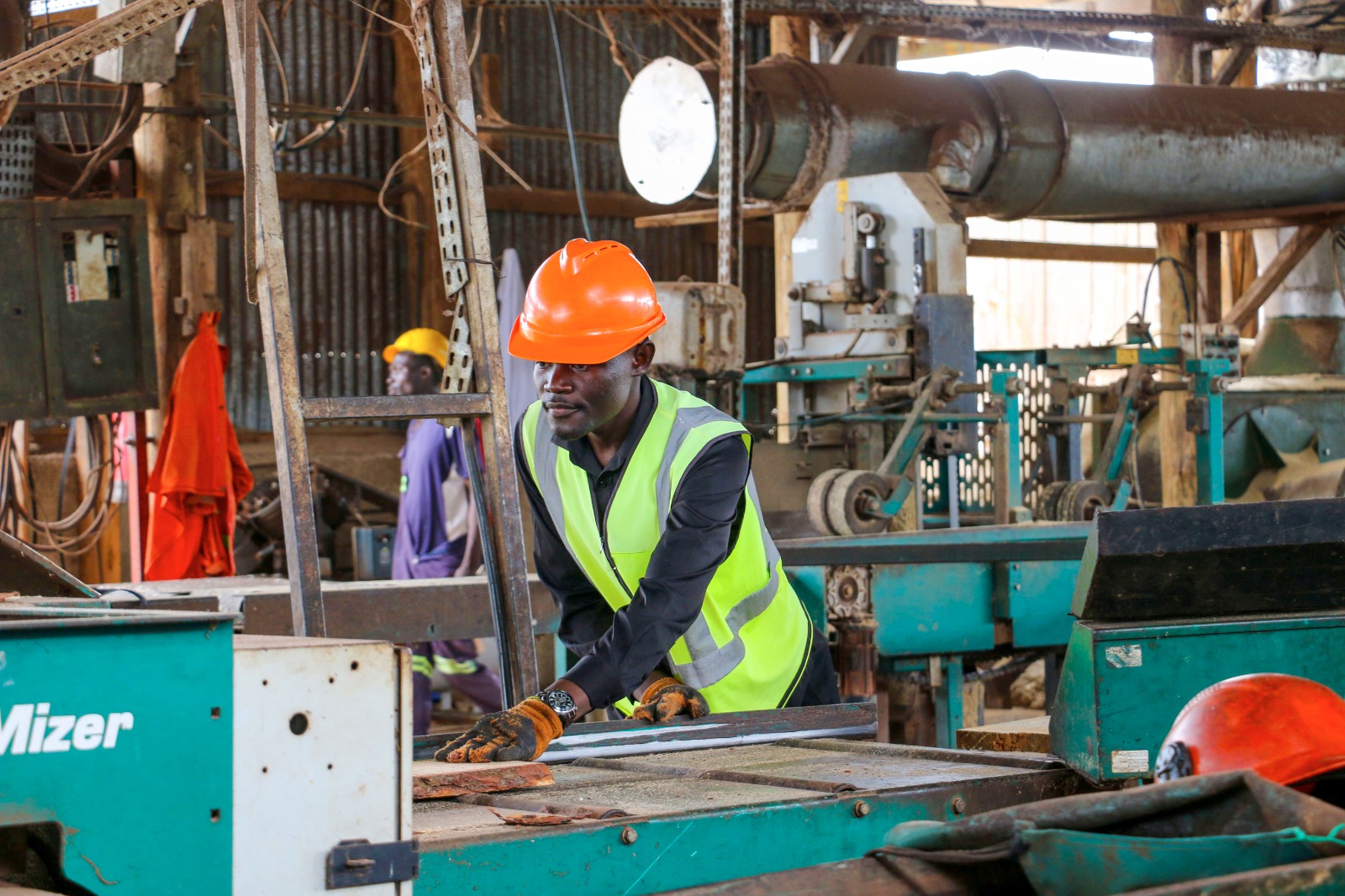
This could create opportunities for enterprises involved in areas such as timber processing, furniture manufacturing, construction materials and other wood-based products.
A stronger domestic wood-processing industry could also create demand for sustainably produced raw materials while generating employment throughout the value chain—from forestry and harvesting to processing, manufacturing, transportation and marketing.
Bringing businesses, financiers and investors together
The launch brought together the 54 participating enterprises, business development service providers, financial institutions, investors and other forestry-sector stakeholders.
The gathering provided an opportunity for participants to understand the objectives of the programme, the support available to them and the expectations during the six-month acceleration period.
For the participating enterprises, the programme offers an opportunity to identify weaknesses within their businesses, improve their management systems and develop strategies for sustainable expansion.
It also creates a platform for businesses to interact with potential financiers and investors who can provide the capital required to scale up production and enter new markets.
Contribution to Uganda’s green economy
The Sustainable Wood-Based Value Chains Project forms part of the broader EU–Uganda Forest Partnership, which seeks to strengthen the contribution of forests to inclusive economic growth, employment and livelihoods.
The partnership also addresses major environmental challenges, including deforestation, climate change and biodiversity loss.
By combining enterprise development with sustainable forest management, the partners aim to demonstrate that economic growth and environmental conservation can reinforce each other.
The Enterprise Acceleration Programme is therefore expected to go beyond providing business training. It is designed to help build a stronger ecosystem in which Uganda’s wood-based businesses can become more productive, financially sustainable and competitive while using forest resources responsibly.
For the 54 enterprises selected for the programme, the next six months will provide an opportunity to strengthen their businesses, improve their investment readiness and build relationships with financiers and markets.
For Uganda’s forestry sector, the initiative represents another step towards transforming forest resources into sustainable industries, jobs, investment and greater domestic value addition.