By Wadulo Arnold Mark
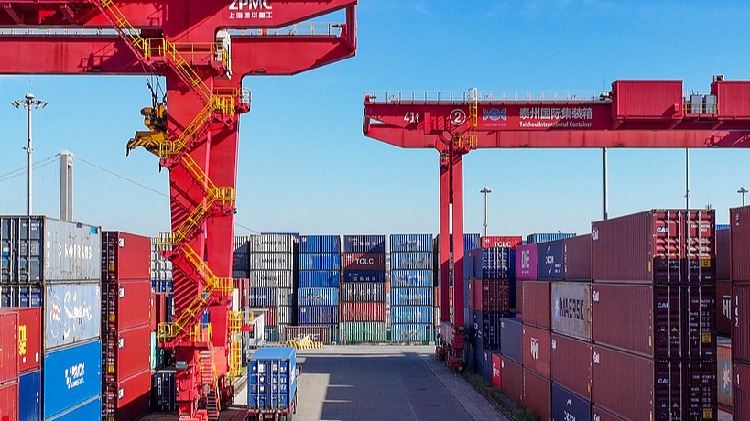
On May 1, 2026, the geopolitical landscape of African trade underwent a seismic shift as China officially opened its $21 trillion consumer market to 53 African nations under a comprehensive zero-tariff regime. While the policy represents a historic opportunity for the continent, for Uganda, the move is a double-edged sword that signals the end of “affirmative action” and the beginning of a high-stakes race for market competitiveness.
The development, which expands on a 2005 World Trade Organization (WTO) decision, removes duties on 100% of tariff lines for nearly every nation on the continent. However, as Ugandan trade officials and international observers warn, the window to capitalize on this is narrow a two-year “test phase” ending April 30, 2028, that will determine whether Africa can move from being a source of raw materials to a hub of industrial manufacturing.
The End of Preference: Competing with the ‘Big Boys’
For nearly two decades, Uganda, as a Least Developed Country (LDC), enjoyed a degree of “preferential treatment” that larger African economies did not. Cleopas Ndorere, the Commissioner for External Trade at Uganda’s Ministry of Trade, Industry, and Cooperatives, likens the previous arrangement to affirmative action in the education sector.
“What is new is that China has now decided to give it to all of Africa,” Ndorere explains. “It is like saying 1.5 [entry points] will be for the boys and the girls as well. The ‘boys’ in this case—South Africa, Egypt, Morocco, Kenya—now have the same duty-free access we do”.
This “preference erosion” means Uganda can no longer rely on its LDC status to win. To survive, the country must “pull up its socks” to compete with more industrialized neighbors who already possess sophisticated logistics and manufacturing bases.
The Competitiveness Gap: 0.1% is Not Enough
The scale of the opportunity is staggering. China boasts a 1.4 billion-person population and a $21 trillion economy, yet the entire African continent currently accounts for only about $123 billion of China’s imports. Uganda’s slice of that pie is a mere 0.1%, totaling roughly $140 million.
Hez Kimoomi Alinda, the Executive Director of the Uganda Free Zones and Export Promotions Authority (UFZEPA), argues that the battle for China will be won or lost on competitiveness.
“Competitiveness is largely about two things: the cost of production and quality,” Alinda says. He notes that Uganda is aggressively pursuing a target of five cents per kilowatt-hour for electricity to lower the cost of doing business. “If we achieve that, and manage the cost of water for export-oriented industries, we gain the edge needed to sell more than just raw beans”.
From Volume to Value: The Coffee Litmus Test
Uganda’s coffee sector serves as the primary case study for this transition. While coffee exports to China doubled last year to $62 million, only 7% to 8% of that coffee is exported with any value addition.
The incentive to process at home is now financial. Ma Ke, a CGTN reporter, notes that African products like Ethiopian coffee are already 20% cheaper than Latin American rivals in China because the tariffs have vanished. This price advantage provides a “cushion” that allows African exporters to reinvest in processing machinery.
Furthermore, China’s policy is designed to encourage Chinese firms to relocate manufacturing to Africa. “If a Chinese company processes cashews or coffee inside Africa, the finished products can enter China tariff-free,” Ma Ke reports, noting that this is already happening in Zambia and Tanzania.
The Practical Blueprint: What Stakeholders Must Do
To move beyond the “test phase,” Ugandan stakeholders must follow a rigorous technical roadmap:
1. For Exporters: The GACC Hurdle Exporters must realize that zero tariffs do not mean zero rules. Since 2022, all food manufacturers must be registered with the General Administration of Customs of China (GACC). “You must have a GACC registration number printed on your inner and outer packaging, or the goods will not clear customs,” Alinda warns.
2. For Farmers: Sanitary Standards (SPS) Uganda has struggled with salmonella levels and chemical residues. Alinda emphasizes that farmers must adopt strict agronomic practices. “The product must be traceable back to the manufacturer. This creates the trust that the product is not fake”.
3. For the Government: Strategic Intelligence The Ministry of Trade is shifting its strategy toward “Economic and Commercial Diplomacy.” Commissioner Ndorere confirms the ministry is attaching dedicated trade attaches to missions in China to provide “market intelligence and buyer-to-buyer interconnection”. Additionally, the government has established regional laboratories through the Uganda National Bureau of Standards (UNBS) in Mbarara, Gulu, and Arua to ensure products meet Chinese standards before they leave the country.
4. Financial Stakeholders: The De-Dollarization Move To reduce foreign exchange exposure, Uganda is exploring settling trade in Yuan and Shillings. While the dollar remains dominant, Ndorere points to the Pan-African Payment and Settlement System (PAPSS) as a model for how local currency trade can strengthen reserves and reduce costs for traders.
The Road Ahead: 2028 and Beyond
Uganda is also looking to diversify away from traditional European markets, which are becoming increasingly restrictive due to new regulations like the EU Deforestation Regulation (EUDR). By targeting China, Uganda is not just seeking a new buyer; it is seeking a partner that, under the BRICS framework, claims to desire “mutually beneficial” value addition rather than just raw material extraction.
However, the burden of proof remains on the private sector. Commissioner Ndorere quotes former WTO Director Pascal Lamy to summarize the challenge: “Trade negotiations make trade possible. It is the private sector that makes trade happen”.
“We have negotiated the environment,” Ndorere concludes. “In short, we take the horse to the well, but we cannot force it to drink. The opportunities are there; the private sector must now take advantage of them”.