
By David Mwanje
A Ugandan food researcher is using common local foods to develop cheaper nutrition products for households struggling with poor diets and malnutrition.
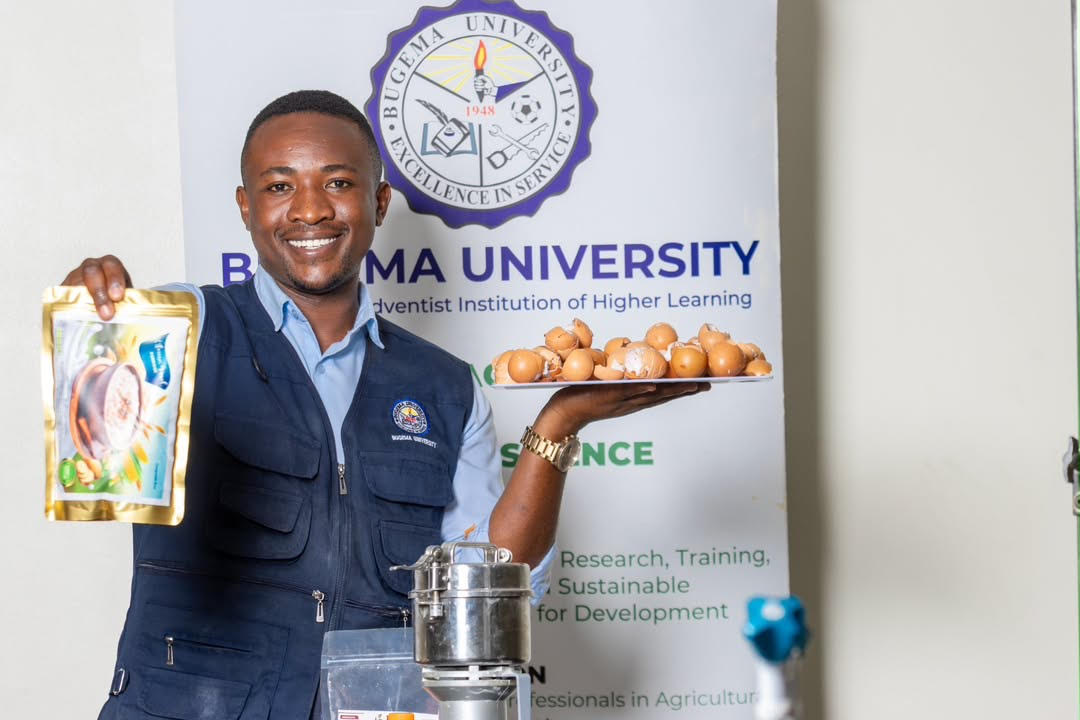
Irumva Gad has been working on products made from eggs, mukene and cornsilk, with the aim of improving access to protein, calcium, vitamins and minerals using foods already available in local markets.
Gad is a Laboratory Technician in the Department of Nutrition, Food and Technology at Bugema University’s School of Agriculture and Applied Sciences.
His work comes at a time when malnutrition remains a concern in Uganda, especially among children. Health experts have often warned that the problem is not only lack of food, but also poor diets that leave many families without the nutrients needed for growth, learning and proper body development.
One of Gad’s products is an egg-based porridge made from whole eggs processed into powder and mixed with cereal flour. The porridge is intended to provide protein, calcium, vitamins and minerals in a form that can be easily prepared by households.
He has also worked on mukene yoghurt, made by mixing yoghurt with powdered mukene fish. The fish is processed with its bones and skin, which are rich in calcium and other nutrients.
Another product uses cornsilk, the thread-like part of maize that is usually thrown away. Gad says research has shown it can be processed into a supplement instead of being treated as waste.
According to Gad, the idea is to make nutrition products from foods and materials that ordinary communities already know.
“Many people consume enough food but still miss out on essential nutrients needed for healthy living. We are working on solutions that are affordable and accessible to ordinary households,” he said.
The work points to how university-based research can be used to address everyday food and health challenges beyond lecture rooms and laboratories.
For Gad, the focus is on turning familiar local foods into products that can improve diets without pushing nutrition beyond the reach of ordinary families.