By Nabakiibi Doreen Malaika
Spain’s victory in the 2026 FIFA World Cup final brought the curtain down on the largest edition of the tournament ever staged.
The competition, spread across the United States, Canada and Mexico, introduced a 48-team format, drew vast audiences and pushed football further into the commercial and entertainment culture of North America.
For Uganda Broadcasting Corporation, the tournament was also a demanding broadcasting operation. UBC aired 34 selected matches to free-to-air audiences in Uganda, navigating expensive television rights, strict digital restrictions, difficult kick-off times and the commercial pressure that comes with carrying one of the world’s most valuable sporting properties.
The experience came at an important time. Uganda is preparing to co-host the 2027 Africa Cup of Nations with Kenya and Tanzania, and the World Cup offered useful lessons in television production, audience behaviour, tournament organisation and the growing cost of international sports broadcasting.
A World Cup Built on a Larger Scale
The 2026 tournament was the first World Cup to feature 48 teams, up from 32.
The expansion brought more countries into the competition and increased the number of matches, creating a longer tournament and a bigger broadcast schedule.
For countries such as Uganda, which remain outside the World Cup finals, the expanded format offered renewed hope. More places were available, but qualification still demanded stronger domestic structures, better youth development and greater consistency at national-team level.

UBC Marketing Manager William Odoch said the wider tournament should encourage countries that have traditionally struggled to qualify.
“The opportunity is bigger, but it still has to be earned,” Odoch said. “For Uganda, the lesson is that qualification requires investment in youth football, coaching, facilities and proper long-term planning.”
The format also increased the value of the competition to broadcasters. More matches meant more content, more advertising slots and more opportunities to build programming around the tournament. It also meant higher operational demands.
The American Influence
The World Cup carried a clear North American identity.
Match presentation borrowed heavily from the entertainment culture surrounding major American sporting events. Stadium shows, fan zones, music, technology and sponsor activations became part of the matchday package.
The final also featured halftime entertainment, a concept closely associated with the Super Bowl and other major American events.
For some supporters, this made the tournament more attractive to wider audiences. For others, it raised questions about how far football should go in adopting the entertainment model of American sport.
The tournament also renewed debate around dynamic ticket pricing.
Under dynamic pricing, ticket prices rise or fall according to demand, the teams involved, the venue and the stage of the competition. The model is common in the United States, where prices for major sporting events and concerts can change sharply depending on market interest.
For football supporters used to fixed ticket categories, the system added another cost to an already expensive tournament.
Flights, accommodation, internal travel and match tickets made attendance difficult for many fans, particularly those travelling from Africa and other parts of the developing world.
Odoch said the pricing model showed how football’s biggest events are being shaped by market demand.
“The game is still about the supporters, but it is also a major commercial product,” he said. “The host cities, sponsors, broadcasters and organisers all operate within that commercial reality.”
The Rising Cost of Sports Rights
For broadcasters, the greatest pressure often comes before the first ball is kicked.
Rights to major tournaments have become increasingly expensive. A broadcaster is no longer buying only the right to show matches on television. Modern packages can separate free-to-air television, pay television, radio, digital streaming, mobile use, highlights, social media clips and on-demand viewing.
Each platform carries its own rules and, in some markets, its own price.
For many African broadcasters, purchasing full rights directly is beyond reach. National broadcasters often depend on sublicensing arrangements through regional rights holders, which acquire larger packages and distribute selected matches to stations in different countries.
UBC carried the World Cup through a rights arrangement involving New World TV.
Even under a sublicensing arrangement, the cost of the rights is only one part of the bill. Broadcasters must also pay for production, studios, presenters, technical crews, transmission, graphics, promotion, satellite delivery, backup systems and overtime.
The commercial challenge is recovering that investment through advertising and sponsorship.
For UBC, the overnight schedule made that difficult.
Some matches kicked off when most Ugandans were asleep. A major game at 3:00am or 4:00am could attract committed football fans, but it did not offer the same advertising value as a match played during prime time.
Odoch said this is one of the central difficulties facing public broadcasters.
“World Cup rights are expensive, and the cost does not stop with buying the matches,” he said. “You still have to produce the programmes, pay the crews and keep the signal on air. At the same time, some matches fall outside the hours advertisers prefer.”
Public broadcasters also face a different obligation from purely commercial stations.
“Our first responsibility is public service,” Odoch said. “Football should not only be available to people who can afford subscription television. Major events must also reach viewers on free-to-air platforms.”
Uganda on North American Time
The time difference between East Africa and North America became one of the defining features of the tournament for Ugandan audiences.
Some matches were shown late at night. Others began in the early hours of the morning.
Viewers adjusted their routines. Some slept early and woke up before kick-off. Others watched through the night and went to work with little rest. Sports bars remained open beyond their usual hours, while online discussion continued until dawn.
Inside UBC, the schedule affected the entire production chain.
Presenters, producers, directors, commentators, camera operators, vision mixers, graphics teams, transmission engineers and continuity staff all had to work around the North American clock.

Sports presenter Ruben Kibirango said the standard of the broadcast could not depend on the hour.
“Whether the match started at eight in the evening or four in the morning, the viewer expected the same level of preparation,” Kibirango said. “The team had to be ready, informed and professional throughout.”
The late-night schedule also created a different rhythm in the newsroom. Pre-match shows had to be prepared during the evening, while post-match analysis sometimes continued into the morning.
For presenters, it meant researching teams, injuries, tactics and previous meetings at hours when the rest of Kampala was winding down.
For technical staff, it meant keeping the transmission stable through long overnight shifts.
Strict Rights in the Digital Age
The tournament also showed how tightly football footage is now controlled online.
Supporters increasingly expect goals, highlights and major incidents to appear instantly on social media. Broadcasters, however, cannot assume that television rights allow them to publish the same footage on Facebook, X, TikTok, Instagram or YouTube.
Digital rights are often separate and heavily restricted.
In the United States, where sports rights are aggressively protected, unauthorised clips could be removed quickly. Broadcasters had to follow detailed conditions on what could be shared, how long clips could remain online and which platforms were permitted.
For UBC, this limited the amount of match footage that could be posted across its digital platforms.
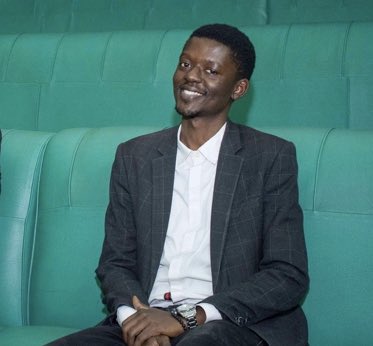
Graphics Designer Stephen Kamoga said the restrictions forced the production team to rely more heavily on original design, analysis and studio-based content.
“Supporters wanted to see goals and highlights immediately, but the rights did not allow us to post everything,” Kamoga said. “We had to use graphics, statistics, analysis and original studio content to keep the audience engaged.”
The restrictions also affected how stories were promoted.
A broadcaster could advertise an upcoming match, publish team news and produce original analysis, but still be prevented from sharing the moments viewers most wanted to see.
That distinction has become increasingly important as television audiences move online.
For broadcasters, the World Cup is now a contest on two fronts: maintaining a traditional television audience while also serving viewers who expect instant content on their phones.
Building the World Cup Look
UBC’s visual presentation had to fit within official tournament guidelines.
Working through the New World TV broadcast framework, the graphics team used approved typography, colours and branding elements associated with the tournament.
Kamoga said the challenge was to maintain the official World Cup identity while giving the local production a recognisable Ugandan feel.
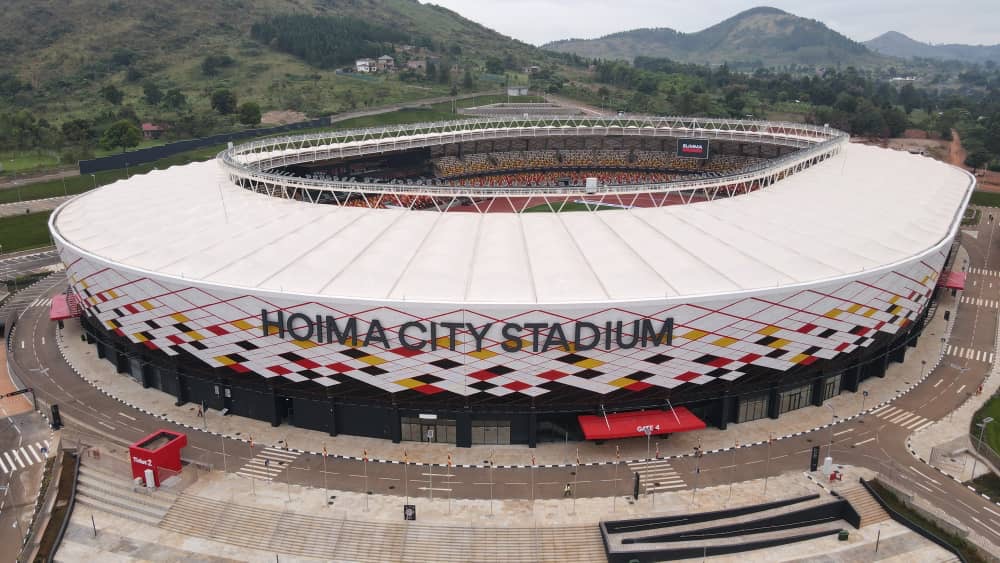
The team drew some design inspiration from Hoima Stadium, one of the venues being prepared for AFCON 2027.
The local touch was subtle, but it helped connect the global tournament to Uganda’s own football preparations.
Commercial material also had to fit within strict timing rules.
Advertisers often prefer longer spots, particularly during major tournaments, but international broadcast regulations require precise control of commercial breaks and programme timing.
This left the production team balancing the needs of sponsors with the rules attached to the rights package.
Amon Ngabo’s World Cup from Kampala
For senior sports reporter Amon Ngabo, the tournament was also a personal story of access denied.
Ngabo covered the 2025 Africa Cup of Nations in Morocco, but he was unable to travel for the 2026 World Cup after facing repeated visa difficulties. Later Ebola-related travel restrictions affecting Uganda further complicated the process.
He followed and analysed the tournament from Kampala instead of the stadiums of North America.
For a reporter accustomed to covering major continental football on location, the experience underlined how immigration rules and public-health restrictions can shape African sports journalism.
Ngabo said Spain’s success was built on structure rather than a short burst of form.
“Spain showed the value of keeping a football identity and investing in players over time,” he said. “Their victory was not an accident. It came from planning, technical development and belief in a system.”
He also welcomed the 48-team format, although he warned that more qualification places would not solve Uganda’s weaknesses on their own.
“The format gives more countries hope, but hope is not a development programme,” he said. “Uganda still needs stronger academies, better competitions and a clear route from youth football to the national team.”
The Good
Ngabo believes the tournament produced several positive lessons for African football.
The expanded competition gave more countries access to the global stage and allowed emerging teams to test themselves against stronger opposition.
It also created wider interest in markets that had previously felt distant from the World Cup.
In Uganda, viewing centres and sports bars attracted supporters throughout the tournament. Hotels, restaurants and entertainment venues benefited from the demand for places showing matches, even when kick-off came late at night.
The competition also gave Ugandan broadcasters more material for discussion, analysis and audience engagement.
Spain’s triumph, in Ngabo’s view, provided the clearest football lesson.
Their technical quality was matched by organisation, patience and tactical discipline. They played with a recognisable style and trusted players developed through a system that had been built over many years.
The Bad
Africa still finished the tournament without a finalist.
African teams produced strong performances, but the continent remained short of the final step.
Ngabo said the difference between African teams and the strongest sides was not simply individual talent.
“Squad depth matters,” he said. “Decision-making matters. The quality of preparation matters. At the highest level, teams are punished for every weakness.”
He also pointed to the uneven strength of domestic leagues and youth systems across the continent.
African countries continue to produce gifted players, but many national teams remain dependent on individuals developed abroad. Domestic structures often struggle to provide the same quality of coaching, facilities and competition.
Uganda’s absence reflected that wider problem.
The country has passionate supporters and talented players, but qualification demands consistent planning rather than short campaigns built around individual matches.
The Ugly
Ngabo was also concerned by the level of online abuse directed at players, coaches and referees.
Social media gave supporters a direct voice throughout the tournament, but criticism often moved beyond football into personal attacks.
Players were judged instantly after mistakes. Referees faced abuse after disputed decisions. Coaches were targeted before emotions from matches had settled.
The digital environment that helps grow football audiences can also make the game harsher for those taking part.
Ngabo also pointed to football’s widening financial gap.
The richest federations benefit from stronger leagues, better academies, more advanced sports science and greater commercial support. Smaller football nations are expected to compete against that machinery with far fewer resources.
For Uganda, he said AFCON 2027 should not be judged only by whether stadiums are completed.
“The real legacy must include football development,” Ngabo said. “A successful tournament should leave behind facilities, knowledge, better competitions and players capable of competing at a higher level.”
AFCON 2027 Comes into Focus
Uganda’s preparations for AFCON 2027 give the World Cup experience greater relevance.
The scale will be smaller, but many of the demands will be similar.
Accreditation systems must work. Transport must move teams, officials and supporters efficiently. Security planning must protect venues without making the event hostile. Medical services must be prepared. Volunteers must be trained. Broadcasters must receive reliable facilities and technical access.
The host countries will also have to provide a strong experience outside the stadiums.
Visitors will judge airports, hotels, roads, communication systems and customer service alongside the football.
Odoch, who is involved in Uganda’s Local Organising Committee, said the World Cup gave officials a useful reference point.
“The public sees the match, but the tournament is much bigger than the match,” he said. “There is transport, security, media, hospitality, ticketing, sponsorship and the movement of thousands of people.”
Broadcasting will be central to AFCON.
For most supporters across Africa, television and digital platforms will be their only connection to the tournament. Poor pictures, weak sound, delays or unreliable transmission can damage the reputation of the event, regardless of what happens inside the stadium.
UBC will therefore carry both a national and continental responsibility.
The corporation will be expected to cover Uganda’s role as a host, provide domestic programming and meet the technical standards demanded by a major international tournament.