By Mwanje Gideon
Uganda approaches 64 years of independence having gained sovereignty on October 9, 1962. our governance frameworks remain visibly anchored in 20th-century archetypes. In an era where post-colonial statehood demands dynamic economic diversification, our leadership continues to view physical sport through an obsolete lens: as mere leisure, physical exercise, or a high-school co-curricular pastime. This wrong oversight ignores a fundamental truth of the modern global economy, sports is no longer recreation; it is a multi-billion-dollar global industry driving gross domestic product (GDP), direct foreign investment, tax revenue, and youth empowerment.
Uganda is one of the countries with the highest youth unemployment rates globally, continuing to relegate sports to the economic periphery is a major governance failure. Reclaiming our national pride and unlocking youth potential requires recognizing sports as a critical macroeconomic pillar.
Globally, the sports sector generates over $500 billion annually, driving massive value through television broadcasting rights, commercial sponsorships, merchandise, real estate, and sports tourism.
Across Africa, modern sports ecosystems demonstrate how athletic talent translates directly into foreign exchange and sustainable local development:
Sadio Mané (Senegal): Beyond his athletic accolades, Mané operates as an economic institution in Senegal. He has funneled over $20 million (approx. 81,648,770,580 UGX) of personal earnings back into his hometown of Bambali. His investments ranging from hospital construction and schools to a $20 million agro-industrial processing facility have created over 1,000 direct jobs, reduced localized poverty, and expanded Senegal’s domestic capital base.
Mohamed Salah (Egypt): Salah contributes millions in direct remittances and tax revenues while funding major medical facilities and youth training institutions across Nagrig and Cairo. His international presence acts as a soft-power marketing engine, boosting Egypt’s national brand and tourism revenues.
The economic value of athletic exports is not an abstract concept in Uganda. It is an underfunded reality.
Consider the domestic example of playmaker Allan Okello. His professional movements transfer to Tanzania’s Young Africans (Yanga SC) valued at approximately $500,000 (over UGX 1.8 billion) and latest to a Moroccan club demonstrate the immediate monetary influx that skilled talent generates.
If Uganda produces 1,000 elite athletes operating at Allan Okello’s market value across various international disciplines (football, athletics, netball, basketball, cricket), the economy would see an direct capital injection exceeding $500 million (over UGX 1.8 trillion) in foreign currency inflows, transfer fees, and player remittances.
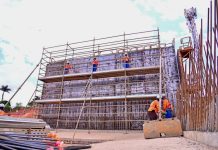
Currently, Uganda approaches sports facilities reactively. The construction and renovation of Namboole Stadium and Hoima Stadium are largely driven by the immediate pressure of hosting the AFCON (PAMOJA Bid) tournament, rather than a long-term economic development strategy. While these developments are welcome, building infrastructure solely to meet tournament deadlines reflects short-term planning rather than structural vision.
Uganda’s demographic structure presents both a challenge and an opportunity: over 75% of the population is under the age of 30, accompanied by high youth unemployment and underemployment rates.
Investing in a formal sports sector turns youth talent into a sustainable export pipeline:
A formal sports industry creates jobs beyond professional athletes, supporting sports medicine practitioners, physical therapists, data analysts, sports journalists, talent scouts, facility managers, and manufacturing workers for sports apparel.
It should be remembered that active engagement in structured academy pathways diverts young people from urban crime, substance abuse, and systemic despair, replacing social rehabilitation costs with productive economic output.
Be that as it may, athletic academies provide lower-income youth with a merit-based pathway to financial stability and international education scholarships. Not to forget those contract clauses and exposure boasting about our tourism.
Patriotism cannot be built solely through political directives or administrative slogans; it flourishes through shared national achievement.
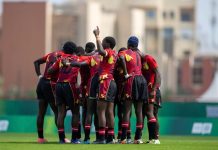
When Joshua Cheptegei and Jacob Kiplimo dominate international distance running, or when the Uganda Cranes and the Victoria Pearls represent the country abroad, regional, tribal, and political divisions momentarily disappear. National prestige on the global stage raises a country’s diplomatic profile, directly supporting international trade and tourism.
Victory in international sports creates a unifying narrative that strengthens civic cohesion across diverse populations. When we come together to support Uganda cranes, She cranes, Cricket cranes or the Hippos; we don’t look at our political differences. We are one as Ugandans.
Sports is an Inspiration to Future Generations: Visible success by homegrown athletes provides tangible evidence to young citizens that excellence can be nurtured domestically, this limits the growing numbers of young people running abroad for greener pasture.
It is late, but not too late, to realign national policy with modern economic realities. To build a self-sustaining sports sector, the state must transition from reactive event hosting to structured institutional investment that can see how to build Agriculture and Tourism through Sports.
At 64 years of independence, Uganda stands at a critical demographic and economic crossroad. Continuing to view sports as mere entertainment ignores a major catalyst for youth employment and GDP growth. If we treat sports as a strategic industry, Uganda can turn its high youth population into an engine for economic growth, international prominence, and renewed national unity. The infrastructure built for AFCON should mark the beginning of a long-term national policy, not an isolated effort. We can start by building stadiums in every district and nurturing talents through investments.
FOR GOD AND MY COUNTRY!
The author is a legal scholar at the Law Development Centre, Kampala.