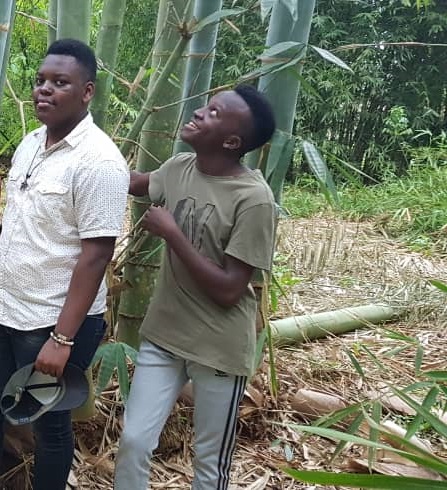
Uganda’s young people have an opportunity to turn one of nature’s most remarkable plants into a source of employment, entrepreneurship and environmental protection. Bamboo, often overlooked as an ordinary grass, is emerging as a valuable resource that could contribute significantly to Uganda’s green economy while addressing the growing challenges of deforestation, climate change and youth unemployment.
The Chairperson of the Uganda Bamboo Association, Fravia Munaaba Nabugere said that, bamboo growing presents an exciting opportunity for young Ugandans to participate in environmental conservation while creating sustainable livelihoods.
She said , Bamboo is among the fastest-growing plants in the world. Its rapid regeneration makes it an excellent alternative to conventional timber, reducing pressure on natural forests.
Its extensive root system helps hold soil together, control erosion, protect riverbanks and restore degraded landscapes.
She further noted that , Bamboo also absorbs carbon dioxide, making it an important resource in climate change mitigation.
She observed that, in Uganda, where protecting forests, wetlands and water catchment areas is increasingly important, and expanding sustainable bamboo cultivation can make a meaningful difference.
She pointed out that, Young people can particularly embrace bamboo growing because it does not only offer environmental benefits but also presents numerous economic opportunities.
Bamboo is a resource with multiple uses and a growing market for value added products.
Through bamboo cultivation, young entrepreneurs can establish nurseries, produce and sell seedlings, establish plantations, supply raw bamboo poles and venture into processing and manufacturing.
She noted that, the opportunities extend to producing bamboo furniture, beds, chairs, tables, flooring materials, baskets, mats, curtains, handicrafts, toothpicks, charcoal, construction materials, handbags and decorative products.
Bamboo shoots are also consumed as food, particularly in communities around Mount Elgon, where they are locally known as Malewa.
Uganda’s Industrial Research Institute UIRI has also demonstrated the potential for commercial bamboo toothpick production.
These products provide opportunities for young people with different skills, including carpentry, engineering, fashion, design, agriculture, technology and business management.
Bamboo growing is already taking root in several parts of Uganda.
Important growing areas include Kabale, Kisoro, Kanungu, Mbale, Nakasongola, Kaliro and Mityana.
Other areas with bamboo resources include the Rwenzori region, Mount Elgon and the Echuya Forest landscape.
The Uganda Bamboo Association has been promoting bamboo cultivation, training, plantation establishment and value addition to strengthen the country’s bamboo industry.
According to Munaaba Nabugere, encourage young people is key particularly in schools, universities, youth groups and agricultural institutions to consider bamboo as a practical investment in their future. Instead of viewing environmental protection as a responsibility that offers no financial return, we should recognise that protecting nature can also create wealth.
Government, development partners, financial institutions and the private sector should support youth led bamboo enterprises through affordable financing, technical training, access to seedlings, modern processing equipment and reliable markets.
She stressed that, youth can grow bamboo, protect the environment and create wealth.
Uganda’s youth must not remain spectators in the fight against climate change and unemployment.
They can become active participants in building a greener, more prosperous economy. Bamboo offers them an opportunity to plant something today that can sustain livelihoods and protect the environment for generations to come.